5 Tips on How to Drive Efficiency Through Pharmacy Software 1

5 Tips on How to Drive Efficiency Through Pharmacy Software

The pervasive nature of technology and its immense applications has transformed the face of pharmacies. From being just a place to get your meds to a business that focuses on customer relations and automation, the way a pharmacy function has been revolutionized by technology. Independent pharmacies that are reluctant to accept the new tech are finding themself losing out on the game.

This article looks at pharmacy software used to automate and optimize the operations of a pharmacy and specifically looks at how each of its features benefits the pharmacy by driving its efficiency. We also look at how online pharmacy software development happens.


What is a Pharmacy Software Development?

Online pharmacy apps, pharmacy software, information systems, or pharmacy management systems improve pharmacy operations, promote better patient health outcomes and increase revenue for the pharmacy. They track and report medicine costs, usage, correct medication process, compliance, and patient safety.

Pharmacy software consists of a connected computer system with multiple access points, and a user interface with the patient’s profiles, inventory management, medicine information, and billing options. Depending upon the pharmacy software you use, more features may or may not be available. These systems can be integrated with other systems, like a hospital management system.

Some of the significant features of pharmacy management software are discussed below.
features-of-pharmacy-software

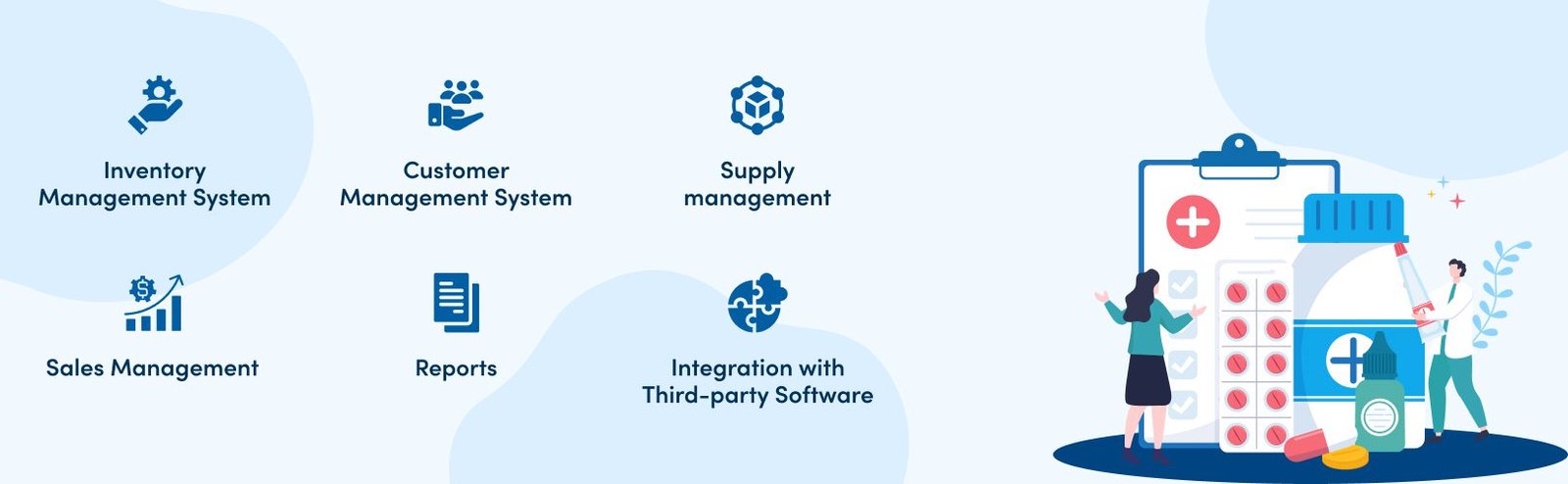
1. Inventory Management System: Pharmacy owners can keep track of the medicine supply and make data-driven decisions. Connect ERP software, online stores, and marketplaces and keep a record of stock levels. Add products with various SKU (stock-keeping units) codes. Eliminates challenges for product availability.

2. Customer Management System: Manage customer data like contacts, health records, feedback, etc., in an automated solution. Pharmacists can use feedback and reviews to make better business strategies. The automated system adds new contacts to the list with every update.

3. Supply management: Pharmacists can integrate with wholesalers and seamlessly place purchase orders. Refilling stock, product performance tracking, and stock levels with a supply management module.

4. Sales management: Pharmacy software helps you to easily and efficiently manage your sales. Now you can keep track of every sale, the price of every medicine and equipment sold, and also the profit made. You can also analyze your pharmacy business prospect and the flow of cash, and get the information you required to optimize the whole sales process.

5. Reports: Pharmacy management software stores large amounts of data regarding sales, purchases, and overall performance. All of these data are aggregated into reports. These reports can be used for business strategy, inspection, and even insights into operations.

6. Integration with Third-party Software: Manage back-office operations, data flow between inventory data, medicine order software, patient records, POS (point of sale), etc. The software can manage third-party software for messages and alerts, insurance claims, etc, via integration.

Let us now look at how these features of pharmacy software increase the efficiency of a pharmacy.

How Does Pharmacy Software management Increase Efficiency?

Pharmacy management software is a significant upgrade to the operations of a pharmacy. It increases the performance and efficiency of its operations. Let us look at how the features mentioned earlier come together to increase the efficiency of a pharmacy. Read about the online pharmacy services that can benefit from pharmacy apps and websites.

Better Customer Experience

Pharmacy management software allows you to store a lot of data about a customer in the system. The purchase history of the customer, insurance information, and other medical data. All of these are valuable in building a good customer relationship. With this information, you can personalize services from the pharmacy. You can cater to the customer’s specific needs, follow up on their medicine orders and refill as per schedule. You can send out customized text messages intimating them of upcoming refills.

Pharmacists can also keep track of their allergies and provide medicines that suit them. They can also give information on medicine interactions and counteractions of medicines. Pharmacists can also suggest economical options for medicines and even suggest recurring plans for long-term illnesses. All of these increase customer satisfaction and retention, thus increasing the efficiency of the operations.

Good Resource Management

A lot of resources pass through a pharmacy. Managing them efficiently increases the overall efficiency of the pharmacy. Resources can be efficiently allocated and accounted for with the different features of the pharmacy software.

All your available stock of medicines and equipment and out-of-stock items can be accounted for using the inventory management feature. Orders dispatched to your customers, special orders, and incoming orders can all be tracked, and reports made using the order tracking feature.

All the billing activities of incoming and outgoing transactions can be managed with the invoicing functionality. You can make better decisions that improve your business with a better understanding of your financial matters. Online software can account for the business matters of multiple locations with a single platform.

Reduces Billing and Medication Errors

As a place that makes many transactions, there is always a chance for error in a pharmacy. That is when pharmacists did everything manually, with pen and paper. In the digital age, the chances of error have also significantly reduced. Most errors occur either in the billing department, where there is some counting error or in the dispensing department, where the medicine given is not the one prescribed. With computerized billing and medicine order, transactions are much more efficient, improving the overall efficiency of the pharmacy.

Offering Online Services

The pandemic and the boom of online services have made pharmacies a leading player in the online market. You’d be surprised to know how willingly customers choose an online pharmacy over a brick-and-mortar store. It would be a miss to not provide your services online too. Here is how B2B online pharmacies are bound to speed up the digital transformation of local pharmacies.

Good pharmacy software provides the provisions to engage customers through online sales portals. With effective cloud integration, your business can soar online as well. With an online business up and running, you are making the most out of your resources and thus enhancing your business prospects. Your pharmacy will have a larger customer base and better brand awareness with an online business.

Effective Sales Management

Good pharmacy software can manage your sales efficiently. It can track all the sales happening at your pharmacy. With this feature, you will know in detail about every sale, the price of each medicine or equipment sold, and the profit made with each transaction. All of these data can be aggregated to generate reports that give insights into your business. Backed with the proper data, you can optimize your business. For example, you can look at the reports, know what sells well and what doesn’t, and then replace the slower-moving item with an in-demand item.

How To Build an Online Pharmacy Software?

Now that you know how beneficial it is to have online pharmacy software to run your pharmacy, you can give your pharmacy an edge with pharmacy app development. Our team at EMed HealthTech is fully dedicated to building your online pharmacy software with finesse. As developers of the best pharmacy apps for pharmacies worldwide, we will help your business grow and thrive through well-designed, stable, and secure apps. To know more, get in touch with us today and start a free trial of SaaS pharmacy software at EMed HealthTech!

Medicine Delivery App Development Key Features Cost and More 1

Medicine Delivery App: Key Features, Cost and More

The pharmacy business is a lucrative one with a high-profit margin. Hence the competition in the field is also incredibly high. You would know how tough it is to keep business moving as a competitor. Staying ahead of the competition is a matter of survival. Technology is a key player in taking the business to a new level.

With online platforms to buy and sell medicines being the norm of the post-COVID world, pharmacies adopt various business development strategies to get an advantage against competitors. According to leading studies, modern customers are inclined to choose the online marketplace over the physical ones.

This article looks at what goes into the medicine delivery app development process. This will help you get started on your journey of building your app.

What is a Medicine Delivery App?

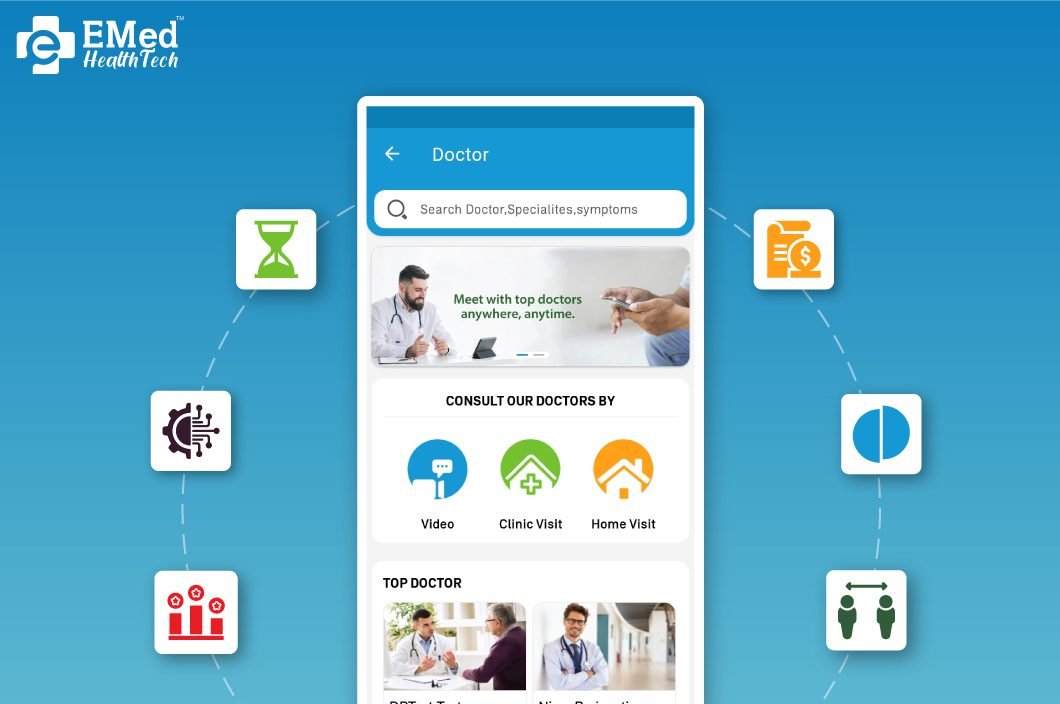
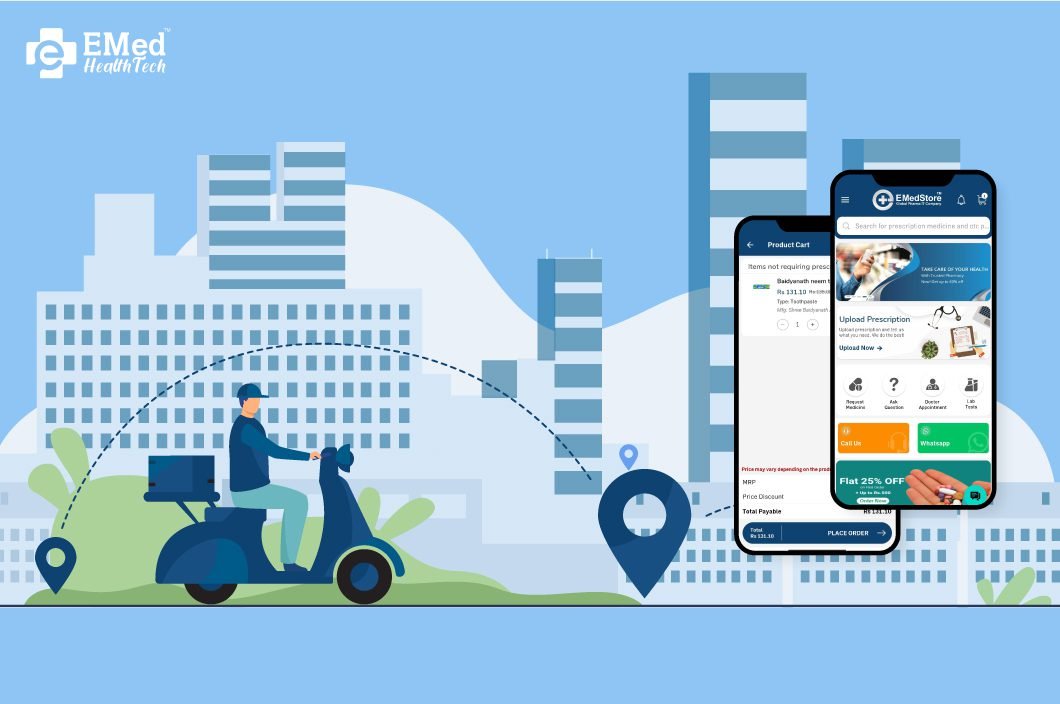
Medicine delivery apps are the online mode by which customers can buy medicine and have it delivered to their doorstep. They can choose medicines at competitive prices without stepping out of their homes.

Medicine delivery apps typically sell healthcare, OTC, and medical equipment online. Some apps also offer you the facility to book diagnostic test services online, like blood tests, full body checkups, lab tests, and preventative health checkups. Find the detailed guide on how to sell medicines using the medicine delivery app.

Medicine delivery apps have proven to be highly beneficial for pharmacies. It is beneficial for both the users and the pharmacists. Customers choose online platforms to avoid going to a physical store or if they are rendered unable due to medical conditions. Online delivery apps also provide offers and discounts which they can avail of. For pharmacists, this means they can increase sales. With better brand coverage, they can ensure that sales go up. They also have a greater reach among customers than a brick-and-mortar store would give.


What’s in a Medicine Delivery App?

There are typically four interfaces for a medicine delivery app. They are the Customer app, the pharmacy app, the Admin app, and the Driver app. Each of them has different functionalities. Let us look at the user-wise key features of a medicine delivery app.

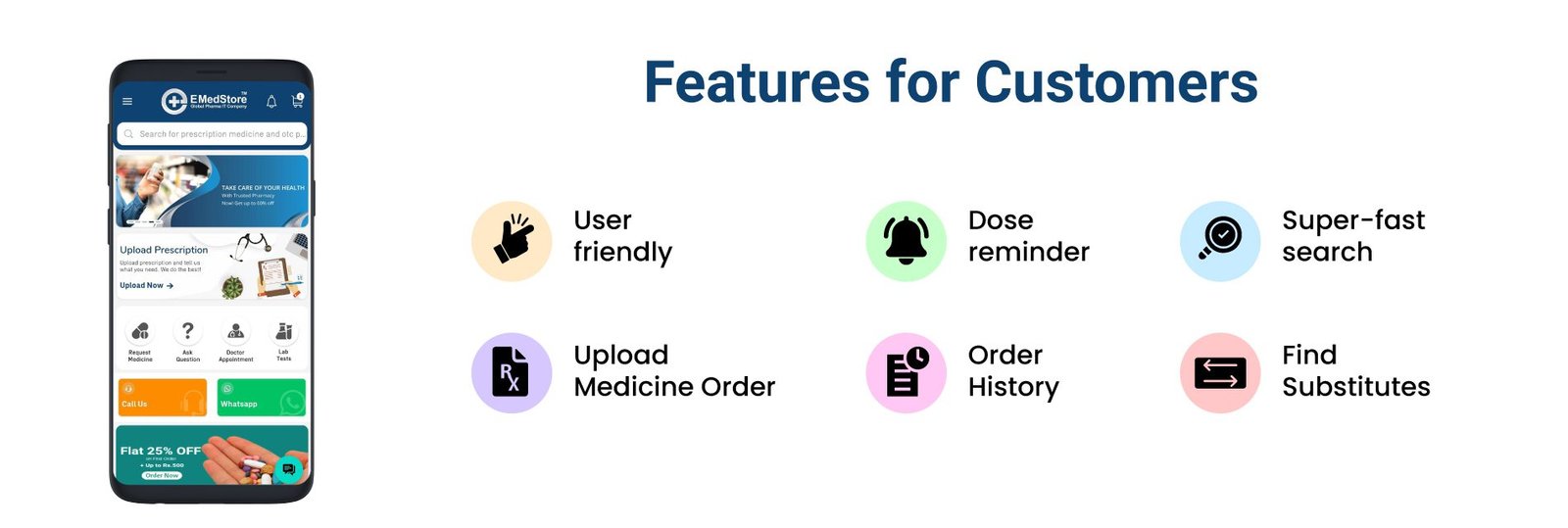
Features of Customer App

  1. An easy-to-use UI – user interface
  2. Registration and login with phone number and password
  3. User profile to add useful information like address, contact details, etc
  4. Medicine-wise search & also identify the substitute medicines
  5. Upload Medicine orders in the form of pharmacist-approved images
  6. View past orders and reorder the required medicines
  7. Wallet system to make quicker payments and process faster returns
  8. Secured payments with third-party payment providers
  9. Order tracking to locate order status
  10. Interact with the pharmacist in in-app chat in real-time

Features of Pharmacy Dashboard

  1. Generate reports in just a few clicks
  2. Check the orders assigned to him

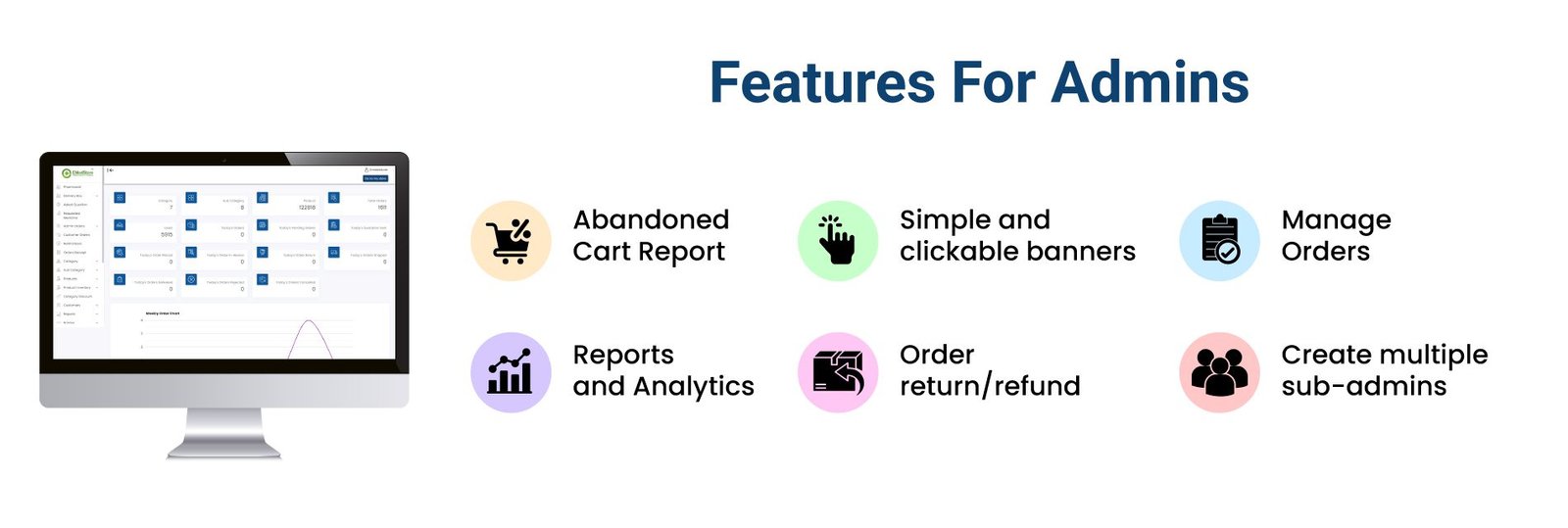
Features of Admin Dashboard

  1. Manage users and pharmacies
  2. View, manage and track orders
  3. Returns and refund management
  4. Provide category-wise discounts to customers
  5. Provide promo code and Refer & Earn facility
  6. SEO management & EMail marketing
  7. The track received orders and pending deliveries
  8. Inventory management with real-time info on stocks
  9. Different dashboards for different roles across departments
  10. Reports & Analytics to track performance

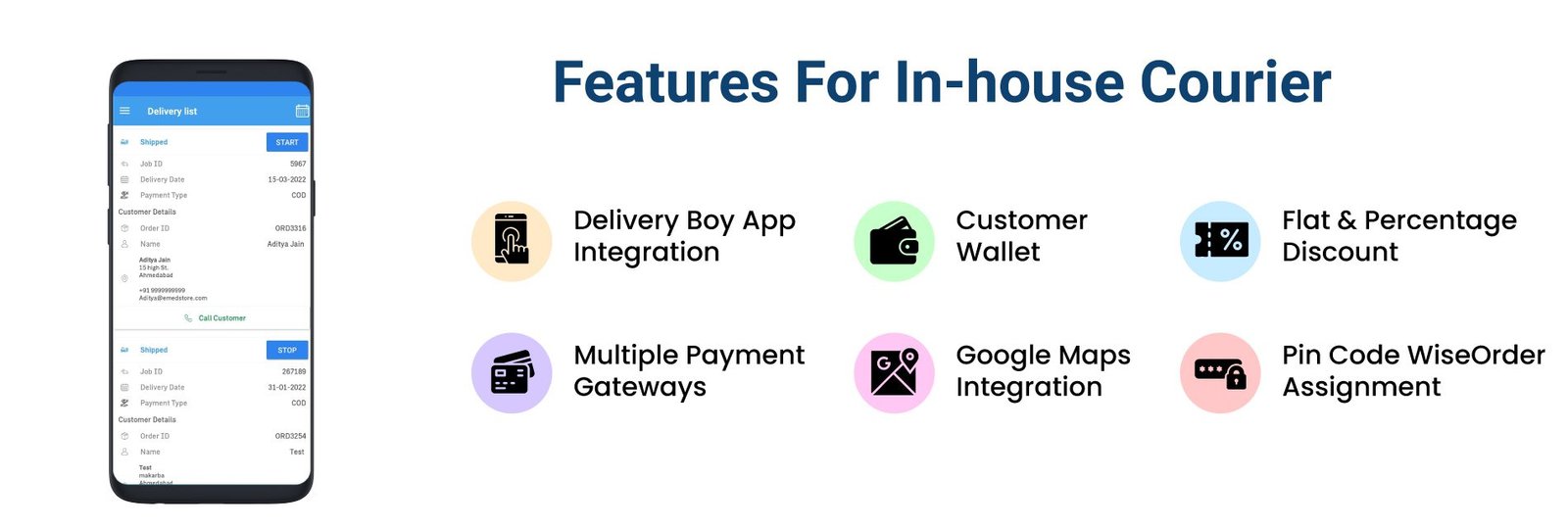
Features of Medicine Delivery Boy App

  1. Driver profile which creates a profile for each driver
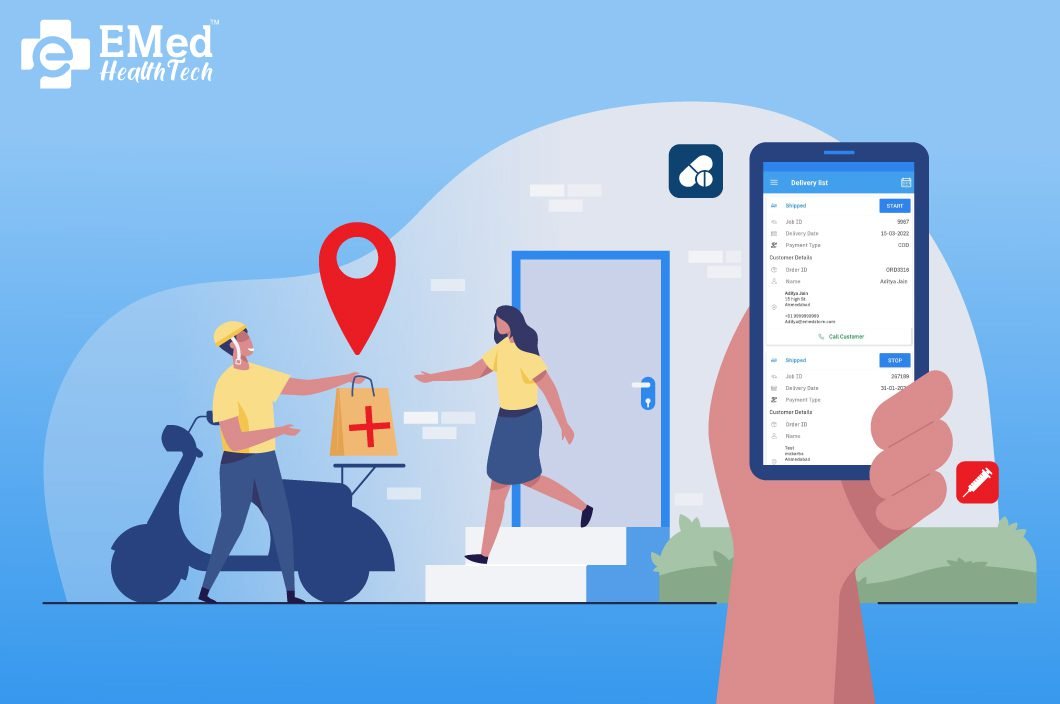
  2. Delivery status, location, and order status can be understood
  3. Instant notification on delivered orders
  4. Route optimization with online maps, hence faster delivery


How Much Does Medicine Delivery App Development Cost?

Creating an app from scratch is an expensive process. But what decides the expenses depend upon a lot of different factors. These are some of the parameters that determine the cost of app development. There can be a great difference in the prices when you are developing the app in-house compared to outsourcing it.

  1. What features does the app have?
  2. The platforms the app runs in – iOS, Android
  3. Compliance to regulations
  4. The location where your outsourced team is based
  5. Duration of the time development process
  6. Market research and business analysis

Step-by-Step Process of Developing a Medicine Delivery App

When you venture out to create a medicine delivery app, you need to know a couple of things. First, you need to identify your unique selling prospect or USP. This has to be what sets you apart from your competitors. Let us look at the process of developing an online pharmacy or medicine delivery app.

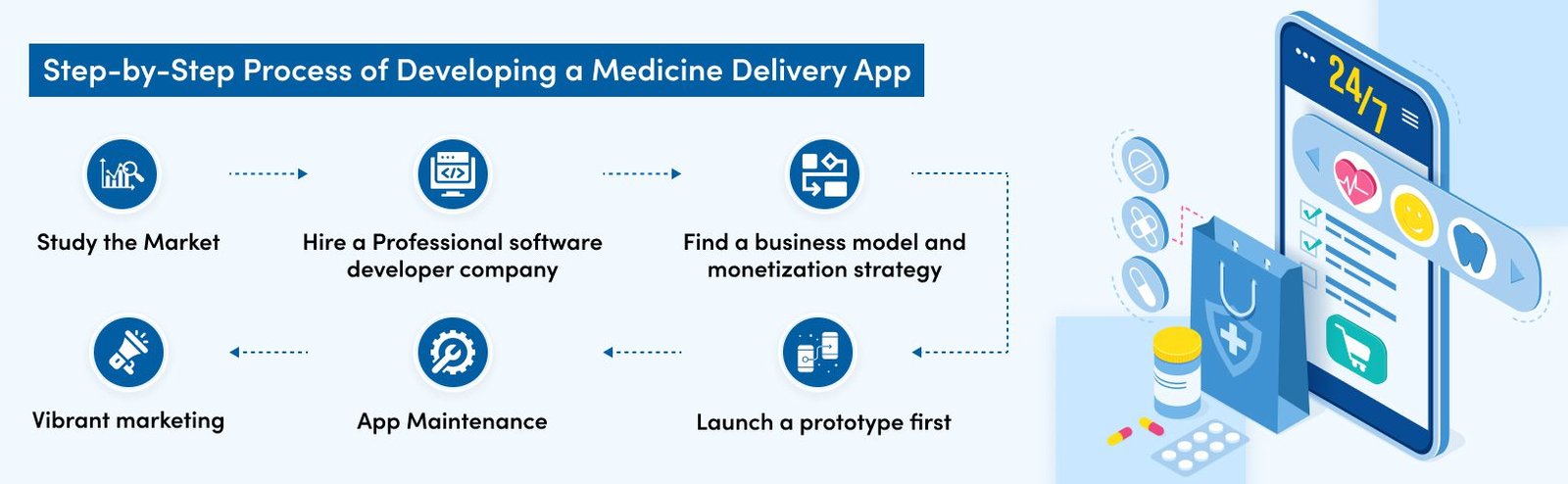
  1. Study the Market: Before you begin, you need to know what your market size is, who your competitors are, what hurdles you may face, and the scope of growth in your region.
  2. Hire a Professional software developer company: Hiring a medicine app development company can save you from many problems you can face as they are experts in what they do.
  3. Find a business model and monetization strategy: Every business has a monetization strategy that works for them. After thorough research, you can find what works for you and your business model.
  4. Launch a prototype first: Instead of cramming all of the features into a single app and launching it, develop a basic version and add the additional features.
  5. App Maintenance: The app is not a one-time production. It requires constant monitoring for an error-free life. Even before it is launched, it has to be tested thoroughly for bugs. It is also important that you constantly update the app for the best user experience.
  6. Vibrant marketing: An app cannot market itself. You have it do it. Make sure you have a rigorous marketing strategy that ensures your app gets the maximum visibility. Once your app is out there, your advertisements should focus on building a strong and recurrent customer base.

Also, read Medicine Delivery App Development Guide for Online Pharmacies.

Summing It Up

Building a medicine delivery app is no easy task. There is so much work and effort that goes into different fronts. When all of this comes together, you get a fully functional and useful app. You can either put together an in-house team to create the app for you or outsource the job to a medicine delivery app development company. Doing it in-house can be very expensive as you have to do it from scratch, provide the technology and infrastructure, and wager on a team working together for the first time.

On the contrary, outsourcing means you are enlisting the help of experts who have done it before. An experienced and talented team like EMed HealthTech can help you realize your medicine delivery app at great speeds. EMed HealthTech has been providing app development services in the medical field and accumulating experience along the way. Reach out to us today at EMed HealthTech and start a free trial of SaaS pharmacy software.

Oct 2022 10 Benefits of 5G Launch on Healthcare in India

10 Benefits of 5G Launch on Healthcare in India

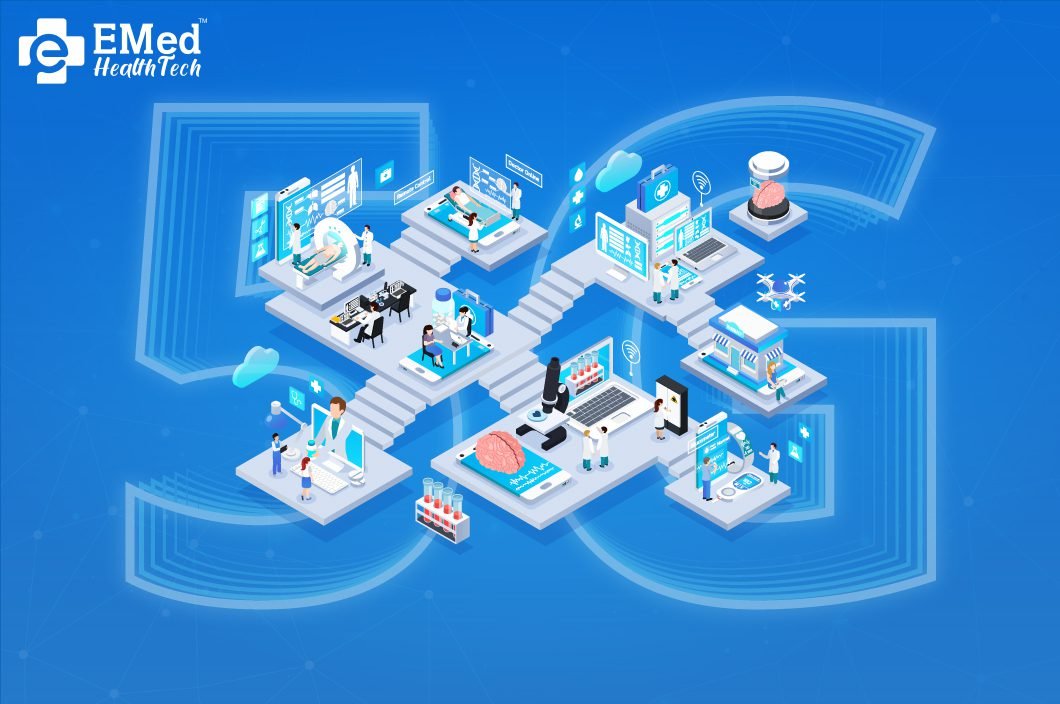
The advancements in modern technology have always been a boon for the world of healthcare. The latest 5G rollout is no different. At the outset, faster internet services and better connectivity bring immense potential to be explored in the healthcare sector.

First, let us look at the new technology that we call 5G and how it is different from its predecessors. Also, we take an in-depth look at what this means for the health sector in India. For a nation speeding its way towards development and modernization, the healthcare sector can benefit significantly from this new technology. Finally, we look at what it means for healthcare app development, which relies heavily on the speed and quality of the internet connection.

What is 5G?

Let us shed some light on what 5G is. In simple terms, 5G refers to the Fifth Generation of wireless network technology. For the previous generations, 1G focused on improving voice quality, which was picked up and improved upon by 2G. 3G is what opened the avenues of the internet to mobile users. 4G immensely increased the speed of wireless internet and data sharing.

What 5G brings to the table is high-speed connectivity, high data rate, low latency, and highly reliable communications. It also has aspects that increase energy efficiency, network efficiency, and spectrum efficiency.

When was 5G launched in India?

India launched 5G internet services on October 1, 2022. It was launched ceremoniously by Prime Minister Narendra Modi at the Indian Mobile Congress in New Delhi. It was flagged off and will be available in select cities across India. The 5G services will be progressively available throughout the country in the coming years. The Prime Minister called it a “knock on the doors of a new era”. The opportunities a technology like 5G presents to India are immense.


How does 5G benefit healthcare in India?

Previously 4G was used in the healthcare sector to improve the services, reach, and efficiency. However, 4G was not without faults. It was riddled with lags and would often fail its purpose. However, the new 5G improves upon 4G at incredible rates. Here are some of the imminent benefits of adopting 5G services in the healthcare sector in India.

Benefits of 5G Launch on Healthcare in India

1.  Connected ambulance

This concept could help improve emergency services, the quality of healthcare provided, and better outcomes for the patient. A connected ambulance would have means to transmit vital information about the patient, which can help better understand the patient’s condition, even before they arrive at the hospital. 5G’s better connectivity can also help doctors guide paramedics to conduct emergency procedures.

2. Collaborative surgery

Surgical procedures can get a boost with 5G procedures. While telesurgery is still a long way, collaborative surgeries are an attainable goal. With the help of AR/VR headsets, doctors can collaborate by watching in real-time and providing comments as another doctor performs the surgery.

3. Virtual consultations at HD quality

While internet connectivity already brought the facility of remote consultation, 5G takes it to a new level with its high speed and higher consistent quality. With 5G, the screening and assessments required for a consultation can be done online, thanks to the quality of the stream 5G ensures. Visual diagnoses can take a new definition with 5G assistance.

4. Faster image and records processing

5G offers better connectivity for transferring diagnostic images and reports at a stunning speed. What earlier took a long time can now in a surprisingly low amount of time. This gives patients faster access to treatment as they don’t have to shuttle between hospitals and diagnostic centers for results.

5. Remote patient monitoring with Telemedicine

Remote healthcare service delivery with a Telemedicine platform can be more efficient and proactive with 5G. With high speed, quality, and security, patients in far-off areas and those with chronic illnesses or mobility issues can use the services of 5G internet.

6. AR & VR for visually challenged

There are a lot of visually challenged people who suffer from impairment to different degrees. With the help of 5G-powered AR and VR tech, they can have a better sense of control over their surroundings with audio assistance from VR/AR goggles. Live advisors help them navigate their surroundings with high-speed 5G-powered tech.

7. Medication assistance through HD video

One of the innovative ways internet connections are used is to help those who may need help with medication assistance. This may be elderly or mentally ill patients who may not be able to have their medication in the prescribed amount or at the right time. Trained pharmacists engage them at the right time to consume the right amount of medicine. Thanks to 5G, this can be done in real-time and in high-quality streaming.

8. Innovative use in therapy

The use of AR and VR in rehabilitative therapy and distraction therapy has been implemented in different countries. It has potential applications in India as well. With the help of advanced 5G, this is possible. Patients can use AR/VR-assisted therapy.

9. 5G for medical education

The high speed, quality, and consistency 5G offers are a boon for medical students. With remote education a tangible option, 5G offers the potential to conduct in-depth training via high-speed connectivity. Students can watch AR/VR setup or live streaming procedures and collaborate.

10. Real-time transfer of data from wearables

Wearable tech has become a staple among our accessories. But when equipped with 5G tech, it becomes a powerful tool that transfers vital data in real-time. It can help recognize anomalies and connect to healthcare providers who can monitor your vitals remotely.


What does it mean for healthcare app development?

Healthcare software development is an area that is immensely benefited from the advancement of 5G technology. With 5G tech, healthcare services can be distributed more democratically and efficiently among people. Hospitals prefer to invest in custom healthcare software development as they see its potential in bridging the gap between healthcare services and the common man. Also, read A Guide to Custom Healthcare Software Development.

If you are looking for custom healthcare app development services, EMed HealthTech is a reliable destination for you. Our expert team of healthcare software developers specializes in building custom healthcare app and software that efficiently run on 5G technology. We will help you leverage technology to gain a competitive edge while delivering high-quality services to a wider group of customers. Book an appointment with us to get started today!


Custom Healthcare Software vs. Readymade Healthcare

Custom Healthcare Software vs. Readymade Healthcare Software

Technological advancements have found innovative applications in every industry. The Healthcare sector has benefited by using technology to make its processes smooth and more efficient. They may be healthcare software development that aids in running a medical facility smoothly or a device that provides better medical service.
When it comes to hospital management software, there are a lot of options available. Are you looking for business-centric medical software like a patient health record management system, medical billing software, or hospital management software? There is also the option of patient-centric software like telemedicine software, appointment scheduler, medicine order software, etc.

Whether you are looking for a patient- or business-centric healthcare software, there are two ways to go about it. You can either choose custom healthcare app development or software development that suits your needs or buy ready-made software available in the market. It is a tough decision as it is a huge business investment. So we break down everything in this article to help you choose the right one for your business strategy.

What are the different types of healthcare software?

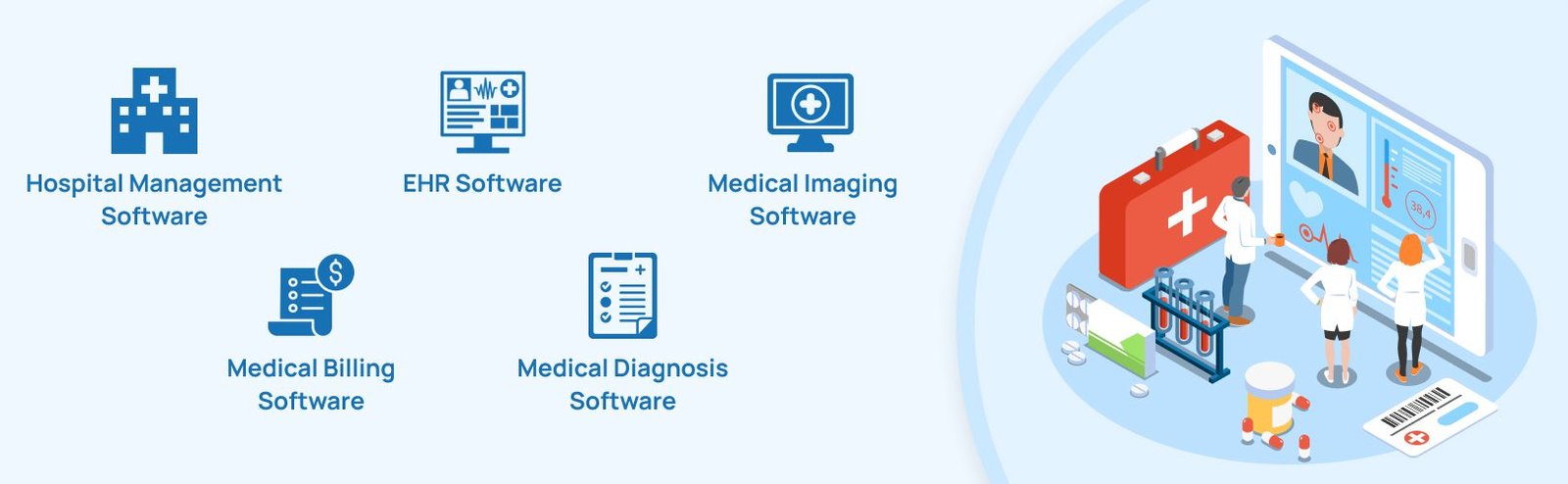
Before you dive into the world of custom-made and ready-made healthcare software, let us look at the different kinds of healthcare software that are used by a medical facility like a hospital:

healthcare software


Online Pharmacy Software

An Online Pharmacy/ePharmacy is an online platform for medical store owners, through which they can sell medicines online to their customers.

Hospital Management Software

This versatile software has many components like appointment management, patient management, supply management, facility management, insurance management, support management, etc.

Medicine Delivery Software

A medicine delivery software allows patients to order prescribed medicines online that will be delivered via the nearest pharmacy store.

EHR Software

EHR or Electronic Health Record serves as a patient’s medical history database. With comprehensive data available, medical services become more efficient.

Telemedicine Software

Telemedicine, a part of Telehealth, delivers healthcare using electronic information & technology and supports healthcare when distance separates the patients.

Medical Imaging Software

This software allows doctors to view, store, train, and share medical data and provide efficient treatment.

Doctor Appointment Booking Software

Doctor appointment booking software is specially developed to help patients to book, manage and schedule appointments with doctors or video consultations.

Medical Billing Software

This software is ideal for hospitals to prevent mistakes, enhance the patient experience, and provide an efficient interface to manage all the expenses within a facility.

Medical Lab Diagnosis Software

This is an AI-powered lab diagnosis software that can automate and interconnect medical diagnostic processes. It ensures that there is a low chance of error in the diagnostic results.

What are Custom Healthcare Software and Readymade Healthcare Software?

Custom Healthcare Software

Every health care facility is different. Each has a different approach to doing business and hence has unique requirements. Naturally, such a facility would want custom healthcare app development or software development to suit its needs. It is a personalized healthcare product designed according to the business’s needs. It is designed to easily adapt to existing business processes and launch new digital workflows with ease. It is not meant to be sold or distributed to other parties.

The different tools and features of such custom healthcare software are privately owned by the same company. With custom healthcare software development, features suited to the business are readily available. The healthcare business can easily target certain aspects, maximize efficiency, and exact the required output. It is a transparent application with no hidden functionality or costs, with an interface designed specifically for the client’s ease.

Ready-Made Healthcare Software

Readymade healthcare software is generic. It is built by large healthcare software development companies that cater to entire industries and different businesses.
Readymade healthcare software is suitable for a whole range of businesses. Hence it has a larger host of functionalities to serve the needs of different types of users. It is designed for commercial sale. It has easy configurations that allow it to be integrated into existing systems without hassles.

It has a lot of features, some of which may be useful and some of which might not be. It can also have hidden costs and features irrelevant to the business buying such software. Its features cater to the general need of a particular type of business rather than the specific needs of a business. Hence it cannot fully adapt to the needs of the business.

Benefits of Custom Made Healthcare Software

Let us look closely at the advantages of custom healthcare software development and readymade healthcare software.

Custom healthcare software advantages

  • Customization: Custom-made software has highly adapted features to your business processes.
  • Compatibility: Software designed to suit your needs is highly compatible with your business processes and workflows.
  • Autonomy: You can automate tasks, integrate processes and expand features in any way that works for you.
  • An advantage over competitors: With a higher level of personalization, you get a competitive advantage over other businesses.
  • Scalability: Your business is ever-changing and growing. Custom healthcare software that scales up with your growth is a great investment.
  • Economical and Effective: Custom-made healthcare software is much more economical than ready-made healthcare software. This is because businesses can use all the features without renewing their license yearly or buying new features as the business grows.
  • Better Security: It has a better security system than software openly available for sale. It ensures all your data, including patient and administrative data, are safe from prying eyes.
  • Compliance: Compliance is a sensitive issue that has to be handled with care. Custom-made software ensures that it is built and compliant with the rules and regulations under whose jurisdiction your business falls.

Benefits of Ready-made Healthcare Software

  • Readily available: There is no need to spend time developing software as it is readily available off the shelf.
  • Lower initial investment: Buying ready-made software solutions is cheaper than developing a custom-made one. It has free trial periods that let you decide whether the software suits your needs. It has flexible price ranges determined by the number of software users than the software itself.
  • Multi-Functional: A ready-made solution is meant for use by many people than a custom-made solution. This means you get a feature-rich product that can be used according to your specific needs.
  • User Friendly: It is designed to be highly user-friendly and meant for intuitive use. Since it cannot be explained to each new user, it is meant to be self-explanatory.
  • High Community Support: Since it is used by many people, dedicated communities provide invaluable support in the form of information and hacks to make it easier to use.
  • Maintenance and Support: Ready-made software gets automated updates throughout its usage. You can also avail of comprehensive support for your application without having to deploy your teams for it.

EMed HealthTech: Your Answer for all Healthcare Software Solutions

There are plenty of healthcare software service providers that design software for the needs of your business. However, finding a design company that tailors software to your needs can be a tough challenge. Whether ready or custom-made healthcare software, you need to hire software developers who can diligently understand your needs and apply them to the software.

Also, check out this blog What is the Importance Of Healthcare IT Solutions in Patient Care?

EMed HealthTech has been a leading player in the healthcare software development industry for almost a decade. We specialize as healthcare IT consultants providing expert service with our software solutions. Whether you are planning to hire healthcare app developers for custom or ready-made healthcare software, EMed HealthTech has done it all. With a long list of loyal clients, we focus on empowering our clients with healthcare software solutions that maximize business outcomes and improve user experience. Reach out to us today to get a free estimate.

Key Regulatory Compliance Standards That Healthcare Software Developers Should Know About

Key Regulatory Compliance Standards That Healthcare Software Developers Should Know About

Building healthcare software from scratch is no cakewalk. A lot of effort goes into ensuring the software works as planned and checks every box, from performance to compliance. However, this last bit is where many custom healthcare software development projects take stumble.

Healthcare regulatory and security compliance and regulations are matters that cannot be taken lightly. With authorities worldwide tightening up data security norms, the penalties for non-compliance are harsh, and companies at fault have to pay dearly. Earlier this year, a healthcare software provider was fined a whopping $1.5 million in fines to French data protection authorities. In the US, penalties for security violations by medical companies can cost up to $1.5 million.

In short, the devil is always in the details, and the nitty-gritty details in the regulations can land you in trouble.

Therefore, if you are planning on healthcare software or healthcare app development,

This article will give you an idea of what compliances and regulations are, why they are implemented, and the different regulations you should be aware of.

What are Regulatory Compliances for Healthcare Products?

As in every industry, the healthcare industry is also ruled by certain regulations that determine what is legal and illegal. These are designed with everyone’s best interest at heart, and not complying can come with hefty penalties. There are issues like privacy and data security, and safety and care for the patient that these regulations try to address. If healthcare software does not follow these regulations, it can invite large amounts of fines and disciplinary action from the government.

Every country has certain regulations the healthcare industry needs to follow while implementing healthcare software solutions. Some of the major regulations are given below.

  1. Health Insurance Portability and Accountability Act (HIPAA) -USA
  2. The Federal Food, Medicine, and Cosmetic Act-(FFDCA)-USA
  3. Food and Medicine Administration (FDA) -USA
  4. Health Information Technology for Economic and Clinical Health Act (HITECH) -USA
  5. Office of the Australian Information Commissioner (OAIC) – Australia
  6. Personal Information Protection and Electronic Documents Act (PIPEDA) -Canada
  7. General Data Protection Regulation (GDPR) — The European Union -European Union

Complying to these depending upon where your healthcare service is focused is crucial. Let us look at some of the reasons why regulations and compliances need to be followed.


Why Is It Essential to Follow Regulatory Compliance in Healthcare Software and App Development?

Privacy & Data Security

Regarding healthcare software development, the primary concern that regulations take care of is privacy and data security.
The digital world is constantly threatened with cyber attacks, and, naturally, there are potential threats to healthcare solutions too. The sensitive data that people share with healthcare providers are stored digitally. This software often uses cloud computing technology to function. All of these cyber spaces are prone to attacks and data theft.
This threat also makes people more reluctant to use software solutions, making everything much easier. It is a hurdle healthcare providers have to overcome. Thankfully, governments are issuing strict regulations that protect patient health information(PHI).

Patient-Centric Care

These regulations are not only about data protection but part of an overall effort to make healthcare more patient-centric. With these regulations in place, the healthcare IT service provider has to put the patient’s needs first and give utmost care to not let any slip-ups happen. It also curbs fraudulent practices within the healthcare system, ensuring no patient is taken advantage of by the big industry. In connection to the previous point, data protection protects the patient from potential emotional harm a data or identity theft can cause them.

Avoid Fines and financial losses

The price to pay for not complying with government regulations can be sometimes too high. It is rightly so as it is not a small thing to overlook. Fines as high as $1.5 million can be incurred if the healthcare software used does not comply with the regulations of the place.

A healthcare service provider can also incur heavy losses if these protective measures are not adhered to. Data breaches, holding data for ransom, etc are ways in which healthcare providers can be ensnared in the cyber traps.

Regulatory Approval

It goes without saying that you cannot get your software product to work in the public sector without the seal of approval from these regulatory bodies. Moving forward without gaining a certificate of compliance is impossible. Only in the case of updated regulations can the above problems come into existence.
These are some of the compliance reasons. Let us look at some of the healthcare standards you should be aware of before you hire healthcare software developers.

Regulatory Compliances for Healthtech Products in Different Countries

Countless regulations ensure compliance in the healthcare industry. Instead of it being a deterrent, it ensures better services and benefits for all involved. Some of the major ones are:

FFDCA – USA

The Federal Food, Medicine, and Cosmetic Act govern medical devices, under which healthcare software falls, pharmaceuticals, and more. To get FFDCA compliance, one has to first comply with several other approvals like the PMA (Pre-Market Approval), Pre-Cert Program (Digital Health Software Pre-Certification Program), SaMD (Software as a Medical Device), and the LDT (Laboratory Developed Test).

HIPAA – USA

The Health Insurance Portability and Accountability Act of 1996 defines the rules ones needs to follow if one intends to collect, store and exchange personal data from a customer. Healthcare facilities that do not comply with this can bring legal action against them.

If your software is related to PHI (protected health information), EMRs (electronic medical records), or EHR (electronic health records), then you need to comply with the HIPAA requirements.

HITECH Act – USA

The HITECH (Health Information Technology for Economic and Clinical) Act came into place to promote the adoption and meaningful use of health information technology. It enforces healthcare providers to comply with HIPAA regulations.

Food and Medicine Administration (FDA)

Every software application or standalone device meant for mass public use must first undergo the rigorous scrutiny of the FDA under the United States Department of Health and Human Services. FDA assesses the software for compliance and regulations and only then approves its use and distribution among the public.

OAIC – Australia

Regulations pertaining to the use and distribution of software and healthcare technology are administered by the OAIC or Office of the Australian Information Commissioner. It defines how the personal information from patients is collected, stored, and disclosed. It also gives patients full control over sensitive data. Healthcare providers must give them complete network security and immediate reports in case of data breaches.

PIPEDA – Canada

Personal Information Protection and Electronic Documents Act, 2000 (PIPEDA) governs the rules for personal information handled by businesses for commercial activity. It is similar to HIPAA, however, it provides additional data protection in medical apps. It can fine up to $100,000 for each case of violation.

General Data Protection Regulation (GDPR) — The European Union

This is generally applicable inside the European Union. Compared to other regulatory bodies, GDPR widens what falls under sensitive data, including biometric data, genetic data, IP addresses, and data on racial and ethnic origin and religion. Individuals can withdraw their consent at any time.

Conclusion

Compliances and Regulations in custom healthcare app development must be carefully considered before the final product is rolled out. It is better to be aware of and implement the regulations than to suffer financial losses and government legal action. Before you decide to hire healthcare app developers, you must check whether they have a history of non-compliance or legal action being taken against them.

Also, check out this blog A Guide to Custom Healthcare Software Development.

It is better to hire an experienced team that can provide the best custom healthcare services and solutions with all the necessary compliances than to clean up after the mess of an inexperienced team. EMed HealthTech is your best bet if you want to create a system that adheres to all regulations. We provide the best service to our clients with compliance followed to the dot and constant updates on all changing regulations. Reach out to us today to book an appointment with us at EMed HealthTech.

How to Find and Hire Healthcare App Developers

Top 5 Tips to Hire the Right Healthcare App Developers

Healthcare applications and healthcare software are slowly but surely becoming an essential part of the modern healthcare system. From mobile devices to wearables that track vitals, they are being fed with metrics that analyze and provide accurate feedback. These are linked to healthcare software and healthcare app development that give users information on their general well-being.

The usage of healthcare apps that are linked to the mobile phone or wearables also called health apps in the past year has seen a spike since the onset COVID pandemic in 2020. A worldwide spike of 65% was noted in the download of healthcare apps according to Statista. However, this is not a one-time event as the healthcare apps market had a massive five-fold increase from $21billion in 2016 to $100 billion in 2021. This estimate will go up to $189 billion by the year 2025.

With surging demand for healthcare applications and software, businesses are striving every day to improve on existing apps and get a foothold in the already vast market.

With the demand for healthcare apps and software rising, there comes an equal demand for healthcare software developers to create such apps. But, it can be difficult to find the right developers from a sea of candidates.

In this blog, we offer some insights on what you should keep in mind while hiring a software developer.


healthcare-software-development-team


1. Outsource to a third-party healthtech team or hire your healthcare developer team.

The matter of whether the team has to be outsourced or employed in-house has its own sets of advantages and disadvantages. Let’s look at them.

     Outsourcing – Outsourcing is advantageous as it lessens the expenditure by a large portion compared to in-house employees. There is no process like hiring, training, onboarding, or training to be part of the company. You can also pick a team from virtually anywhere. This gives a huge talent pool at your disposal.

The disadvantage of outsourcing is that there could be issues of time zone differences and language barriers. This could diminish the quality of the communication and hence affect the outcome.

     Hiring in-house healthtech employees– The advantage of an in-house team is that there is stronger communication of your ideas, expectations, and feedback on the project. The in-house team would also give you undivided attention compared to outsourced staff. It also negates the disadvantages that outsourcing has in terms of barriers of language and time.

The disadvantage of hiring in-house healthtech employees is that the costs of hiring, employing, and providing the technological infrastructure can be exorbitant. You would also have to hire from local talent which would cut down your chances of finding that perfect fit.


2. Where can you find healthcare software developers?

Here are a few places you can start your search for software developers for a healthcare app.

Job platforms like Upwork and Freelancer have a large pool of talent that is actively looking for job opportunities.

Software Development companies that specialize in healthcare applications. You can find them on ratings and reviews platforms. A thorough look at their previous works can help you understand their mettle and performance. Platforms like Clutch, Madeline, and GoodFirms are good places to start looking.

3. Check portfolios for healthtech projects

Another important aspect to keep in mind while hiring a development team for a healthcare app is to look for a strong portfolio with previous work experience in the healthcare app industry. Since there are a lot of compliance and regulation issues to take care of while developing healthcare apps, a prior experience in the niche is always a plus.

4. What to look for in a healthcare software developer?

The size and scale of your project would put you in a position where you cannot take many risks. It is an absolute must that you do a thorough skill check before hiring a candidate, whether they are outsourced or employed in-house.

Some of the hard skills a candidate should have can be summed up in the given list.

  1. Interoperability in Healthcare with integration standards no less than Health level-7.2.x. It would be a plus to know standards such as ANSI X12n 5010, NCPDP SCRIPT, DICOM, and HL7 v3 CDA.
  2. Well-versed in semantic vocabularies such as ICD9/10, RxNorm, LOINC, and SNOMED-CT among others.
  3. Knowledge of Integration frameworks like HITSP or Healthcare Information Technology Standards Panel and IHE or Integrated Healthcare Enterprise.

The candidate should also have technical skills such as:

  1. Knowledge of Big data AI to leverage the existing healthcare data from EHRs and insurance companies.
  2. Well-versed in cybersecurity measures, knowledge of libraries, secure coding practices, and strong encryption tools.
  3. Ability to use third-party integrations to optimize and streamline workflows. This requires knowledge of integration standards such as the HL7 FHIR, REST, and SOAP frameworks.

The next most required skill is the knowledge of domain concepts. Some of them include:

  1. Knowledge of regulatory aspects like HIPAA, FDA, ARRA HITECH, CCHIT, etc, depending on the jurisdiction under which the application is.
  2. Well-versed in operating revenue cycle workflows.

The candidate must also be screened for soft skills such as:

  1. Ability to work in teams and strategize according to the need of the healthcare project.
  2. Interpersonal skills of healthcare technologies.
  3. Knowledge of the usability and applicability of healthcare IT solutions.


Ready to Hire a Healthcare Software Development Team?

Before you hire healthcare app developers from a healthcare IT solutions company, it is prudent to have a thorough check on the previous projects they have worked on. This is the ultimate litmus test for an IT solutions company. The final product speaks volumes about their services. It is also necessary to check if your business needs are compatible with the services the IT company offers.

With that, we’ve rounded up some of the most critical things to consider when hiring a healthcare app development company. If you’re on the lookout for a reliable healthcare app developer, EMed HealthTech ticks off all the boxes.

When you hire EMed HealthTech as your healthcare software developer, you are investing in a strong team that is well-versed in all the relevant aspects of software development mentioned above. You also have the option to choose from remote dedicated healthcare developers, offshore healthcare development teams, or onsite healthcare app developers. Our previous healthcare IT projects are available in our portfolio, which speaks for itself.

To know more about hiring healthcare app developers, contact us today or simply fill out our online contact form and our expert team members will get in touch with you.

Top 5 Reasons to Develop A Telemedicine App

Top 10 Reasons to Develop a Telemedicine App

The concept of telemedicine apps has been around for a long time. The COVID pandemic forced us to resort to telemedicine out of the restrictions imposed on movement. It has highlighted the need to integrate a functional telemedicine system that runs alongside regular healthcare.

Connecting patients and healthcare providers via technology are being increasingly implemented worldwide post COVID. The onset of COVID also warmed up the users to the benefits of telemedicine. Post-COVID, there has been a stark increase in the number of virtual consultations via doctor appointment booking apps. Studies show that there has been a triple increase in the investment made to telemedicine in 2020 than it had in 2017.

It is an area that has the potential to change the way we see medical care. Here is all you need to know about telemedicine, its implementation via telemedicine app, why you should invest in it, and the challenges faced in the process.

What is a Telemedicine App?

telemedicine

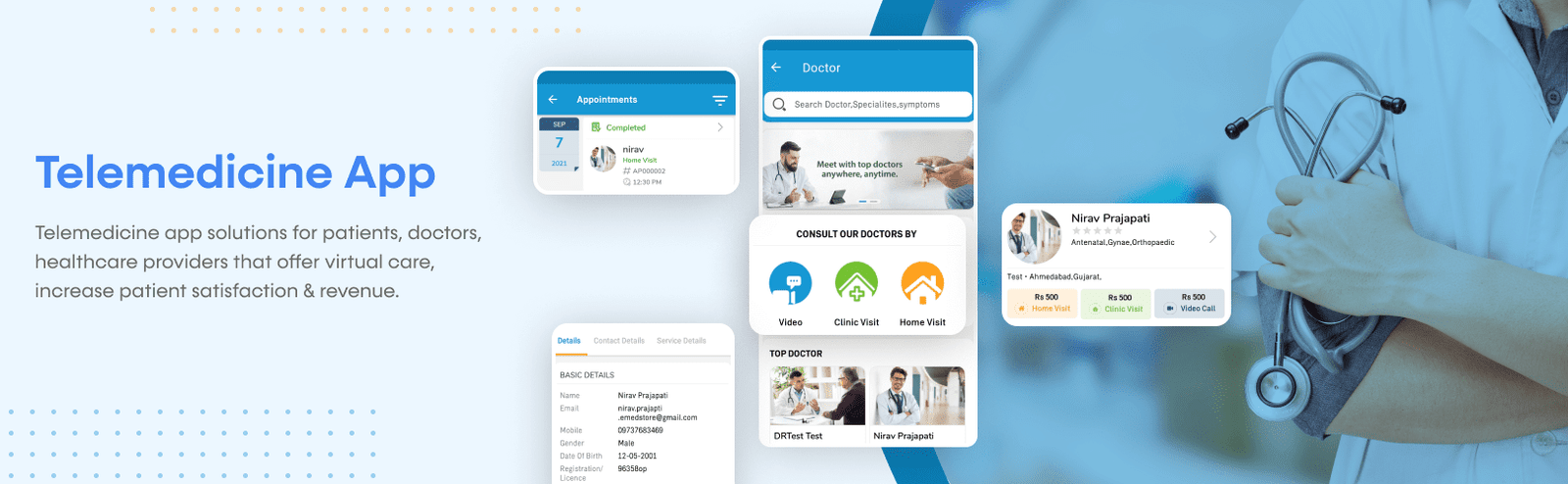
A telemedicine app is a software that functions as a platform to avail various healthcare services. It serves the patients to determine the nature of their ailment, find the apt healthcare provider, and provide virtual consultation, and follow-ups. It is also an avenue to cater to pharmaceutical needs, and avail services of testing and lab facilities.

Telemedicine apps also provide the platform for healthcare providers to connect to patients, organize data and schedules, manage visits, and more.

It is a holistic platform that has a wide range of functions. When developed properly, telemedicine software can create the ideal network of healthcare providers and patients. The healthcare industry is adopting this technology to enmesh its services with the needs of the day.

If COVID showed us telemedicine was indispensable, we are making a stronger case for it. Here are some very compelling reasons why you should be investing in a telemedicine app today

1. Better access to healthcare: Healthcare has often been inaccessible to people who live in rural areas. Sometimes a specialist we need is not available in a country. This challenge of distance and access is neutralized when there is a virtual set-up that enables the meeting of people from whichever corner of the world.

2. Maintain social distance: This is the first and foremost reason telemedicine was popular during the COVID pandemic. It serves the purpose later too, as contagious diseases will spread less when more and more people opt for virtual consultations.

3. Steady care for chronic health issues: Patients who battle chronic illnesses like diabetes, heart diseases, or lifestyle diseases need not travel to the doctor for every consultation. A virtual care system enables the patient to stay in the comfort of their home.

4. Reduces patient waiting time: Access to healthcare is hindered majorly by waiting time. The availability of doctors in a particular area, the number of patients seeking the same doctor, and the lack of a proper system in place contribute to the cause of the patient.

5. Lower treatment costs: The cost of the treatment is seen to be significantly lower when it comes to virtual care. This applies to both the hospital and the patient. The hospital could save up to $24 per patient and the patient saved an average of $50 in travel expenses, a study showed.

6. Gain an edge over competitors: The telemedicine system allows healthcare providers to have an advantage over their competitors who have not adopted the technology. It also gives them access to patients who would choose a remote consultation over being physically present for one.

7. Save infrastructure costs: The first advantage of a virtual care system is to be free of infrastructure costs. Compared to the hefty architectural investment required, a telemedicine app development costs significantly less. This automatically makes healthcare more affordable.

8. Balances the doctor-patient ratio: One of the biggest advantages of telemedicine is how it negates geographical barriers to bringing services to customers. While a particular place may be constrained due to the lack of doctors in proportion to patients, another place may have an abundance.

9. Access to healthcare during epidemics/disasters: Telemedicine proved to be the best option to cater to the healthcare industry during the COVID pandemic. If this proves anything, it is that telemedicine is the most effective form of providing medical service during times of such crisis.

10. The advantage of technology: A telemedicine system puts the doctor and patient in a position where they can use technology to their benefit. For example, the doctor can refer to biometric readings taken from wearable techs to monitor the health of the patient.

To know more about how to develop telemedicine apps check out this link.

Telemedicine App Development Challenges

The world of telemedicine is a sophisticated one that focuses on making accessibility easier. However, it is not one without challenges. It has its unique challenges. Here are some of them.

features-telemedicine

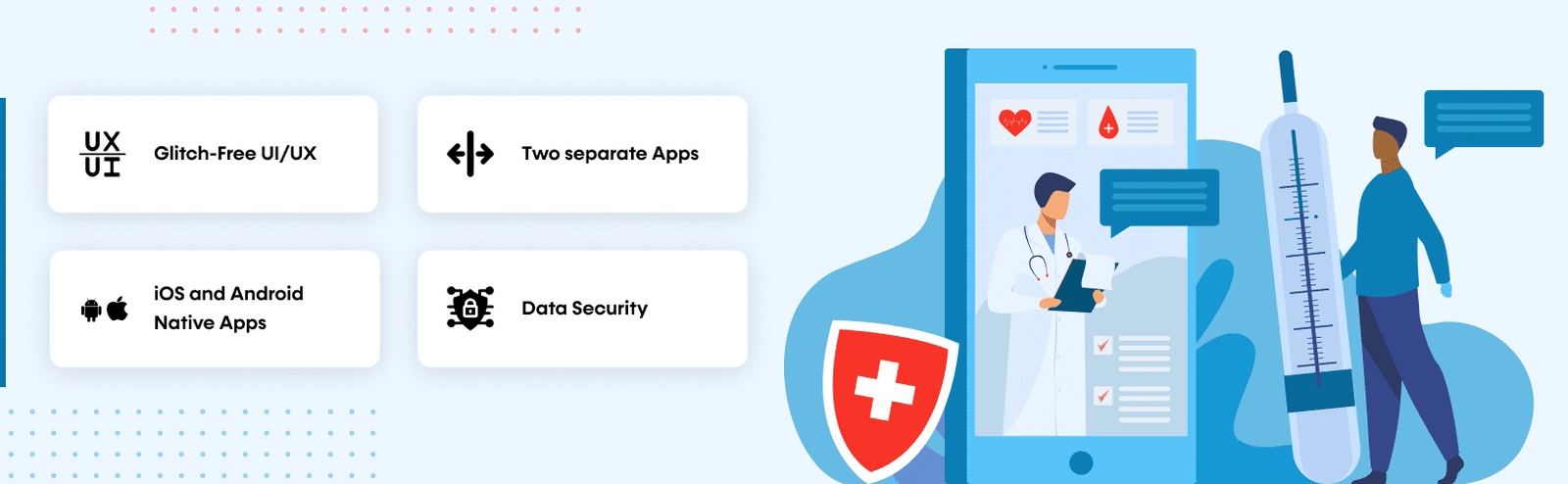
1. Glitch-free UI/UX: The healthcare industry has no room for error as it could prove even fatal. A telemedicine app has to remain glitch-free and very user-friendly. The patient and the doctor must be able to navigate the app with the least difficulty.

2. Two separate apps: A telemedicine app has two significant users – the doctors and the patients. Both users have different apps. These call for two separate fronts that are integrated seamlessly.

3. iOS and Android Native Apps: Telemedicine apps must be designed to be compatible with iOS and Android OSes. This requires a larger development team.

4. Data Security: The data shared via a telemedicine app is sensitive and confidential. It requires high-level security from being leaked by hackers.

Take Advantage of High-Quality Telemedicine App Development

Creating a telemedicine app has its benefits and small challenges. But in the end, it benefits all. It creates a world of equal access and opportunity. If you are convinced that you need to create an impeccably designed telemedicine app, look no further than EMed HealthTech.

At EMed HealthTech, we deliver quality healthcare software services and solutions to all your needs, garnering the trust of the healthcare industry. Choose EMed HealthTech for your telemedicine app development services. Reach out to us today for a custom quote.


Online Pharmacy Service Benefits of Building Your Online Pharmacy

Online Pharmacy Service: Benefits of Building Pharmacy App & Website

Online Pharmacy Service: Benefits of Building Your Online Pharmacy App & Website

The pandemic has forced almost all services to find a presence or migrate permanently to the online space to ensure their survival. While becoming a preferred way for customers to shop, it is also profitable for sellers. This is true for businesses in many sectors, including healthcare. Online pharmacies are on the rise and proving to be a financially lucrative model for healthcare companies. A recent market study estimates that online pharmacies will generate a revenue of around USD 210.35 Billion by 2028.

If you’re thinking about building an online pharmacy app, this article is just for you. Read on to learn more about the potential of online pharmacy apps, their applications, and their development.


Why Do Pharmacies Need an App?

With the global pandemic shifting consumer patterns, a large source of pharmaceutical revenue has shifted to an online presence. However, with the potential to integrate more than just a medicine delivery system, online pharmacy services are competing to create a personalized user experience.

With an application online, a pharmacy can potentially integrate a lot of creative aspects into it, thus increasing sales and retaining customers. Some of them are:

  1. Give detailed information on the medicine order, its side effects, and dosage.
  2. Online consultation with specialized doctors.
  3. Personalized sessions with certified pharmacists.
  4. Technical solutions to find alternatives to the medicine order.
  5. Personalized setting to remind daily medicine intake.
  6. Alerts when incompatible medicines are bought together.
  7. Customized plans for continued purchases.

Bringing in these features and more innovative ideas are winning over more customers and bolting pharmacies to top positions in the market. These are proof enough that the pharmaceutical industry stands to gain from the online market.

Benefits of Having a Pharmacy App/Website

Here is a quick look at some of the perks of having an online application and/or website for your pharmacy.

  1. Low initial investments: An online presence means you can cut down on offline expenses like rent for the premises. It can also be run on minimal staff. The initial costs will however include developing a functional application.
  2. Low Risk, faster turnover: The risk associated with an online pharmacy is low compared to an offline pharmacy. You can also convert your physical space into a storage facility and use it to run a larger online presence.
  3. Consistent sales and customer retention: Unlike your brick-and-mortar pharmacy, your e-pharmacy is available 24×7. It caters to an extremely larger crowd than your physical pharmacy can afford. Hence you can expect, of course, decent marketing, and a steady and consistent sale. With personalized discounts and packages, you can also make sure you have higher customer retention.

Now, let’s talk about how to build a SaaS ePharmacy software, its features, and possible rewards for business owners.


How To Start An Online Pharmacy?

One cannot emphasize enough the importance of a customer-friendly user interface when it comes to online pharmacy app development. In other words, the app should be easy enough for even less tech-savvy customers to navigate and use.

Before you add various features to your app or website, it is important to have an idea of the basic flow of the ordering and delivery process. Here’s a checklist to follow:

  1. Searchbar – to find the medicine or its alternative
  2. Verification – the app/website can verify medicine order if necessary
  3. Cart – A cart is prepared to add medicines before checkout
  4. Order placement – users can order the products and choose the ideal shipping option.
  5. Payment gateway – a secure payment method featuring all payment methods.

The Core Features of an Online Pharmacy App

The core features of the application or website should cover all of the above processes and more. Here is a detailed look at the various core features that should feature in your website to make it functional.

  1. Exhaustive product catalog

Your online application should feature an exhaustive list of all your products, their availability, and details. This allows the customer to choose from similar products based on price or discounts. They can also track medicines that are out of stock, track orders, and make payments through trusted portals.

     2. Loyalty programs for regulars

A loyalty program or a discount card functions much the same way online as it is offline. But the chances of it being redeemed are higher in an online facility. Such options make sure customers come back again.

     3. Smart detections and QR scanning

It is easier for customers to simply scan the QR of a particular product or take a picture to check availability. Such systems help the customer find the medicine or its closest alternative.

    4. Customized deals and discounts

With a good marketing strategy, your online pharmacy can give customized deals and discounts to customers to increase customer retention. Special packages can be developed that take into account subscription model purchases.

     5. Feedback and testimonials

Genuine feedback can help improve customer service. Reviews and testimonials improve sales and increase the level of trust. Having a dedicated feedback section ensures building a relationship with the customer.

     6. Online Assistance

If the customer is unable to make a decision, there must be assistance provided on-site to guide them. A certified pharmacist can help customers make the right decision regarding choosing medicines.

      7. Connecting to offline stores

Linking your customers to your offline stores to redeem benefits will increase your customer retention at both online and offline stores. Having automatic location detection and clear instructions to reach your offline facility ensures you have a steady inflow of customers.


Final Thought

Like any industry that has created an online presence, the pharmacy stands to benefit too. It is a long-term investment and one that is going to cost you much less than you would anticipate in running a full-fledged offline store. The major expenses that you are bound to face are the ones required for web developing or application development. Once that is out of the way you can easily run your business without any hassles.

If you’re planning to build a medicine delivery app to expand your business, this is an opportune time to do it. Consult our team of online pharmacy app development experts to get started today!

featured image

Medicine Delivery App Development Guide for Online Pharmacies

The pandemic has driven healthcare systems and pharmacy retailers worldwide to embrace digitization. Medicine delivery apps have been a massive game-changer amidst the crisis, enabling consumers to get their medicines and pharmacy products delivered to their doorsteps while their lives were restricted indoors. Since then, these apps have grown in popularity as consumers get accustomed to buying medications online rather than from traditional brick-and-mortar stores. 

If you are in the pharmacy business and looking to shift to an e-commerce platform, this guide is for you. But before we dive into how you can start your medicine delivery app development from scratch, let’s look at some of the hottest trends for online pharmacies.  


E-Pharmacy Trends

Trends in the online medicine market indicate that:

  1. Online medical services may cross over USD 300 billion by 2025
  2. E-pharmacies are expected to show seven times growth to reach $3.7 billion by 2022
  3. The global pharmaceutical medicine delivery market is expected to grow at a CAGR of 6.4% to reach $1.7 trillion by 2023


Top Benefits of Medicine Delivery Apps

Consumers often prefer medicine delivery apps due to the ease of use, wherein they can order medicines online with just a few clicks and have them delivered to their doorstep. Besides, there are advantages like privacy, no travel costs involved, easy check on medicine availability, and more competitive prices when buying online. 

For pharmacy retailers, the advantages that medicine delivery apps provide are:

  1. Improved customer base
  2. Improved brand building
  3. Enhanced marketing options
  4. Higher revenue generation
  5. Easy and secured payment


Popular Business Models of Medicine Delivery App

Single-Store Model: In this model, a single store or medical company develops a single integrated medicine delivery app and enlists all available medications. Users can easily browse through the medicines available, choose the required items, and place an order for delivery. You can sell medicines through this model if you own a single pharmacy store.

Aggregator Model: This model allows an investor or business owner to create an online pharmacy marketplace by collaborating with different pharmaceutical stores, enabling them to sell medicines through their mobile app. Customers get a wide range of options to purchase medicines from all enlisted stores.

Customer-Oriented model: In this model, you can create a direct connection with the customer without involving any middleman in the transaction. 


Key Features of Medicine Delivery App Development

As an experienced medicine delivery app developer, our team at EMed recommends a good medicine delivery app to have role-based user permissions. There should be four user roles – customer, pharmacist, admin, and courier delivery, with each role having a specific list of feature stacks. Let’s talk about them one by one. 

Medicine Delivery App Features for Customers:


feature-customer


  1. Registration and login – Customers need to be able to easily register and log in using a mobile number or email ID and password.
  2. User profiles – Customers should be able to manage their profiles, delivery addresses, payment details, etc.
  3. Medicine order upload – A medicine ordering app development should allow customers to upload pictures of their Medicine order and get them reviewed by a pharmacist.
  4. Search medicines – It should be easy to search for medicines through filters.
  5. Medicine Details – Before ordering, customers should be able to check the details of medicines, and manufacturers and compare prices. And also able to find generic alternatives to branded medicines. 


Medicine Delivery App Features for Pharmacy:


pharmacy-features

  1. Easy account set up – To enable quick, easy onboarding for pharmacies. 
  2. Store details – Pharmacy owner or manager should be able to add, change, and remove medication lists and information related to medication.
  3. Digital Medicine ordersPharmacists should be able to review uploaded digital medicine orders.
  4. Product management – To help the pharmacy owner manage and update product details.
  5. Order management: Pharmacists should be able to manage order processing and returns. 
  6. Category: Add & Manage product category and sub-category
  7. Manage payments – To receive payments directly and track all payment details in real-time.
  8. Import Products: Import Products in bulk for a specific category with the help of a sample xls file
  9. Discounts and offers – To provide discounts and offers on medications as part of marketing strategies.
  10. Order history – To give users access to the complete history of their past orders.
  11. Ratings and reviewsTo view and manage user reviews and ratings.


Medicine Delivery App Features for Admins:

admin-features


  1. Dashboard – Admins should be able to view and manage all ongoing orders, active pharmacists, customers, delivery personnel, and overall earnings on a single web view.
  2. Inventory – To help manage medicines inventory and notify on low stocks and expiry dates.
  3. Manage customers and suppliers – To manage registered customers, suppliers, and manufacturers.
  4. Manage Store: Super admin can enable/disable/delete the listed pharmacy stores.
  5. Assign order based on location: Super admin can view the customer orders and the orders will be assigned to the nearest store from the delivery location.
  6. Analytics and reports – Admins should be able to check all operational data and statistics to create reports on business workflow.
  7. Marketing actions – To take marketing activities based on analytics and reports to attract customers and increase business.
  8. Payment collections – To keep track of weekly, monthly, and yearly earnings.


Medicine Delivery App Features for In-house Courier:

in-house


  1. Manage Profile
  2. Set Status of Package Delivery Progress
  3. Order Notification in Real-time
  4. Track Delivery Route
  5. Call or Text Customers for delivery coordination


Cost to Develop an Online Pharmacy App

Now that you’ve decided on medicine delivery app development, the model type, and features to be integrated, it is time to consider how much the app will cost. 

The cost of developing a pharmacy app depends on the following factors:

  1. Number of dashboards and features in each dashboard
  2. Hourly rates of the medicine delivery app development company
  3. Number of platforms (iOS, Android)
  4. UI/UX design
  5. App maintenance cost
  6. Back-end integration and testing


Medicine Delivery App SDLC

The software development life cycle (SDLC) of our medicine delivery application is as follows:

  1. Analysis – Our expert team will analyze user requirements and use them to prepare technical documentation
  2. UI/UX Design – The next stage is developing the interaction between design elements and finalizing the UI/UX of the app.
  3. Development – Once the app design is ready, the front-end and back-end coding are integrated to create a fully functional app.
  4. Testing – The app is tested to check the key areas like usability, security, interface, etc.
  5. Deployment – After thorough testing and re-testing, the app is deployed to the server using FTP, and subsequently final test is performed.
  6. Maintenance – Once the app is published, we provide maintenance and support to ensure smooth, bug-free operation. 

 To know more about Medicine Delivery App Development: How Your Pharmacy Can Sell Online? check this out.

Frequently Asked Questions

  1. What platforms can you work on?

 We work on the most popular app development platforms like Android and iOS. 

  1. How much does it cost to develop an app?

According to our estimates, a basic medicine delivery app may cost anywhere between $25,000 and $40,000, while the ones with more advanced features can cost as high as $40,000-$70,000. 

  1. Why should I hire EMed Healthtech for developing my medicine delivery app?

EMed Healthtech is a leading medicine delivery app development company with years of deep industry experience and proven expertise in building precise apps based on the client’s needs. We have custom and cost-effective app development solutions for start-ups and established businesses. 

If you want to explore building a medicine delivery app with us or simply wish to learn more about our app development services, get in touch with us today!

Medicine Delivery App Development How Your Pharmacy Can Sell Online

Medicine Delivery App Development: How Your Pharmacy Can Sell Online?

The competition in the healthcare sector is intensifying day by day. If you are running a pharmacy business and wish to expand it further, you first need to devise a solid strategy to make your business stand out and attract more business. 

Online pharmacy apps and medicine delivery apps are among the top trends in B2C and B2B healthcare segments, creating colossal business potential and widening reach for pharmacy businesses. 


The Role of Medicine Delivery App Development Today

Hopping from store to store to find medicine order medicines is not something today’s consumers prefer to do anymore. With telemedicine spreading as an efficient and affordable way to access quality healthcare and medication from the comfort of their homes, people are increasingly warming up to medicine ordering apps and online pharmacies.

Pharmacy businesses have also gone to great lengths to make the ordering process as simple as possible for their customers. People can easily browse through all the different categories of medicines and add the ones they need into the cart. Then they need to add the delivery address and choose the payment method, and they will receive the medicines right at their doorstep.

Pharmacy businesses can attract and retain a larger customer base by offering medicine delivery services. Medicine delivery apps are a lifesaver for people who want to avoid long queues at their local pharmacy. This is especially true for elderly patients suffering from various health complications.


Top Reasons for the Popularity of Medicine Delivery Apps

SaaS pharmacy software or Online pharmacy apps have been enjoying widespread popularity over the last couple of years. In 2020, the coronavirus pandemic forced people inside their homes, generating an almost 60-70% rise in consumers buying their medicines online. This trend urged more and more pharmacy companies to launch their own apps to serve the market demands and grow their business. 

Here are some reasons why medicine delivery apps are so popular:

Quick ordering process: Ordering medicines on an online pharmacy app is super easy as you only need to search for the prescribed drugs, add them to your cart, and confirm your order. And you can do all this in just a few clicks!

No traveling needed: You don’t need to step out of your house or hop from one store to another when using a medicine delivery app. Your order will be delivered to your doorstep by the pharmacy. 

Numerous discounts: Apart from saving on travel expenses, you can also get heavy discounts on your orders. Pharmacy companies often provide medicines at a competitive price to attract more buyers to their online stores.

Access to detailed information: You can access all the information regarding a specific medicine prior to buying it right from the app. You can check all the details from the ingredients to benefits and probable side effects.

Instant notifications: Medicine delivery app development companies offer instant push notifications to keep users informed of orders, restocking of particular medicines, discounts, and so on. 


The Main User Roles and Features in an Online Pharmacy App 

Before you dive into the medicine delivery app development process, it’s essential to decide on the features you want to include in your application. Usually, such apps consist of three separate panels – the customer app, the pharmacist panel, and the admin panel. Below are some key features that you can include to make your app stand out from the rest.

The main features of the customer app:

  • Intuitive UI – An easy-to-use app interface can boost user engagement and satisfaction.
  • Quick search – Easy search features to allow customers to find the medicine they are looking for.
  • medicine order upload – Directly upload a picture of your medicine order from your phone gallery.
  • View order history – View past orders in just a few clicks and reorder the required medicines.
  • Customer wallet feature – Enable customers to make quicker payments and process faster returns through the customer wallet option.
  • Alternative medicine search – Easily identify the substitute medicines with the same composition as those you are searching for.


Key features for the pharmacist panel:

  • Product catalog management – Divide the available medicines into different categories to make finding the right medicine easier.
  • Information management – Add and update the details for all the available medicines.
  • View orders – View orders and accept or decline them depending on availability.
  • Real-time chat – Instantly address customer queries with the in-app chat feature.
  • Report generation – Generate sales reports in just a few clicks.


The main features of the admin panel:

  • Order management – View, manage and track all orders from the admin dashboard
  • Returns and refund management – Accept return requests and process refunds directly into the customer’s wallet or bank account.
  • Targeted discounts – Provide targeted discounts to customers based on their browsing history and past orders.
  • Reports and analytics – Generate reports instantly from the app.


Five Ways an Online Pharmacy App Can Help You Sell More Online 

If you are looking to boost your sales figures, here are a few reasons why launching an online pharmacy app can benefit your business.

  1. Provides a competitive edge: Launching an intuitive and efficient app can help your business stand out from the rest of your competitors. Moreover, you can sell your products at a competitive price by offering discounts to attract more customers to your brand.
  2. Showcase products effectively: A mobile app makes it easier for pharmacy businesses to showcase their entire range of products to potential customers. Moreover, customers can also gain access to all the necessary information about the product before purchasing.
  3. Better customer experience: When you build a fast and efficient app that customers can use without any hassles, they will be more inclined to stick to it. Be sure to include a range of practical features to ensure a positive customer experience. This will help you boost the online sales value.
  4. Boosts brand loyalty: The only way to increase brand loyalty and develop a solid customer base is by providing them with the services they need efficiently. And a mobile app can help you achieve just that. When you provide a positive shopping and delivery experience, customers would also opt to use your app for future orders.
  5. More efficient marketing: You can use your medicine delivery app to implement a strategic marketing plan. Since people spend a considerable part of their time using their smartphones, your customers are more likely to view promotions and deals that appear in the form of app notifications.

Check out the guide for Medicine App Delivery Development

If you haven’t yet planned how to launch a medicine delivery app, now is the time to take the plunge. At EMed HealthTech, we offer exceptional online pharmacy app development services to help boost your business revenue. Reach out to our expert team with your requirements today!