How To Build the Best App For Online Doctor Consultation

How to Build the Best Healthcare App for Online Doctor Consultation?

The healthcare sector has lately experienced rapid developments, thanks to the recent pandemic. With this boost, patients from all demographics have begun adopting digital technologies for personal healthcare. This evolution in the market has revealed the power of Telemedicine and online doctor consultation apps to the masses. After all, when apparel, groceries, and household items can be viewed or ordered online, why not healthcare services?

However, like most other rapidly growing digital industries, only the best would survive in healthcare as well. In this piece, we explain how you can get the best digital application for doctor appointment booking built for your healthcare business and solidify your space in the market!

Understanding the Need for Online Doctor Consultation App

Online consultations are not a recent phenomenon – businesses have been taking advantage of the internet for decades. However, healthcare was a sector that lagged behind. The average consumer is used to one-click services and doorstep delivery these days. 

While most, if not all healthcare businesses are online, the ones winning the game focus on the quality of user experience! Realizing that people value easy access to timely and high-quality consultations is the key to success in the digital healthcare space. 

Doctor Appointment Booking App For Patients 

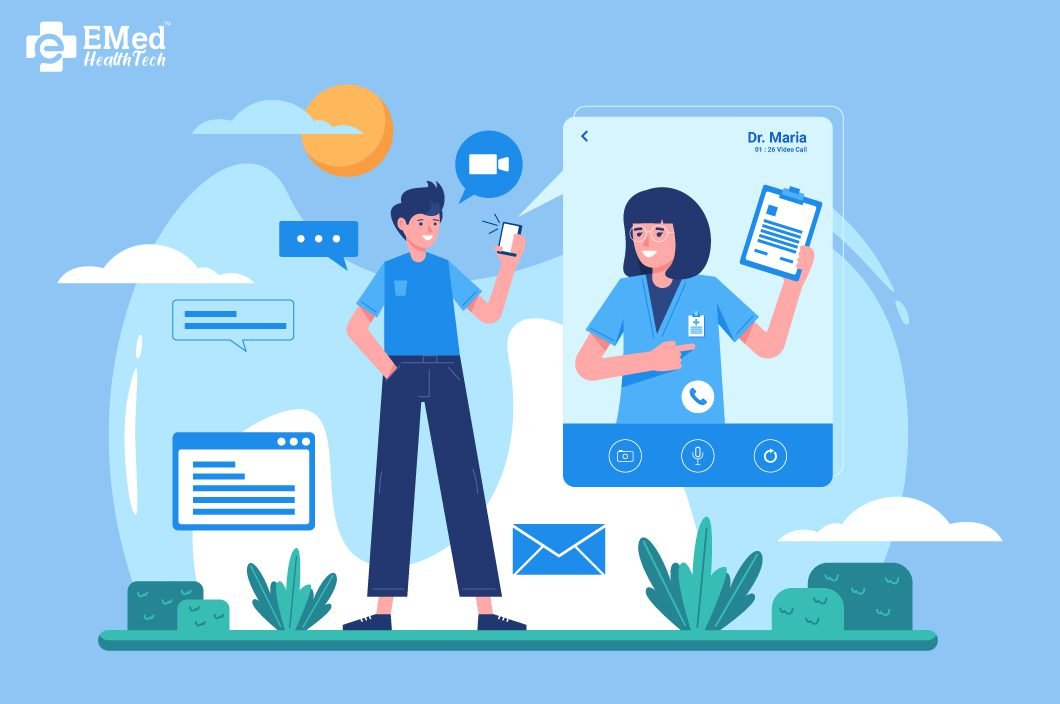
The foremost feature that an online doctor consultation app/Telemedicine app requires is peer-to-peer video calling, regardless of the device. This is especially beneficial for the elderly and patients suffering from critical conditions. If the patient can set and engage in a video consultation with ease, there is nothing like it. 

With a smooth-flowing interface on a doctor consultation app, patients would not just be able to book an appointment, but also follow up and see their medicine orders on their smartphones, laptops, or tablets. 

Doctor App For Healthcare Professionals

Features like group calls, screen sharing, and real-time chat let doctors connect with each other for virtual discussions. Group calls are a great way to hold online meetings with stakeholders and peers. Text chats, on the other hand, let doctors talk to their patients one on one for better clarity on both sides. Secure lines of chat communication instill confidence in the patients’ minds and help doctors do their job better. 

An additional screen-sharing feature would help doctors connect with pharma representatives from their devices and see their offerings on new medications. 

Doctor App For Healthcare Companies

Besides the usual data-sharing routine, in-house applications can do a lot for your business. If you are a doctor, hospital, or pharmacy, doctor consultation app development can be a complete game-changer for your enterprise. Bespoke development would allow multiple features integrated into the app according to your preference. 

Share your files with the group or even third parties directly through the app – no need for other file-sharing applications. Say goodbye to the risk of data theft or unauthorized access! 


How Does the Telemedicine/Doctor Consultation App Work? 

Pandemic or not, digital healthcare is the need of the hour! Digital healthcare is beneficial to every healthcare user. As more and more people interact with this technology, they would no longer feel the need to go back to the traditional ways. With a heightened level of interaction between doctors, patients, and stakeholders, these applications are paving the way for exciting opportunities for growth in the sector. 

Friendly User-Interface

Patients can get in touch with their preferred doctors in no time – all they need is a device and the internet! The application can be designed for personalized updates, tracking, and record-keeping, helping patients achieve their healthcare goals with ease. 

Increased Awareness and Retention

Companies that deploy cutting-edge applications into their healthcare business are reporting improved brand awareness that goes a long way. Add to that great service, and you have a winning formula for the retention of existing customers. The internet-based calling feature eliminates the need for cellular calling or text messaging. Why would patients go anywhere else when they have everything they need in one familiar place?

Improved Revenue

Increase your revenue with the inherent qualities of time management in the doctor consultation app. The application fosters anytime, anywhere communication between doctors and patients, saving time for both parties. With in-built medicine order ordering options, patients can order their medication in no time. All this inevitably leads to more revenue streams and hence, improved numbers for your business

Building the Doctor Appointment Booking App/Telemedicine

Building the right doctor appointment booking app requires a holistic approach that covers the requirements of both patients and doctors. Professional healthcare application development utilizes a well-calculated and step-by-step development methodology that keeps your business needs in mind. With an experienced app development company, you get a world-class application within a short duration. 

Online Doctor Consultation

It all starts with a detailed consultation that brings you and the development team on the same page about your goals, budgets, and timelines. Based on these factors, standard app features can be built along with additionally requested ones. 

The Interface of the Doctor Consultation App

Programmers code and bridge multiple app features like VoIP calling, file-sharing, and progress tracking in a synchronous application that works without flaws. Rigorous testing for bugs and incompatible features ensures a smooth user experience. 

Compliance

Professional application development also takes care of legal compliances that protect patient data. Patients are more likely to install trustworthy software which is compliant with the required regulatory guidelines. 

EMed HealthTech is a renowned doctor appointment app development company that specializes in developing customized healthcare applications such as Telemedicine apps, and doctor apps,  for all devices. We are proud to have worked with all kinds of healthcare businesses, right from local pharmacies to some of the largest corporations in the healthcare sector. Click here to contact us and get started on your journey to online success!
Telemedicine is a Must for Digital Health Ecosystem Union Budget 1

Telemedicine is a Must for Digital Health Ecosystem: Union Budget 2022-23 Spotlight

Technological innovations have brought in far-reaching transformations in almost every field we know of. And at present, one of the most promising developments is in the field of healthcare: The implementation of the Telemedicine app.

India, like the rest of the world, has witnessed a peak in telemedicine services lately. COVID-19 has fast-tracked telemedicine into mainstream healthcare and it is here to stay. The recently presented Union Budget 2022-2023 is a strong indication of this.  


What the Union Budget Says About Telemedicine and Digital Health

With the success of telemedicine services in the last two years, the Indian government is sparing no means to develop it further. A glimpse of this effort can be seen in the expenditure allocation for healthcare in the Union Budget 2022-2023. In a welcome move, the budget has taken some high-priority steps towards digitalization of healthcare services and the use of telemedicine as a tool to combat the ongoing mental health crisis.

The government has stressed the importance of digital healthcare by announcing the rollout of an open platform for the National Digital Health Ecosystem (now called Ayushman Bharat Digital Mission or ABDM). This would consist of the formation of digital registries for health providers and facilities, the creation of unique health identities for all Indians, as well as ensuring universal access to health services.

In addition, the government also announced the launch of a National Tele Mental Health Programme to strengthen mental health support services for people of all ages. This 24/7 telemedicine-based mental health program will be supported by a network of 23 tele-mental health centers, with the Institute of Mental Health and Neurosciences (NIMHANS) serving as the main hub.

The launch of the National Tele Mental Health Program is being hailed as a positive step towards recognizing and addressing mental health issues. The program is aimed at providing counseling and care to people in need. This is especially laudable given the emotional and mental burdens that a huge section of the population is carrying post-COVID.

What’s truly encouraging is the government’s recognition of the fact that the telecommunication infrastructure needs to improve to ensure that the aforementioned benefits reach across the country and are accessible by one and all. From this perspective, the budget lays the ground for 5G rollout and deployment of optical fibers in rural and remote areas of the country under the ‘Bharat Net project’.

These steps reflect the government’s focus on building a strong and holistic health system and steering the country towards a truly digital ecosystem.

Now that we have seen the government’s progressive stance on telemedicine, let’s see why it is so important after all.


Why is Telemedicine So Important?

The introduction of telemedicine in India dates back to the early 2000s, with ISRO playing a vital role in implementing the pilot project. After that, the joint efforts of ISRO, Ministry of External Affairs, Department of Information Technology (DIT), Ministry of Health and Family Welfare, etc., helped expand the telemedicine network further.

Being the second most populated country globally, the doctor-to-patient ratio in India is far lower than the standard ratio recommended by the WHO. The growth of telemedicine services in different parts of the country made it up to some extent, although it remained relatively unknown in several regions. Moreover, the lack of guidelines on the same often thwarted attempts of large-scale implementation.

However, the popularity of telemedicine received a big boost during the pandemic, when the Indian government imposed a nationwide lockdown to curb the spread of the disease. With outpatient departments shutting down in several hospitals across the country and safety concerns prohibiting people from opting for face-to-face consultations with medical professionals, the government needed to develop an effective solution.

During this time, digital health services, including telemedicine, came to the rescue. Digital healthcare services, including telemedicine, were encouraged by the government to deal with the problems in mobility brought on by the pandemic. As per a 2020 report by Practo, there was a 500% growth in online consultations, with around five crore Indians choosing to access healthcare services online. And approximately 80% of the people mentioned above consisted of first-time telemedicine users in the country.

The benefits and convenience offered by telemedicine and its growing popularity among a large section of Indians have prompted more and more healthcare providers to embrace this technology. Moreover, it has also promoted the development of advanced digital healthcare equipment that aids remote monitoring, diagnosis, and treatment. As a result, healthcare IT companies have also started focusing more on developing practical telehealth apps that allow patients to opt for consultations from the safety of their homes.


Government’s Efforts in Promoting Telemedicine 

 The government of India played a prominent role in popularising telemedicine in the country during the pandemic. The government deployed a national telemedicine system on 9th August 2020 as part of the Digital India mission. Known as eSanjeevani, this service enabled patients to seek medical help from professionals without leaving the safety of their homes. This was the first time a large-scale telemedicine service was implemented in India.

Further developments in this regard came from the National Digital Health Mission (NDHM) announcement on 15th August 2020. The objective of this mission was to build a robust digital infrastructure to provide country-wide healthcare services. 

The NDHM infrastructure includes the implementation of several digital systems across the country, such as Health ID, Digi Doctor, Health Facility Register (HFR), Personal Health Records (PHR), and Electronic Medical Records (EMR). In addition, it also aims to incorporate telemedicine services and an e-pharmacy system within its ambit.

The main goal behind the launch of this mission is to create a national digital health ecosystem that would function as a comprehensive solution for all healthcare-related needs of every Indian citizen.

In short, with government support, the future of telemedicine in India seems bright. Effective healthcare digital marketing strategies will further help to promote the adoption of telemedicine and revolutionize the arena of healthcare in India.


Summing Up

 India is on the cusp of a massive digital health transformation. The push towards more accessible digital healthcare, especially telemedicine services, is at the core of this transformation.  

The telemedicine industry in India is growing steadily with the union budget and other government attempts slowly but surely removing the obstacles that have limited its growth so far. While hurdles like lack of adequate infrastructure, proper training of medical staff, connectivity issues, data protection concerns, as well as public awareness still exist, they are being addressed.

All of this makes one thing clear — telemedicine isn’t a temporary trend that will fall into oblivion in the post-pandemic era. It is here to stay and will help transform the field of healthcare for the better in the long run.

Are you thinking of developing an effective telemedicine app to boost your healthcare business and how to build your own telemedicine app? EMed Healthtech can help you transform your business with customized software solutions. Reach out to us today!

How Integrated Platform is Shaping the Future for Healthcare Providers 1 1

How Integrated Healthcare Solutions Shaping Future for Providers?

In a world where technology is improving every day, healthcare integrated solutions providers have to keep up with the pace or risk losing business reputation, credibility, and profitability. Web-based portals and smartphone applications are already proving their mettle in the healthcare domain, but the future demands far superior optimizations. 

While some have taken over this task with multiple channels deployed on various portals, others are taking the smarter approach of leveraging a unified application platform that takes care of everything in one place. An integrated healthcare solutions combines the functions of several distinctive applications such as online pharmacy, Telemedicine, and Diagnostics lab app to create a holistic and all-inclusive environment. 

But before we dive into how integrated healthcare solutions platforms are shaping the healthcare landscape, let’s take a look at some relevant statistics: 

  1. COVID-19 affirmed the significance of digital platforms that support integrated care during a pandemic. (Source)
  2. The telemedicine market has boomed in India and is pushing the eHealth market forward, which is estimated to reach $5.4 billion by 2025. (Source
  3. 95% of doctors and healthcare workers believe that increased data interoperability plays a big role in improving patient outcomes. (Source)
  4. Over 85% of physicians believe that increased information interoperability is the key to reducing the diagnosis period
  5. 96% of doctors agree that easy access to vital patient data can help save lives. (Source)

As you can tell, integration, faster access, and data interoperability are some of the necessities emerging with the changing healthcare landscape. Healthcare providers, as well as consumers, are looking at a future where digital will become even more mainstream and conventional healthcare practices will take a backseat. Continue reading to learn more on how integrated platforms can prepare your healthcare business for this future, besides offering a host of other benefits.


How Integrated Healthcare Solutions Help You Step Up to Challenges

We have all witnessed how the healthcare sector faced severe challenges recently due to COVID-19. The collapse of the already limited physical infrastructure and support mechanisms unraveled a string of unprecedented digital threats – the loopholes inpatient records maintenance and the value of their data. 

Experts suggest that the black-market value of healthcare records can climb up to 400% higher than that of financial data like credit card numbers and bank accounts. This has lately made patient data a lucrative target for hackers all around the world – needless to say, the number of digital security breaches has risen sharply. 

While it is statistically impossible to deter every single hacking attempt, you can certainly limit its possibilities to near-zero with advanced integrated platforms. World-class software technology that follows international protocols is a step in the right direction. 

EMed HealthTech’s leading healthcare integrated solution is an excellent example of a truly integrated platform, which brings an online pharmacy app, a Telemedicine app, and a diagnostic lab booking system all in one place. Most importantly, it is built with best-in-class features and functionalities that prevent malware, ransomware, and hackers from entering into your ecosystem and gaining access to sensitive patient data. This feature not only makes you compliant with many data protection laws but also saves your business from potential losses worth millions.  


All-In-One Healthcare Integrated Solutions 

With multiple platforms come several problems – over time, these tools require distinctive marketing, deploying, managing, and updating strategies that eat through your business revenue. A robust integrated solutions for healthcare does not take a toll on your resources and makes things easier to handle, without compromises. It saves you from the hassles of managing multiple systems and doesn’t overcomplicate your IT environment.

Inter-application support and other advancements are built into the code, so the application works at its best all the time while you can focus on developing your core business. Therefore, when you implement an integrated platform in your process, the results show up as more sales, higher revenue, and ease of operations. 


Key to Happy and Loyal Customers

Customers today are no longer satisfied with the bare minimum. They want everything as quickly and easily as possible. With the rise in doorstep delivery apps and the recent pandemic-driven restriction in physical movement, the average consumer’s expectations have risen far above what they were a few years ago. While this is bad news for traditional business models, it signals a new era of technology-driven innovation. 

A integrated healthcare solutions can be customized according to your business needs, targeting the right customers in the best possible way. With a seamless ecosystem of everything they need in one place, your customers will be more delighted with the experience than ever.

Meaningful Insights for Maximum Results  

Leading integrated healthcare platforms come with a long list of innovative features that provide a competitive edge to your business. With the benefits of laboratory, pharmacy, and telemedicine applications fused into one user-friendly platform, there is no looking back. 

These platforms also come with bonus features to get you ahead in your business by making the best use of available data. For instance, EMed HealthTech’s integrated platform encompasses in-built support for leading analytics providers like Google and Microsoft. Import your business data into leading data analytic platforms like Power BI and get actionable insights like never before.

Improved Scalability 

Customized integrated healthcare solutions offer flexibility that allows coordinated development as your business grows. No matter what the current stage of your company and your business goals, the platform can evolve accordingly thanks to the bespoke backend development.

Multiple Features for All Users

Healthcare is an umbrella industry linked to medical and dental practices and the pharmaceutical space. Modern integrated systems like our healthcare platform is a step above the service channels already in place. It provides a comprehensive solution built with simplicity and ease of use in mind, so it works great both for the tech-savvy and non-technical consumer. 


Final Thoughts

As our healthcare environment continues to evolve, we need systems that can stand up to the growing demands of preparedness and response to medical crises, patient-focused care, and data interoperability, while also helping healthcare businesses to sustain and thrive amidst the challenges. Innovative integrated healthcare platforms are the way forward for the healthcare industry and will be key to success in the era of digitization. 

Interested to know more about the all-in-one integrated healthcare solutions by EMed HealthTech?

Get in touch with us today!

How B2B Online Pharmacy Apps Can Accelerate the Digital Transformation of Local Pharmacies 1 1

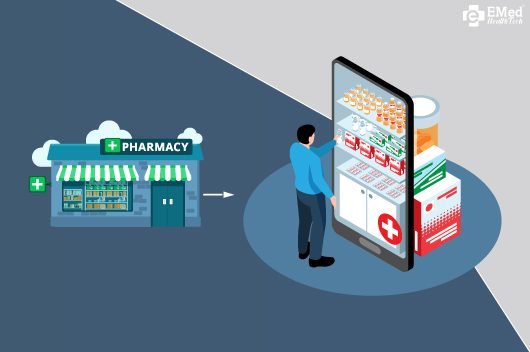
B2B Online Pharmacy Accelerates the Digital Transformation of Local Store

E-commerce has been around for a while now, slowly but steadily becoming a significant part of the average shopper’s habits. The pandemic has given this market a major boost, and the only way to go is up! However, the playing field is still wide open when it comes to online pharmacies. 

One of the crucial deciding factors in how pharmacies will perform in the near future is their ability to move ahead with changing market patterns and incorporating digital technologies. Online pharmacy apps are a great way to secure your market share with the rapidly evolving technology. Read on to find out how b2b online pharmacy apps are bound to speed up the digital transformation of local pharmacies.


Changing Expectations

The modern consumer wants convenience! With high standards in order, shipping, and overall customer experience, set by large retail brands, customers expect the same from their healthcare providers.

With a B2B online pharmacy app, you can target the ever-increasing number of customers looking for the ease of online ordering, discreet shipping, and doorstep delivery. The convenience of not having to travel for medicines is a boon to patients with critical conditions, and with an online mechanism to support them, they would never go back to the old ways. 

This also reduces their dependence on another person for their medicine order medicines, motivating them to take their health into their own hands.


The Data Says It All About B2B Medicine Delivery App

Whether you are in the retail pharmacy space or the B2B industry, having a B2B medicine delivery app is fast becoming a preference, if not a necessity. Experts predict that the global e-pharmacy market will increase from USD 49,727 million in 2018 to USD 177,794 in 2026. If pandemic-like situations prevail, this already high CAGR of 17% could also get a rapid boost. 

Local pharmacies have a considerable role to play in this growth. With a world-class B2B online pharmacy app developed by experts like EMed HealthTech, local pharmacies can easily tap into this multi-million-dollar market. Needless to say, if a business fails to capitalize on this, there would be hundreds of others to take its place.

We all have seen how poor technological readiness and inadequate infrastructures derailed access to proper healthcare services for millions of patients in recent times. With the right technological frameworks in place, you can save your business and ensure timely healthcare for thousands of patients.


Why Make the Shift to Online Pharmacy?

Health care services have traditionally been online, but the recent shift in customers’ perceptions has changed. The modern consumer prefers ordering online and wants everything delivered to their doorstep. Now that they have discovered the comforts of doctor consultations through video conferencing and online health test reports, there is no going back. Thanks to the COVID-led restrictions on the physical movement of people, the world has started taking the online world ever more seriously.

With fierce competition and the ruthless struggle for sales, local pharmacies that stick to the traditional ways are likely to suffer. On the other hand, the ones that invest in developing online ordering methodologies are future-proofing their businesses.

Powerful smartphones and high-speed internet had already put the world at people’s fingertips. Throw user-friendly applications into the mix, and what you have is a lethal combination for sales. For a B2B online pharmacy, dedicated apps expand the market reach and ensure sales in these changing times. 


Discover More About Online Pharmacy

The role of pharmacies may have historically been limited to fulfilling medicine orders given by medical practitioners, but with digital technologies, you can also tap into other avenues.

Providing Information to patients about appropriate healthcare regimes, diet, and lifestyle for their conditions is one way to go. You can also disseminate knowledge about the appropriate vaccination and preventive diagnosis to help patients get on the right track to health management. 

Credible information builds authority and brings customers into your ecosystem, enabling you to get customers without spending on advertisements and SEO. You can even turn these potential customers into loyal advocates for your services. 


How to Go About B2B Online Pharmacy? 

Whether your business is direct to patients or the B2B pharmacy industry, beginning the digital transformation for your pharmacy business is an easy, step-by-step process that promises excellent results for every model. 

Here are the tactics you can implement to ensure your business ushers into the new era of online services. 

  1. Form a digital base with social media channels, online business pages, and a B2B pharmacy website to keep your current customers updated with the latest offers, deals, and combos. Regularly posting and maintaining these channels also train the online algorithms to show your information to potential customers who search for similar services online.
  2. A dedicated B2B Online Pharmacy Application works wonders for smartphone users looking for quality e-pharmacy services. So, it would be fruitful to invest in a high-quality application with exciting features, a great user interface, and powerful performance. Custom-made applications developed according to your business needs would serve you better than standard models.
  3. Integrate your channels, phones, and online tactics into one cohesive ecosystem that allows you to stay on top of your game. Setting up analytics, online advertisements, and mapping your online business with maps helps customers verify your presence and build trust. Regular monitoring of your customer reviews and handling complaints is also an essential part of this process.
  4. Perform a weekly or monthly analysis of your data streams to understand where to put your focus, who to focus on, and when to take action. The details of your customer demographics and deep insights into your online data can help reveal areas of opportunity, which in turn helps in targeted advertisements and online campaigns to boost business.


EMed HealthTech is your partner in the digital transformation of your pharmacy and healthcare business. We design state-of-the-art B2B online pharmacy apps, customize them to suit your requirements, and are built to withstand the test of time. Our technological innovations have been tested and deployed with hundreds of businesses around the globe. To know more about our app and how it can help your pharmacy business, schedule a free online consultation with our experts today!

Frame 17 1

How Social Health Revives the Patient Journey?

Access to online social connections has entirely changed the patient journey, and your brand strategy should evolve with it to effectively identify where your patients are.

A recent study surveyed about 2,371 patients across a diverse representation of health situations to better understand social health – the digital simply means by which health consumers engage about their health – impacts patient experiences.

About 95% of patients surveyed utilize online social resources for health reasons. Wonder, how can these resources be leveraged as mutually advantageous for both patients and pharma?

What is social health?

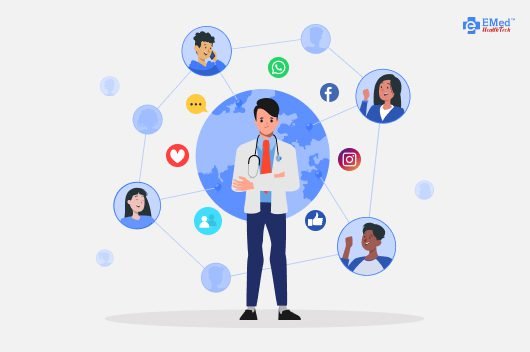
When we think of social health, we often think of social media; however, healthcare is more prominent than social media. Social health in the community, connection, and socialization of patients across the entire social sphere, including groups, messaging, communities, audio, and video.

In today’s hyper-connected digital world, patients seamlessly change from patient communities to social media platforms to peer-to-peer communications to engage healthcare professionals in digital content and conversation. All healthcare SEO is social – and that change is permanent.

Patient education. 

Patients today depend on social interactions to identify, connect, validate, and share. Social media has easily improved patients’ access to health care data and other educational resources. In the USA, 8 out of 10 Internet users seek health information online, and nearly 74% of these people use social media.

Healthcare patients can participate in online communities via social media and research, receive financial or moral support, set goals, and monitor personal progress. 

Patients trust other patients.

Patients often connect with other patients who have experienced a similar disease to understand its symptoms, treatment options, and how they overcome it and live a healthy life now.

When patients talk to these people, they can feel relaxed and get the information they require to act accordingly.

It’s more of a social journey.

In the early stages of checkups, patients often start as consumers of information and, after some time, evolve to become sharers. The techniques for consumption and sharing also evolve and are not mirror images of one another.

Recent studies show this with nearly 93% of patient influencers – compared to only 64% of non-influencers – sharing some essential health data they get with others.

Patient communities.

Patients are additionally utilizing social media to connect with other patients who got affected by similar kinds of diseases. Some social networking sites provide a venue for patients to access information, suggestions, and support from other patients who have experienced the same disease or condition. Moreover, Facebook groups often focus on specific medical conditions. These groups actively engage in end-to-end support and fund-raising efforts for affiliated groups and individuals.

A study showed 58% of analyzed comments within the Facebook pages of its communities show expressions of social support for others, proven through data-sharing, expressions of empathy, and encouragement to others. In fact, one participant commented, there are many days when these posts remind him that he is not the only one dealing with these same issues.

Patient influencers.

Given the superior level of trust that patients place in patient influencers, it’s no surprise that these patient leaders additionally drive patient behavior.

Moreover, patient respondents shared that when someone they considered to be significant shares information about a particular medication, 9 in 10 will ask their doctor about that information. Beyond that, 9 in 10 will further continue sharing it with others they believe to be interested.

Patient influencers within and outside patient communities inspire their communities to take meaningful action.

Conclusion

Social media is considered a new revolution in healthcare. It has completely transformed the way patients seek and share health information. Social media allows for any time anywhere access to and dissemination of information around the globe.

Just imagine a future in which patients tap their phones and understand where they are in their social healthcare journey. That vision of connecting patients to care and sharing data when and where they choose—is what digital healthcare is all about. When social healthcare systems focus on decreasing costs and increasing patient satisfaction, everyone will win.

However, this healthcare digital transformation doesn’t simply happen at night. Even though healthcare systems are forecasting their revenues rebound from COVID-19 restrictions, emergency department volumes remain around 75% of their pre-pandemic cap. It turns out that not all patients want to return to the complexities and inconveniences of healthcare digital marketing.

For better digital healthcare solutions, get in touch with experts at EMed HealthTech today!

How Digital Health Can Help Developing Countries 2

How Digital Health Can Help Developing Countries in Advancing Health System?

Healthcare is one of the most important factors in any country’s economy whether it is a developing or developed country. During this global pandemic, digital healthcare services are growing exponentially. The world has more healthcare opportunities to fight against the healthcare crisis. At that time the developing countries are at a compelling disadvantage in responding to the crisis. Therefore either in the healthcare or economy,  the developing countries are likely to be hit the most by the pandemic. 


eHealth – A Major Challenge For Developing Countries:

Though there are defined and recorded benefits of eHealthcare, the adoption of digital health specifically in developing countries still remains a major challenge. Healthcare systems in developing countries often struggle to provide economical, high-quality, and globally accessible healthcare.  The low- and middle-income countries are facing the challenges such as high population, economic resources limitation, volatile national capabilities, limited internet bandwidth, and poor medical infrastructure, etc. 

Due to certain challenges, the developing countries are unable to obtain basic health care requirements and accomplish their health goals. If the known healthcare challenges of the developing countries are not settled by time, it can affect the whole world.


4 Main Areas To Be Focused To Overcome the Challenges:

Healthcare Digital solutions have proven to be valuable assets to highlight the key challenges, specifically by implementing technology and enabling better communication within & among various parts of the healthcare chain. Developing countries can focus on the below-mentioned 4 areas to overcome the above-mentioned challenges in implementing digital health. With this they can have a better scope in advancing healthcare:

  1. Digitize Healthcare Information 
  2. Improve the flow of Diagnosis and Treatment
  3. Better Delivery of eHealthcare Services
  4. Technology-enabled Healthcare Solutions

There is a need to invest in realistic efforts to overcome the major obstacles that developing countries have dealt with earlier and Today as well in adopting and accessing and implementing digital healthcare technologies.


Future of Digital Healthcare In Developing Countries:

Information and communication technologies are increasingly offering the tools and knowledge to improve health care, enabling health solutions that benefit patients as well as health professionals and institutions in both the private and public sectors globally. E-health can be used as the main source for the digital transformation of health conditions in the developing world, especially for those who are living in rural and remote areas.

Parallelly increased consumer demand for health services forces the health admins to adopt innovative tech solutions. Healthcare solutions need to integrate with information & communication technologies and digitize healthcare service distribution to initiate an e-health solution in developing countries. 

The actual purpose to help developing countries and increase their health care outcomes means to explore healthcare technology, which experienced a rejuvenation during the pandemic.

In fact, the healthcare market growth of the overall world will be supported by swiftly expanding healthcare IT infrastructure in developed as well as in developing countries. 


How Digital Health can Help Developing Countries?

A digital healthcare system can only be successful in a developing country if it is able to fulfill the requirements of different healthcare stakeholders. Countries should adopt the patient-centric approach. It is necessary for the healthcare organizations to serve and satisfy the patients first and then other healthcare entities as well such as doctors, physicians, researchers, clinics, hospitals, healthcare insurance, healthcare institutes, and government organizations.

Healthcare digital transformation with advanced technology will help to enhance the speciality of healthcare. Here are the technologies which can play a vital role in the growth of developing countries:

  1. IoT – Internet of things
  2. Virtual Healthcare
  3. RPM – Remote Patient Monitoring 
  4. AI – Artificial Intelligence
  5. Big Data Analytics 
  6. Blockchain 
  7. Smart Wearables 
  8. 5G
  9. AR – Augmented Reality
  10. VR – Virtual Reality
  11. The Cloud
  12. The Chatbots
  13. Healthcare Robotics
  14. Healthcare Analytics
  15. mHealth

On 19th Oct 2021, UNCTAD awarded investment promotion agencies (IPAs) from Costa Rica, the Netherlands, and the Republic of Korea for excellence in promoting investment in digital health sectors, such as manufacturing of medical devices, pharmaceuticals, and vaccines, in the production of personal protective equipment and more.


Here are examples of digital healthcare solutions that are strengthening health systems across developing countries:

1. Healthcare applications will be used to provide remote patient monitoring. Healthcare custom apps allow healthcare professionals to overcome the limitations of face-to-face follow-ups and make the most from the healthcare practices. Here are the examples of Healthcare apps that can be used to advance the healthcare system in developing countries:

  1. Telemedicine
  2. Online Pharmacy App
  3. Medical Reference & Database Apps
  4. Healthcare Networking Apps
  5. EHR & EMR App
  6. Doctor App
  7. Medicine Delivery App
  8. Telehealth Mobile Apps
  9. Health Apps For Patients


2. Healthcare softwares increase patient outcomes, enable virtual healthcare and automate healthcare workflows. Here are the examples of Healthcare software that can be used to implement digital healthcare in developing areas of the world:

  1. Telehealth Software
  2. IoT Healthcare Software
  3. PMS – Practice Management Software
  4. HMS – Hospital Management Software
  5. LIMS – Lab Information Management Software
  6. e-Pharmacy Software
  7. Medical Billing Software


3. Healthcare IoT will allow the healthcare system to be personalized for the patients and doctors. IoT implementation makes it possible to collect and track user data and to offer real-time monitoring.


Wrap it up…

The Healthcare industry in developing countries is experiencing a drastic revolution due to the digital transformation. Digital health has also become the crucial factor for health organizations to move away from their traditional health model to a more customized, cost-effective, and patient-focused united health service model. To move forward from developing country to developed country, the adoption of digital health is one of the most required factors. They need to acquire the approach of eHealth and need to implement digital transformation in healthcare to be a more advanced healthcare sector.

We at EMed HealthTech help healthcare startups, small and mid-level businesses as well as enterprises to develop customized Healthcare applications such as doctor applications, hospital apps, medicine delivery apps, and software by leveraging the latest technology. Our custom health solutions are the best fit for all of the healthcare stakeholders such as doctors, patients, pharmacists, clinics, laboratories, and hospital admins. 

We also help healthcare professionals and health organizations to grow their online presence and business through various healthcare digital marketing services such as SEO, PPC, Social media, and more. Kindly request a free quote at for your custom requirement for digital health.

Importance of Healthcare Marketing Services 1 1

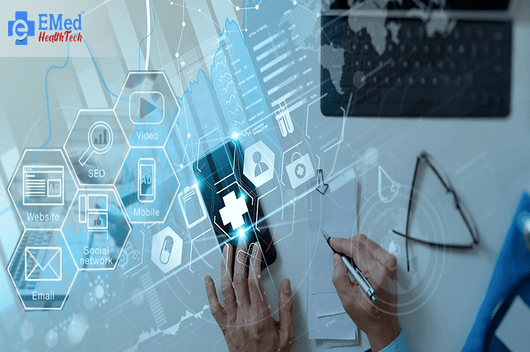
All You Need To Know About Healthcare Digital Marketing Services

Introduction:

The wide adoption of eCommerce platforms has opened many avenues for conducting cost-effective targeted outreach to potential clients. And that is why more and more businesses are now moving towards online mode and doing digital marketing activities to leverage it.

The Healthcare sector is no exception to that. Because, having an online presence of your business not only ensures more visibility on SERPs, but it also means higher engagement with your patients regularly. You also have a very good chance of promoting your products, in case you have a pharmacy store, or your practices and services in case you have a clinic. Essentially, you can improve your revenue stream easily by going online. Want to know how?

Digital healthcare is such a lucrative field that, In 2021, healthcare digital ad spending is set to overtake that of TV ads, and it will be 46% of total healthcare ad spending.

We know that attracting new customers is a major challenge in every business, but it is even more challenging in the healthcare industry as people prefer to consult the doctor they know beforehand. So, attracting new patients to your clinic is a demanding task. However, if you do proper marketing of your healthcare website, it can prove to be a rewarding task and can carry many benefits.

Now the question that arises is how to do proper marketing of your healthcare website?

Do you know more than 75% of users do not scroll past the first page of Google search? This makes it essential to rank your website on the first page of various search engine providers. For this, you need to make sure your potential clients can find your products or services when they search for healthcare-related products or platforms.


Types of Healthcare Digital Marketing:

Digital marketing of healthcare platforms can be of many times. And it is necessary to choose the method that works for you. For that, you need to have a clear understanding of your patients or buyers and design your marketing campaign accordingly.


Search Engine Optimization (SEO):

Search Engine Optimization is integral to any type of digital marketing as it helps brands attain organic growth. Ranking the right keywords ensures higher visibility and brand recognition. It also helps in outranking your competitors. In simpler words, this means that healthcare platforms can increase traffic to their website by properly targeting their keyword.

To ensure your patients can find you when they search on the web, the most fundamental step of any SEO activity is to do keyword research and to optimize websites for your patients’ queries.

Let’s take an example to understand it better. If you are a dentist, you can optimize your website for dentist-related keywords like “dental services” or “root canal operations” etc., and rank your page higher on the SERPs so whenever your prospective clients search for those terms, your website will be shown to them easily.

Healthcare SEO can be of many types. Let us briefly go through all of them.

  • On-Page SEO:

Website SEO Onsite Optimization: It deals with Title tags, Metadata, H1 tags, and Image tags of your products that you list on the website.

Content Optimization: It deals with creating or optimizing keyword-rich content for website landing pages.

  • Off-Page SEO:

Website Offsite Optimization: This method requires link building to targeted landing pages. This activity is used when you want to build a strong presence and want to target a particular audience.

Optimize Sitemap and robots.txt Files: This practice requires informing search engines on how to interact when indexing your website. This basically tells search engines to categorize your websites properly, so that if you are providing dental services it does not show your website to patients looking for eye surgeries.

  • Technical SEO:

Content indexing: Content indexing allows search engines to read and classify contents of your site easily which in turn makes it accessible to site crawlers. For example, if you are selling medicines, or educating your readers about an online pharmacy, proper content indexing will mark your site as such and pass on that classification to the site crawlers.

Optimize Website URL Structure: A clean and optimized URL is important for a successful SEO Campaign. Your URL should be such that visitors to your site can instantly know what you are offering.

  • Local SEO:

This is a type of SEO strategy that enables businesses having a physical location to fine-tune their search result to increase their visibility in a particular geographic area.

Through Local SEO, you can optimize your business locations for Google places and maps and be found locally with the most up-to-date information about your business.

Let’s say you want to target people living in close vicinity to your clinic and who are looking for eye surgery. To achieve this, you can utilize local SEO techniques and capture such local patients to increase footfall in your clinic.


Healthcare Email Marketing:

Effective email marketing is key to distributing your content and creating a sense of urgency for your prospective clients. You can directly reach out to your regular and prospective patients via email and make them aware of the services offered by your clinic.


Healthcare Social Media Marketing:

Social media marketing involves a consistent presence on sites like Facebook, Instagram, Linked In, Twitter, YouTube, and Quora. It is a great platform for online review & reputation management. However, social media marketing means more than just sharing posts on social media, as around 90% of adults have used social media to seek and share healthcare information. Healthcare providers can share healthcare tips on various social media channels to educate patients and boost engagement.

For effective social media marketing, coordinated efforts are required to keep users interested and engaged. Social media analytics is also cardinal to analyzing the performance of posts and user engagement. Basically, It tells you whether your patients are interacting with your posts or not.


Healthcare Pay-Per-Click (PPC) Marketing:

PPC advertising is a crucial strategy to reach your specific demographics and rank for selected keywords. This is a paid strategy that includes Google Ads, Search Ads, Display Ads, Shopping Ads, Remarketing, YouTube/Video Ads, Landing Page Optimization & Advisory, In-App Advertising (App Store & Play Store Ads), etc.

The topmost results on search engines are reserved for PPC ads. This is especially important when you take into consideration that 89% of consumers use an online search engine to look for a solution to their healthcare queries.

For example, let’s say you want to target patients searching for the “Best dentist near me” term. You can optimize your website for that particular keyword and then pay fees to Google every time a visitor clicks on your website link.


Healthcare Video Marketing:

According to a report from Wordstream, one-third of online activity is spent watching videos. So, video marketing gives you a good chance to share your views and promote products to your clients via interactive visuals.


Healthcare Print Ads:

How do you get the word out and reach people who are not active on the internet? You can either distribute leaflets or even publish your ads in print media such as the local newspapers and magazines.


Healthcare Radio or Podcast Ads:

Radio or Podcast ads are a great platform to do influencer marketing. You can introduce your products or services and hire an influencer to advertise them. As it is said that people like people, so it is a great way to let people know of your services.

We have so far seen the types of digital marketing now; let us look at the benefits of healthcare digital marketing:


Benefits of Healthcare Digital Marketing:

Digital marketing gives you a competitive edge over your rivals.

  1. Increases traffic to your website.
  2. Opens up new opportunities to engage with your existing and potential clients.
  3. Allows you to target the right audience based on their location and medical needs.
  4. Enables you to popularize your brand and maximize Return on Investment (ROI).
  5. Improves frequency and quality of inbound leads
  6. Ensures better outreach

Now that we know the benefits of doing digital marketing for healthcare platforms let us see how to do it effectively.


Actionable tips to increase visitors to your healthcare website:

An accessible website coupled with regular SEO activity helps you to rank higher on SERPs. Active social media interactions with your target audience allow you to market your healthcare services to a larger audience easily.

  1. Precision-target your purpose
  2. Actively share on social media
  3. Regularly share company-related updates
  4. Interact with your audience
  5. Do Rigorous Competitor Analysis 


How to measure the success of your healthcare marketing campaign?

  1. Define KPIs
  2. Track the performance of selected KPIs
  3. Periodically review the performance of your keywords
  4. Do a frequent site audit
  5. Use Social media analytics


Ready To Grow Patients Through Healthcare Digital Marketing?

EMed HealthTech’s result-oriented digital marketing services for healthcare are the best way to increase your healthcare revenue. Our expert team provides data-driven marketing strategies to healthcare organizations/providers that increase patient volume & engagement in a cost-effective manner. Our experienced healthcare digital marketing experts help to promote brands through successful online advertising campaigns and SEO. Do you want to increase the revenue of your healthcare organization? Contact us to know more.

What Are The HIPAA Rules Blog

What Are The HIPAA Rules And How To Ensure HIPAA Compliance?

Medical information is predominantly exchanged over the electronic mode nowadays, thus increasing accessibility and convenience but also simultaneously raising concerns over the privacy of critical protected health information (PHI).

Many countries have designed their own rules and regulations aiming to address this issue. In addition, some private entities have also framed their own standards to remove any loopholes in government-designed rules.

Background of HIPAA:

HIPAA Compliance is a must for digital healthcare solutions. Before HIPAA was enacted into the law, healthcare organizations were following different standards to safeguard the privacy and security of protected health information (PHI), but the lack of industry-wide agreed standards was a big hindrance in maintaining the confidentiality and security of sensitive patient information.

The Health Insurance Portability and Accountability Act (HIPAA) was signed into law on 21st August 1996 to regulate the handling or transmission of healthcare information. It gives control to patients over their health information and stipulates penalties in case of violation of these rules.

Basically, the HIPAA Suit consists of three main sets of rules. 1) Privacy Rule, 2) Security Rule, and 3) Breach Notification Rule.

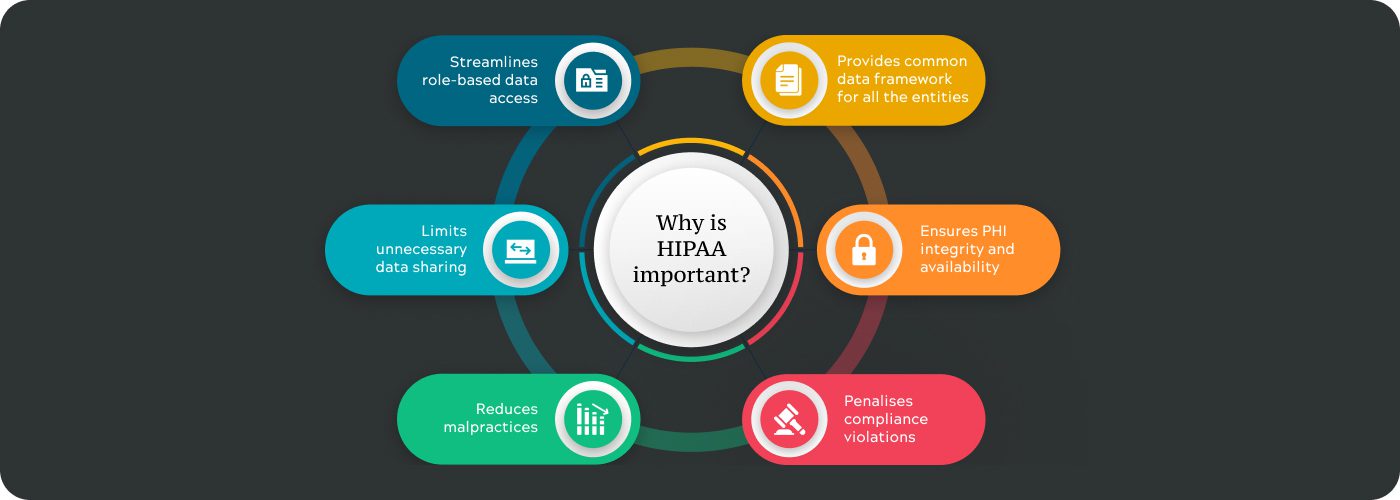
  1. The Privacy Rule aims to protect the privacy of individually identifiable health information by restricting access to only required entities.
  2. The Security Rule sets forth certain technical procedures to ensure the confidentiality, integrity, and availability of data.
  3. Breach Notification Rule stipulates organizations to provide notification following a breach of PHI.

We will talk more about the HIPAA rules in detail later on. Let us first know what PHI is and why it is critical to secure it.

What constitutes PHI?

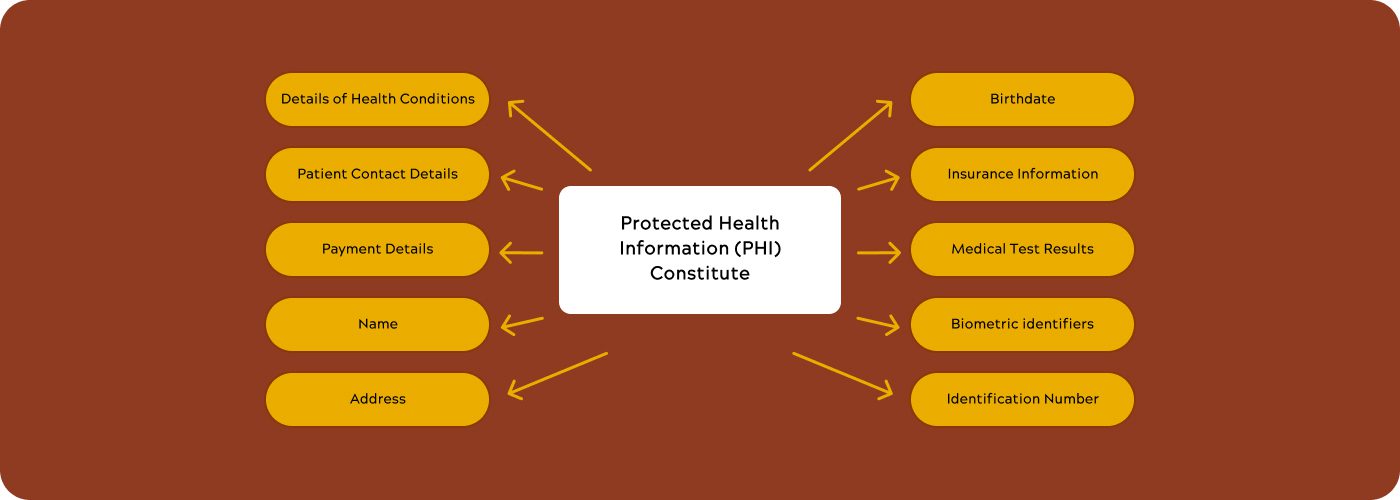
The critical health data is categorized as protected health information (PHI) by HIPAA. That includes the details related to the patient’s past and present physical or mental health condition, payment details of the patient, components of a patient’s medical record. In addition, PHI also includes many standard identifiers, such as name, address, birth date, insurance information, patient contact details, medical test results, social security number, and biometric identifiers of the patient (e.g., retina scan, fingerprint, or voice recording). Sometimes, this also includes data collected from medical equipment also.

Why is healthcare data critical?

In most cases, the healthcare data is permanent and can not be changed easily. Biometric details especially are more vulnerable as they can not be altered at all. So if that data is compromised in a data breach, it is compromised forever. And because it contains unique identifying information that is permanent in nature, it has higher implications when it gets compromised as it can be used to forge identities.

What are the best data handling practices as per HIPAA?

As healthcare data consists of sensitive personal data, robust security measures must be implemented to secure it. To protect patients’ data while complying with the HIPAA rules, the following steps are suggested:

  1. Secure Data Collection: Only authorized persons should be able to collect, use, or access the data and whoever collects data should also be made responsible for its security. The admin should frequently monitor which users are accessing what data and from what devices.
  2. Locate the health data storage: The health data can be stored over many electronic devices, so these devices must be secured with strong and unique passwords. Also, use two-factor authentication whenever possible. Also, do not forget to log off or lock the systems when not in use.
  3. Encrypt data: Healthcare data must be encrypted with the highest security standards during the storage and transmission of information. When the data is encrypted, getting access to it won’t be enough to read it, as it will need a key to decrypt and decipher the data. That’s why HIPAA rules strongly recommend data encryption.
  4. Always Use Latest Technologies: Obsolete or older versions have higher chances of data leakage. That is why it is cardinal to utilize the latest technologies to handle, store, and access EHR data.
  5. Educate the staff about HIPAA guidelines: At the end of the day, your staff must understand HIPAA rules to implement them properly. So, train them properly and make sure your staff is not the weak link in the chain.
  6. Conduct regular data security audits: To identify weak links and vulnerabilities in your security infrastructure, HIPAA recommends regularly conducting data security audits.
  7. Secure Data Backup Facilities: The data backup facility or data center of a healthcare institute where all the sensitive information is stored should have robust security. CCTV cameras should be installed at the premises, access should be restricted, and biometric or other means of rigorous authentication must be implemented.

How to ensure HIPAA-Compliance Platform?

We have seen that building HIPAA-compliant software from scratch is a complex process consuming significant time and resources. To rid yourself of all these complexities and procedural headaches, you can instead choose a readymade HIPAA-compliant platform and start your telehealth business with it.

But you might be wondering how to choose the best HIPAA-compliant software? So, here are our tips to ensure you choose the best HIPAA-compliant platform vendor:

  1. Verify end-to-end encryption.
  2. Check the encryption standard.
  3. Inquire whether they conduct security audits or not.
  4. Find out where the information is stored.
  5. Sign an agreement of undertaking.
  6. Verify the security of servers.
  7. Search about the company and read reviews of their users.

HIPAA Act of 1996:

HIPAA was passed in 1966 to ensure that the advances in electronic technology do not erode health information privacy. In addition, it aimed to simplify administration processes of dealing with electronic health care transactions, unique health identifiers, and security. This act sets conditions and limits the disclosure of such information.

HIPAA Privacy Rule:

This rule was published in December 2000 and was later modified in August 2002. This rule sets standards for protecting identifiable health information of health plans, healthcare providers, and health care clearinghouses who conduct the standard health care transactions electronically. Compliance with the Privacy Rule was mandated on 14th April 2003.

Highlights of this rule are as follows:

  1. It defines how a patient’s data can be used and disclosed.
  2. PHI can be disclosed to a third party with the patient’s discretion, and even then, the information shared must be minimum necessary to perform the task.
  3. Patients can inspect and obtain a copy of their records and request a correction to them.
  4. The healthcare organization must inform their clients about their business practices and entertain complaints from the patients if it fails to adhere to HIPAA rules.

HIPAA Security Rule:

This rule was published in February 2003. It sets national standards for protecting the confidentiality, integrity, and availability of electronically protected health information. Compliance with the Security Rule was mandated on 20th April 2005.

Highlights of this rule are as follows:

  1. Confidentiality: Secure information from unauthorized access.
  2. Integrity: Ensure data integrity by securing the data.
  3. Availability: Make sure that the data is available for the authorized personnel at all times.
  4. Frequent internal audits of ongoing operations must be conducted.
  5. Role-based access to patient data must be implemented.
  6. PHI should be transmitted through encrypted channels.

HIPAA Breach Notification Rule:

The HIPAA Breach Notification Rule mandated that the covered entities should notify affected individuals. It allows patients to examine and obtain a copy of their health records and ask for corrections.

Highlights of this rule are as follows:

  1. In case of a data breach, the organization must inform all the stakeholders involved. Breaches affecting more than 500 patients must also be reported to the media and HHS. Such breaches must be reported within 60 days of discovery.
  2. Penalties for failing to comply with HIPAA rules.

The state of HIPAA rules today:

Since its enactment in 1966, HIPAA rules have witnessed many additions and revisions in their original form. The big modifications in the original HIPAA rules are only three. The Health Information Technology for Economic and Clinical Health (HITECH) Act of 2009 promoted EHR and encouraged data interoperability. It expanded the HIPAA rule scope by increasing potential legal liabilities for non-compliance and more stringent enforcement. The latest modification was the HIPAA omnibus final rule passed in 2013 that implemented HITECH rules more strictly and introduced advanced measures to strengthen the privacy and security protections for health information established under HIPAA. HIPAA is still considered the benchmark for patient data handling practices.

While I have tried to cover the most important HIPAA rules based on research, feel free to add more in the comment section to make it insightful for the readers.