EMR vs. EHR Software Development What to Choose for Your Healthcare Business

EMR vs. EHR Software Development: What to Choose for Your Healthcare Business?

Technology makes our lives more convenient, there is no doubt. We can see different tech types being adapted to different aspects of our lives, including healthcare. Some of the most commonly used tech in healthcare are healthcare software. 

Healthcare software refers to computer programs and applications designed for use in the healthcare industry. These software solutions may be custom-made or off-the-shelf products that help manage and optimize various healthcare-related tasks. It helps with patient records management, billing, scheduling, electronic health records (EHR), and other medical and administrative functions.

Since there are many options to choose from, you could be confused when picking one. As a healthcare business, you can make a better choice after reading this article, as we are going to explore two of the most popular options in healthcare software development: EMR and EHR. 

Let us explore the major differences between EMRs, or electronic medical records, and EHRs, or electronic health records. We will also look at the difference in the development process of each of these so you can make an informed decision. 

What is EHR Software? 

Electronic Health Records (EHR) have become a part of the modern healthcare industry. They are also sometimes called electronic patient charts. This is because they do what previously paper charts used to do, only much more efficiently. This software provides real-time access to patient information, including medical conditions, lab records, and prescriptions. With this software, doctors and medical professionals can quickly access medical data. 

How is an EHR System Used? 

An EHR is a versatile software that finds immense applications in the medical world. Here are some ways your healthcare business can use the EHR system

  1. Better decision-making and treatment can be given to patients. It also provides better care to patients as data can be accessed quickly, leading to better outcomes as well. 
  2. Patients have better access to their medical information, increasing patient engagement and self-management. 
  3. EHR leads to better collaboration between departments as well as healthcare services, as medical history can be accessed from anywhere. 
  4. EHRs streamline administrative processes, such as billing and appointment scheduling, making healthcare operations more efficient.
  5. It can contribute to medical research as huge amounts of data are available under a single system. It also leads to the betterment of medical services as a whole.
  6. EHRs assist healthcare organizations in meeting regulatory requirements and reporting, ensuring compliance with healthcare standards and laws.
  7. EHRs are great for legal documentation of medical procedures, diagnoses, and treatments. It covers healthcare providers in legal matters.

Why Should a Healthcare Business Use EHR Softwares? 

EHRs offer numerous advantages for healthcare providers, patients, and clinics. Here is a look at why you should consider it, too: 

Better outcomes:

EHRs offer faster access to patient information, leading to higher-quality care. Doctors can provide better treatment thanks to the data available, which leads to informed decisions. 

All data under one roof:

EHRs maintain current patient records. This way, doctors can get the latest updates and access all available information, even if the patient has consulted multiple healthcare services. 

Integration:

EHRs seamlessly integrate with other healthcare systems in the facility. Be it billing software or pharmacy software, there is better connectedness and coordination. 

Enhanced efficiency:

EHRs save time for healthcare providers. This means the time spent on appointments and outpatient visits is much lower. 

Security:

Data security is a priority for EHR. You have to stick to regulations like HIPAA, ensure patient data protection, and maintain stringent security standards. 

In short, electronic health records (EHRs) are a revolution in itself. But is it the best tool for your healthcare business? Read about EMR and decide for yourself. 

What is EMR Software in Healthcare?

Electronic medical records (EMR) is a cutting-edge concept that has significantly transformed healthcare management. Unlike traditional paper health records, EMRs make patient information entirely digital. An EMR makes it efficient to access them, store them securely, and manage them easily. They give all the information regarding it under a single interface. 

How is an EHR System Used? 

EMR systems serve as the central hub for various clinical activities in healthcare settings, offering a range of features and functionalities:

Patient Information Management:

EHRs store vital patient data, including treatment history and diagnoses. It provides better access to medical records.

Appointment Scheduling:

EHRs streamline appointment management. It makes scheduling appointments and patient flow a breeze. 

Data Sharing:

There is better data sharing among healthcare team members, promoting up-to-date information access.

New Patient Integration:

Onboarding for new patients is no longer a nightmare. There is a complete and accurate record for better treatment. 

Clinical Documentation:

Keep a tab of everything that’s happening with clinical data recording and logging. No more heavy paper records and manual entry.

Regulatory Compliance:

Stay compliant with evolving regulations and adherence to industry standards and guidelines.

Why Should a Healthcare Business Invest in EMR Softwares? 

Electronic Medical Records (EMRs) offer plenty of advantages for healthcare professionals, organizations, as well as patients. Here is a quick look at them. 

Save space:

With this software, there is no need for physical paper record storage. As patients’ volumes rise, this becomes a lifesaver. 

User-Friendly:

You don’t have to rummage around looking for files as they are all available under the click of a button in a user-friendly interface. 

Streamlined Organisation:

Manual record keeping is more expensive. Make your staff more resourceful and operations better with electronic record keeping. 

Enhanced Prescription Safety:

When it comes to medication, EMRs can help patients get the best medicine without the hassles. Any interactions with other medications will also be notified. 

Robust Data Security:

EMRs are all about keeping data safer, sticking to regulations, and maintaining a hierarchy of authorized access.

Better Communication:

EMRs help healthcare professionals communicate and coordinate better, leading to better outcomes. 

EMRs offer a secure, efficient, and collaborative approach to managing patient information. 

They have become indispensable tools in the medical industry. 

How Does the Software Development Process Differ? 

EMR and EHR software development processes have major differences. Their functionalities and applications make them entirely different processes. 

When it comes to EMR Software Development: 

  1. The focus is on clinical functionality, which can be tailored to each healthcare business. The focus is on better tracking of patient records and treatment history.
  2. It incorporates remote patient monitoring tools so that doctors can monitor remote vital signs and provide treatment on time.
  3. EMR software integrates advanced technologies like AI, data analysis, and blockchain, enhancing data utilization for research and analysis.
  4. There is a higher need to stick to data quality standards, thanks to a dynamic regulatory environment. 
  5. Internet of Medical Things (IoMT) devices and wearables are a part of this system. It helps improve patient safety by monitoring vital signs. 

On the Other hand, EHR Software Development involves: 

  1. It is more than just clinical functions, it creates a complete healthcare ecosystem. There are a lot of aspects in focus, not just data.
  2. Patients and physicians can better keep an eye on habits such as diet, exercise, and sleep. This is a more holistic approach. 
  3. EHRs are all about data exchange between healthcare professionals and facilities, enhancing care coordination. Interoperability is in focus here. 
  4. Robust data security is a priority. Developers have to ensure they protect patient privacy and maintain data integrity.

Developers focus on different aspects to emphasize EHR and EMR. Depending on your needs, these can be customized to include more aspects for better efficiency. 

EHR vs. EMR Software: Comparison

In short, while EMRs and EHRs serve as digital records for healthcare information, EHRs are more comprehensive and versatile.  EMRs, on the other hand, are typically limited to the needs of a specific healthcare facility. 

Depending upon the needs of your healthcare business, you can make an informed choice. 

Choose EMR or EHR Software. Our Health Tech Experts Can Help You

In the EHR vs. EMR debate, both serve as foundations for the future of medical practice. Both enhance data collection and processing. The choice ultimately falls on you. Before you choose, understand the difference between EHR and EMR, the features they offer, and how they align with your business goals. Also, keep a keen eye for regulations. 

The other major choice here is to pick the right developer. An EHR/EMR software development company should be able to offer you the option to customize. Also, look for a company with EHR/EMR software developers who have ample experience to their name. 

As an experienced medical software development company, EMed Healthtech builds user-centric EMR/EHR applications. We leverage our expertise and the latest best practices to help you create successful healthcare products.

Interested in learning more about our EHR/EMR software development or need a quote for your next project? Get in touch with us! 

Why You Should Use Hospital Management Software

10 Reasons Why You Should Use Hospital Management System

A hospital is a center of activity, from medical and administrative tasks to financial and legal functions. While everything under this was once done manually, the HMS or hospital management system has been nothing short of a revolution. 

With the digitization wave lashing across industries, its effects can be seen rippled across the healthcare industry as well. With healthcare solutions like HMS and many others following suit, hospitals can now aim for efficiency, accuracy, and seamless patient management. It has become an indispensable tool in making sense of the chaos. 

The HMS’s relevance is underlined by its multifaceted capabilities, from efficient patient registration and billing to real-time access to medical records. Beyond its functionality, the software’s rising popularity is supported by hard numbers. 

Let’s delve deeper into the numbers and the benefits it offers, and you will find the answer to why it is time to invest in a hospital management system. 

Hospital Management Software Growth & Popularity

Hospital Management Software (HMS) has emerged as a game-changer in the healthcare industry, which has traditionally been dependent on manual processes. The software has witnessed a remarkable growth in its popularity and adoption, as it offers numerous benefits, such as streamlining operations, enhancing patient care, and providing analytical insights. 

According to a report by Arizton Advisory and Intelligence, the hospital management solutions market size will reach revenues of USD 62.17 billion by 2027, growing at a CAGR of over 12.48%. These stats indicate a high demand and acceptance of HMS among healthcare institutions worldwide. 

The software has not only increased the adoption rate but also transformed the way hospitals manage their daily activities and processes. By digitizing and integrating various aspects of hospital management, such as patient records, billing, inventory, pharmacy, laboratory, and others, HMS has created a more efficient, error-free, and patient-centric system. 

Let us now look at some solid reasons why it has become an indispensable tool in today’s world. 

Why Hospital Management Software is a Necessity for Modern Hospitals and Clinics? 10 Reasons

1. Efficient Patient Management

Healthcare institutions aiming for excellence know that it is the patient who should be the center of focus. With the integration of Hospital Management Software Solutions, hospitals can now make possible a seamless patient experience. Right from the initial stage of registration to appointment scheduling and even billing, every process is sped up. This helps in reducing waiting times and eliminating huge paperwork. 

Such software not only enhances the administrative workflow but also prioritizes patients’ convenience, ensuring they receive timely care. The potent mix of quick procedures backed by advanced technology sheds light on the importance of such software solutions in modern-day healthcare.

2. Enhanced Data Security

As the world becomes more and more open with digitization, privacy has become the focus of all efforts. Safeguarding sensitive patient information is a touchy topic in the healthcare industry. 

Healthcare Management Software provides the solution by offering state-of-the-art security measures. Such software is engineered with advanced encryption protocols and multi-layered security systems. It helps ensure patient data remains inaccessible to unauthorized individuals. 

Beyond just storing information, the software actively monitors for security breaches and potential threats, ensuring that the sanctity of patient confidentiality and trust remains uncompromised.

3. Improved Clinical Decision-making

Time is of the essence in the world of healthcare. Timely and informed decisions can make all the difference. Access to real-time patient data, facilitated by modern Hospital Management Software, helps healthcare professionals with the info they need at their fingertips. 

This immediacy not only streamlines clinical workflows but also enhances the accuracy and efficacy of patient care. By presenting a consolidated view of patient histories, current conditions, and other essential data, the software increases confidence and well-informed clinical choices.

4. Accurate Record Keeping

The backbone of effective healthcare delivery depends on maintaining and making available patient records on time. The Hospital Information Management System is an integral part of making this happen. It facilitates instant access to these crucial records. 

Gone are the days when medical professionals had to sift through piles of paperwork or wait for long hours to get a patient’s medical history. With this system, a patient’s entire medical journey, including previous diagnoses, treatments, and medications, is available at the click of a button. 

Such instant and accurate record-keeping ensures better-informed decisions, customized treatment plans, and overall enhanced patient care.

5. Streamlined Financial Management

Navigating the intricate web of hospital finances, from billing to insurance claims and expense tracking, is nothing less than daunting. However, with the advent of modern Hospital Management Software, these processes have been significantly simplified. 

The software offers integrated modules that streamline billing processes, expedite insurance claim approvals, and meticulously track expenses. With automation at its core, it reduces human errors, ensures transparency, and provides a holistic view of the hospital’s financial health. It essentially makes financial management efficient and hassle-free.

6. Customization and Scalability

No two healthcare institutions are identical. Recognizing this, contemporary Hospital Management Software offers high degrees of customization. This allows hospitals to tailor the software to their unique needs, workflows, and objectives. 

Moreover, as a hospital grows and evolves, so does the software. Its inherent scalability ensures that as medical facilities expand, add new departments, or increase their patient base, the software can adapt and scale accordingly, ensuring longevity and return on investment.

7. Seamless Communication

A well-oiled hospital machinery relies heavily on efficient communication between its various departments. Hospital Management Software plays a pivotal role in ensuring that this communication remains clear. 

By offering integrated communication tools and platforms, the software breaks down silos of info, ensuring every department is on the same page. This means there are faster responses and fewer misunderstandings. It also fosters a cohesive environment for patient-centric care.

8. Compliance and Reporting

Navigating the maze of healthcare regulatory compliances is nothing less than a nightmare for healthcare institutions. Hospital Management Software streamlines this process by ensuring all operations align with prevailing health guidelines and standards. 

The built-in reporting tools provide a complete overview, aiding in regular audits and maintaining transparency. This not only instills confidence among stakeholders but also safeguards the institution against potential legal pitfalls and ensures continuous, compliant care for patients.

9. Automated Task Management

The automation of everyday tasks is one of the standout features of modern Hospital Management Software. By automating repetitive and mundane tasks, the software significantly reduces the scope for human error. What it leads to is more consistent and reliable outcomes. 

This automation not only enhances efficiency but also frees up medical staff to focus on more critical, patient-centric activities. The result? An optimally functioning healthcare facility that prioritizes its patients above all.

10. Cost-Efficiency

Competition is higher than ever in the world of healthcare, and it all comes down to financial prudence to stay profitable. Hospital management software offers a pathway to notable cost savings. 

By streamlining administrative processes and reducing the need for extensive manpower in routine tasks, the software significantly cuts down operational expenses. The added efficiency and reduced redundancy lead to more effective resource utilization, ensuring that healthcare institutions can deliver top-notch care without compromising their bottom line.

Choose Healthcare IT Experts to Build Your Hospital Management System

The adoption of Hospital Management Software has ushered in a transformative era for the healthcare sector. It is bringing in streamlined operations, robust data security, and optimal patient care. These systems are no longer just a luxury but a necessity, enabling medical facilities to stay ahead in this technologically driven age.

At EMed HealthTech, we pride ourselves on being at the forefront of this revolution. Our seasoned team of healthcare UI/UX web designers brings their vast experience in crafting healthcare websites that are not only innovative but also error-free. Before delivery, we rigorously test our designs, ensuring they meet the latest industry standards. Our solutions ensure that you have increased patient engagement and streamlined operations.

Are you ready to elevate your healthcare management? 

Explore EMed HealthTech’s unparalleled offerings and join a growing list of satisfied clientele. Your next digital solution is just a click away. Give us a call today!

Healthcare Software Development Company How Can It Transform Healthcare

Healthcare Software Development Company: How Can It Transform Healthcare?

A custom healthcare software development company is revolutionizing the medical industry by leveraging cutting-edge technologies like AI, IoT, and cloud computing. These companies are designing innovative solutions that enhance patient care, streamline clinical workflows, and optimize hospital operations.

From telemedicine platforms to electronic health records (EHR), digital solutions are transforming how doctors and healthcare providers operate. Top healthcare software companies are developing robust IT solutions to help hospitals, clinics, and pharmacies manage patient data securely and efficiently.

As the demand for healthcare technology grows, healthcare software companies in the USA are leading the way in innovation. Let’s explore the healthcare software list and understand how these solutions are shaping the future of medicine.

The Role of Healthcare Software in Modern Healthcare

Technology is playing a critical role in improving healthcare services. A custom healthcare software development company offers tailored solutions to address the unique needs of hospitals, clinics, and healthcare providers. Here’s how:

1. Telemedicine and Virtual Healthcare Solutions

Telemedicine has become a game-changer in the healthcare industry. Top healthcare software companies develop virtual consultation platforms that allow doctors to connect with patients remotely. This enhances access to healthcare, especially in rural areas, and reduces hospital visits.

2. Electronic Health Records (EHR) for Better Patient Data Management

A well-implemented healthcare software list includes EHR systems that store and manage patient records digitally. This ensures seamless access to patient history, improves diagnosis accuracy, and enhances collaboration among healthcare professionals.

3. AI-Powered Healthcare Solutions

AI-driven healthcare software is transforming diagnosis and treatment. AI algorithms help doctors analyze medical data, predict diseases, and recommend personalized treatment plans, making healthcare more efficient and data-driven.

4. IoT and Remote Patient Monitoring

IoT-based healthcare solutions enable real-time monitoring of patients’ vital signs through wearable devices. These solutions allow doctors to track health metrics like blood pressure, heart rate, and oxygen levels remotely, ensuring timely medical intervention.

5. Custom Healthcare Software for Hospitals and Clinics

A custom healthcare software development company provides tailored solutions for hospital management, patient scheduling, billing, and medical inventory tracking. These solutions help hospitals streamline operations and improve patient experience.

6. Healthcare Mobile Apps for Patients

Top healthcare software companies develop mobile apps that allow patients to book appointments, access medical records, receive medication reminders, and engage in virtual consultations, making healthcare more accessible.

Why Choose a Custom Healthcare Software Development Company?

Discover the benefits of choosing a custom healthcare software development company for tailored solutions that enhance patient care, efficiency, and security.

1. Enhanced Efficiency and Accuracy

Automated software solutions reduce paperwork and administrative tasks, allowing healthcare professionals to focus on patient care. Digital records minimize errors and improve diagnosis accuracy.

2. Improved Patient Engagement

Mobile apps and patient portals enable better communication between doctors and patients, leading to improved healthcare outcomes and patient satisfaction.

3. Data Security and Compliance

With stringent regulations like HIPAA and GDPR, healthcare software companies in the USA develop secure solutions that protect sensitive patient data and ensure compliance with industry standards.

4. Cost Savings and Scalability

Investing in custom healthcare software development helps hospitals and clinics reduce operational costs, improve resource utilization, and scale their services efficiently.

Top Healthcare Software Companies in the USA

Here are some of the top healthcare software companies known for developing innovative solutions:

  1. Epic Systems – Leading provider of EHR solutions for hospitals and clinics.

  2. Cerner Corporation – Specializes in data-driven healthcare solutions and population health management.

  3. McKesson – Offers software solutions for hospital management and pharmacy automation.

  4. Allscripts – Provides advanced EHR and practice management software.

  5. Athenahealth – Known for cloud-based medical billing and patient engagement solutions.

Growth Potential of Custom Healthcare Software Development

Healthcare solutions play an important role in increasing business growth. There is a major shift from paper-based administration to a digital one. Patient data is stored in cloud systems, which means a lot of work is automated and needs little maintenance. Operating costs are also lower this way, raising the ROI. 

Growth Potential of Healthcare Software Development

1. Easy Access Across Devices

Software systems used for healthcare have one major advantage. It can be accessed from different types of devices like mobile phones, tablets, and desktops. This means it is used optimally and in sync. Users can log in wherever they are, enabling real-time data access. 

2. Improved Healthcare Quality 

Custom software solutions are changing the traditional healthcare system by integrating cutting-edge technologies. Features like automated systems and advanced processes make healthcare delivery more efficient. Every aspect of healthcare, from patient appointment scheduling to data storage, undergoes a redesign to align with current healthcare standards. This software removes outdated procedures and makes the whole process faster, ultimately increasing the quality of healthcare services.

3. Scalability and Sustainable Growth with Custom Software

Unlike off-the-shelf software, custom solutions offer healthcare providers major advantages. One of them is the possibility of scaling up with growth. Custom healthcare software development means that the software can level up along with the company’s growth. The software can be maintained according to the needs of the hospital or clinic. It is a sustainable model too. 

Conclusion

A custom healthcare software development company plays a crucial role in modernizing the medical industry. By providing advanced solutions such as telemedicine platforms, EHR systems, AI-driven analytics, and IoT-based monitoring, these companies are revolutionizing patient care and hospital management.

As technology continues to evolve, healthcare software companies in the USA will remain at the forefront of innovation, shaping the future of healthcare. If you’re looking to implement a healthcare IT solution, choosing a trusted development partner is the key to success.

Evaluating the Role of Telemedicine Apps in Health Care Services

Defining the Role of Telemedicine in HealthCare

Telemedicine as a concept dates as far back as the 1950s when healthcare providers used technology to deliver healthcare services. It has been holding global attention for a couple of years now. Since the COVID pandemic shook the world and confined us to our homes, people turned to technology to make telemedicine happen. Telehealth appointments witnessed a remarkable increase of 154% compared to the same period in 2019.

Technology is advancing as time passes by. With 5G connectivity, IoT, and wearable tech making telemedicine more accessible and democratic, it is changing the way we interact with the medical industry. 

In this article, we examine the role that telemedicine apps play in modern healthcare services. We also look at their benefits, challenges, applications, and future implications.

The Evolution of Telemedicine Apps

Telemedicine owes much of its popularity to the pandemic times. This is in reference to the COVID-19 pandemic and the resulting surge in the use of these tools. We can safely look at the timeline of telemedicine app evolution in terms of the pandemic. 

With that perspective, let us look at how this tech has evolved…

The Evolution of Telemedicine Apps

Telemedicine in Pre-Pandemic Era

Before the pandemic, telemedicine apps existed even though they were not widely used. It was also not adopted as much by healthcare providers. 

The existing apps mainly functioned as basic video chat platforms with limited medical features. The regulations surrounding the use of such platforms were not very favorable to the cause. It restricted the coverage, as well as limited reimbursement options for virtual care services. Telemedicine apps were only seen as supplementary to traditional in-person visits. They could not be thought of as a replacement. 

Telemedicine in Pandemic Era

The onset of the pandemic marked a significant turning point for telemedicine app development and use. The COVID-19 lockdown forced people indoors. Social distancing became a norm. It was then that telehealth experienced a rapid and substantial surge in usage. 

Healthcare providers were quick to adopt telehealth as a means to provide care while sticking to safety protocols. Regulatory changes played a crucial role in this shift too. Healthcare regulatory compliances now expanded coverage and reimbursement to include telehealth services for patients covered by Medicare and Medicaid.

In response to the growing demand, telemedicine app developers rolled out advanced features that went beyond simple video calls. These apps evolved to enable remote examinations, streamline care coordination, offer patient education, and manage chronic diseases from a distance. As consumers adapted to the new normal, their comfort level with using telehealth apps to access medical care from the comfort of their homes increased.

Telemedicine in Post Pandemic Era

As the pandemic gradually receded, the impact of telemedicine became lasting. Telemedicine apps have now moved from a niche concept to a mainstream healthcare solution. Systems like the electronic health record (EHR) are a part of these apps.

Many healthcare providers have incorporated telehealth as a permanent component of their clinical workflow. Regulatory support has become favorable, reinforcing its use and reimbursement of telemedicine services.

Furthermore, telemedicine app developers have incorporated advanced technologies to make it more accessible and effective. Technologies like Artificial Intelligence (AI), Remote Patient Monitoring (RPM), and wearable devices increase the capabilities and value of their applications. 

With consumer expectations transformed, the demand for virtual care options and mobile health management has become an integral part of the healthcare landscape.

Challenges and Benefits of Telemedicine apps

Telemedicine App Benefits and Challenges

Telemedicine became popular in the first place because of the advantages it offered. Here are some of them: 

–> Convenience and Accessibility: Telemedicine apps provide patients with convenient access to healthcare services, eliminating the need for unnecessary travel and wait times.

–> Reduced Transmission Risk: Telemedicine lowers the risk of communicable disease transmission, a crucial factor in pandemic-like scenarios.

–> Efficiency and Time Savings: Telemedicine reduces overall time taken for visits, benefiting both patients and healthcare providers.

There are challenges to using Telemedicine as well. Some of them are: 

–> Challenges in Replacing Physical Examinations: Telemedicine apps offer numerous advantages, but it has one major limitation. It does not allow for a physical examination, which is an important part of a medical diagnosis.

–> Accessibility and Device Limitations: Device and network availability can become a roadblock to universal access to telemedicine services.

–> Technical Challenges: Network disruptions and technical difficulties can impede the effectiveness of telemedicine apps.

Overcoming Challenges for Widespread Adoption of Telemedicine 

If telemedicine has to reach its potential and change the face of the medical industry, it has to overcome several challenges. And these challenges need strategic solutions. 

Healthcare policies have changed in recent times to accommodate reimbursement of telemedicine services. It has been pivotal in driving its adoption. 

However, addressing licensing and regulatory barriers is equally vital to extending the reach of telemedicine services. To gain patient acceptance and confidence, it is important to maintain the same high level of quality in telemedicine services as in traditional in-person care. 

It is important to address the security risks associated with this tech. Healthcare involves a lot of sensitive info about a patient. The provider has to ensure the utmost data privacy and security. There should be strict enforcement of the regulations like HIPAA. It is essential in building and retaining patient trust in telemedicine apps. 

Collectively, overcoming these challenges is essential to realizing the full potential of telemedicine and ensuring its integration as a reliable and effective healthcare solution.

Future Perspectives and Growth of Telemedicine and Telehealth

Here is what we can expect from Telemedicine and Telehealth in 2023 and beyond. Three major factors are fueling the growth of the telemedicine industry. Let us look at each of them in detail.

Future Perspectives and Growth

1. Need for Convenience

Firstly, the aging population and the increasing consumer preference for easier and more accessible healthcare services are acting as strong drivers. Older individuals require more frequent medical attention and visits.

However, mobility is an issue they face along the way. Telemedicine offers them an alternative to getting medical care from the comfort of their home.

For instance, elderly patients with chronic conditions like diabetes can now monitor their health parameters using wearable devices and telemedicine apps. This reduces the need for frequent visits to medical facilities.

2. Technological Advancement

Secondly, continuous technological advancements are shaping the evolution of telemedicine apps. These advancements are making apps more complex and more accessible to people. From AI-powered diagnostic tools to real-time remote patient monitoring, healthcare delivery is becoming more accurate and comprehensive. 

For instance, advanced telemedicine apps can now analyze medical images, such as X-rays, and provide immediate insights, expediting the diagnostic process.

3. Connectivity

This is the era of 5G and ultra-high-speed data transmissions. Healthcare is also showing signs of change in this regard.

Moreover, the rise of the “connected health” model is ushering in a positive shift, powered by these telehealth apps. This model empowers patients to actively engage in their healthcare journey through features like health tracking, medication reminders, and personalized health recommendations. 

It also promotes self-management and timely interventions. The connected health model reduces hospital stays and improves overall health outcomes. 

For example, patients recovering from surgery can use telemedicine apps to receive post-operative care instructions, reducing the need for prolonged hospital stays.

Measures for the Future of Telemedicine Development

We need to consider the sustainable and scalable growth of telemedicine apps. It takes strategic planning, including integration with existing healthcare systems, to make a robust infrastructure that can handle the traffic load. Scalability and data security are important factors to consider when it comes to growth.

Additionally, healthcare professionals need effective training to maximize the potential of these apps and provide quality virtual care. 

By addressing these elements, the telemedicine industry can confidently expand its reach while maintaining high standards of service quality.

Build a Telemedicine Platform to Future-Proof Your Healthcare Service

Telemedicine app development services have emerged as a transformative force in modern healthcare. One cannot overstate their role in empowering the modern healthcare industry. Partnering with a telemedicine app development company can be a transformative force for any healthcare facility.  

To explore the full potential of telemedicine apps, choose reliable telemedicine app developers like EMed HealthTech. As a trusted telemedicine app development company, we have helped many clients achieve their desired results with custom healthcare applications

If you’re looking to embrace telemedicine and adapt your business to the demands of the digital age, get in touch with us. We’ll be delighted to discuss your project needs.

How to Choose the Right App Development Company to Build a Healthcare App

How to Choose the Right Development Company to Build a Healthcare App?

A healthcare app has become a crucial part of a healthcare delivery system. Everyone from doctors, hospitals, pharmacies, and even patients rely on such apps to get better access and service. 

If you want to build one for your business, there are a lot of things to consider. But the most important among them is deciding on an app development company. There are hundreds, if not thousands, of healthcare app development services. How can you pick the right one? 

This guide will walk you through the process of choosing the right healthcare software development partner. But first, let’s look at some hurdles in the way of app development that the right partner can help you solve.  

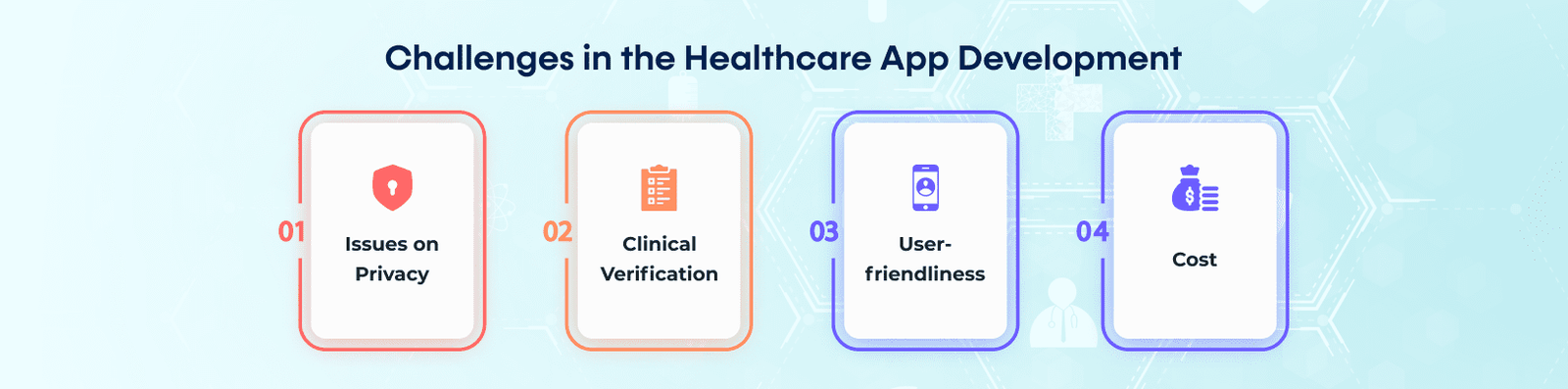
Challenges in the Healthcare App Development 

The idea of an app is exciting. Developing one also brings you the chance to expand your business in new ways. But it is not without challenges. Here are some of the most common issues you could run into while creating a healthcare app.

Challenges in the Healthcare App Development

Issues on Privacy:

93% of healthcare facilities face a data breach in the last three years. Protecting patient information is a sensitive issue. You could be met with issues about privacy in your app development journey. 

Clinical Verification:

The data provided in such an app should be accurate. There is no room for error where people’s lives are involved. The app you create could undergo several rounds of verification. When data provided in healthcare is accurate, there is a higher chance of better outcomes. 

User-friendliness:

The app is meant to be used by regular people. It should therefore have a very easy-to-use interface. If your app is not user-friendly, there is a 90% chance it will be deleted. It takes a good development team to create an app that is simple to use yet has everything that meets your business objectives.

Cost:

Creating a custom app is not as easy on the pocket. There is a high chance you will be met with a heavy bill. With the help of an experienced custom healthcare app development company, you can cut down unnecessary expenses and choose where you need to spend. Please find more details on what is the cost of developing a mobile app for healthcare.

Signs of a Good Healthcare App Development Company

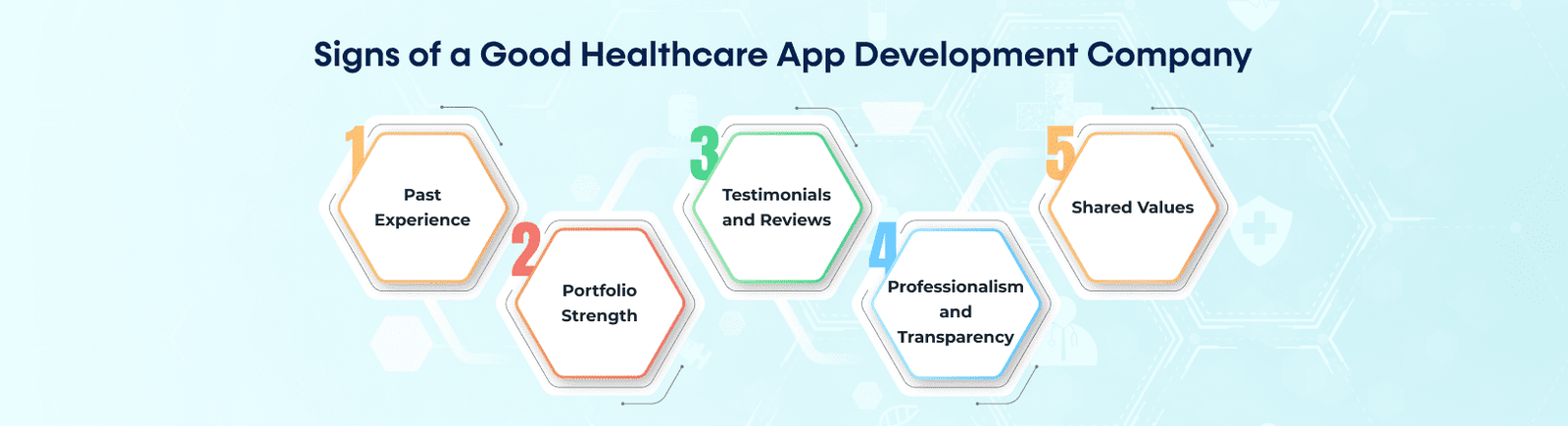
The number of app development companies is increasing day by day. How to tell the good ones from the not-so-good ones? Please find the comprehensive guide on hiring a healthcare software development company. Here are some signs to watch out for.

Signs of a Good Healthcare App Development Company

Past Experience

If there is one factor you should keep while choosing a development company, it is experience. They will better understand the security, legal and technical issues of developing an app. Therefore, no matter how exciting an app developer offers, your decision should be guided by their experience. 

Portfolio Strength

By examining the provider’s portfolio, you can measure their capabilities and proposed solutions through their previous healthcare projects. You can assess whether they have the necessary skills to handle your app’s specific requirements.

Testimonials and Reviews

Insights from past collaborators are very important. Look for testimonials on their website. This will give you more reason to consider whether they are trustworthy. 

Professionalism and Transparency

Assess how the company handles communication. A company should have a high level of transparency throughout the process. They should be honest about their expertise, availability, and project management ability. 

Shared Values

Ensure that the provider’s values align with yours and your company’s. Shared values create a strong foundation for good collaboration. A value-driven company is better equipped to handle the challenges of a project. 

Questions to Ask a Potential Healthcare App Development Partner

  • Since how many years do you provide healthcare app development services?

If there is one question that can give you a lot of information at once, it is this. The answer should be a strong number with a portfolio to support their claim. Their years and previous experiences give you an idea of what to expect from them. 

  • How qualified are your healthcare app developers? 

Ultimately, your product is going to be handled by them. It would be a blunder not to ask this. Every development team should have highly skilled and certified developers. Certifications such as Registered Health Information Technician (RHIT), Certified Professional Coder (CPC®), and Registered Health Information Administrator (RHIA®) are highly impressive credentials to consider.

  • How have your previous clients reviewed you? 

Reviews and feedback can guide you through a lot of information when making a decision. Previous customers will have left behind comments that accurately describe the service. If they are mostly good, then you are good to go. Keep an eye out for the negative comments too. 

  • Will the team submit the health app to the app stores? 

The app stores are the best platform for your app to take off. It is authentic and credible. But getting it to be there has some challenges involved. But it should be easy for a development team. The team should be willing to do it for you so that your app gets maximum coverage. 

  • Do you ensure proper paperwork? 

It is easy to get tricked in the digital world. Make sure you sign appropriate contracts before you engage with them. It also builds a level of trust. The team should be willing to sign contracts and do apt paperwork before beginning work. 

Mistakes to Avoid When Choosing a Development Firm

When choosing a healthcare app development firm, it is not just numbers and figures that matter. There are several pitfalls you should avoid. Here are some of the most common ones.

Mistakes to Avoid When Choosing a Development Firm

Not Choosing a Compatible Team

When you choose a development team, you are looking for a team of real people. You could lose sight of the human factor in the mix of technical things. Make sure to assess how compatible you are as a team. Make sure there is a human connection. 

Going Just by the Cost 

A light price tag is a killer offer. Sometimes it can also be a trap. Don’t fall for the lowest service. Choose a company based on its skills, experience, values, and honesty. All of these should weigh alongside the cost. 

Not Opting for Maintenance and Support

An app might need a lot of maintenance work after it has been launched. The relationship with the development team doesn’t end with the launch. Pick a team that offers post-launch maintenance and support. After all, your business depends on the quality of the app. 

Not looking for Legal and Compliance Expertise

Your app can be in hot soup if it does not comply with the laws and regulations. There are many regulations in place for apps. The development team should have thorough expertise and experience in handling those areas.

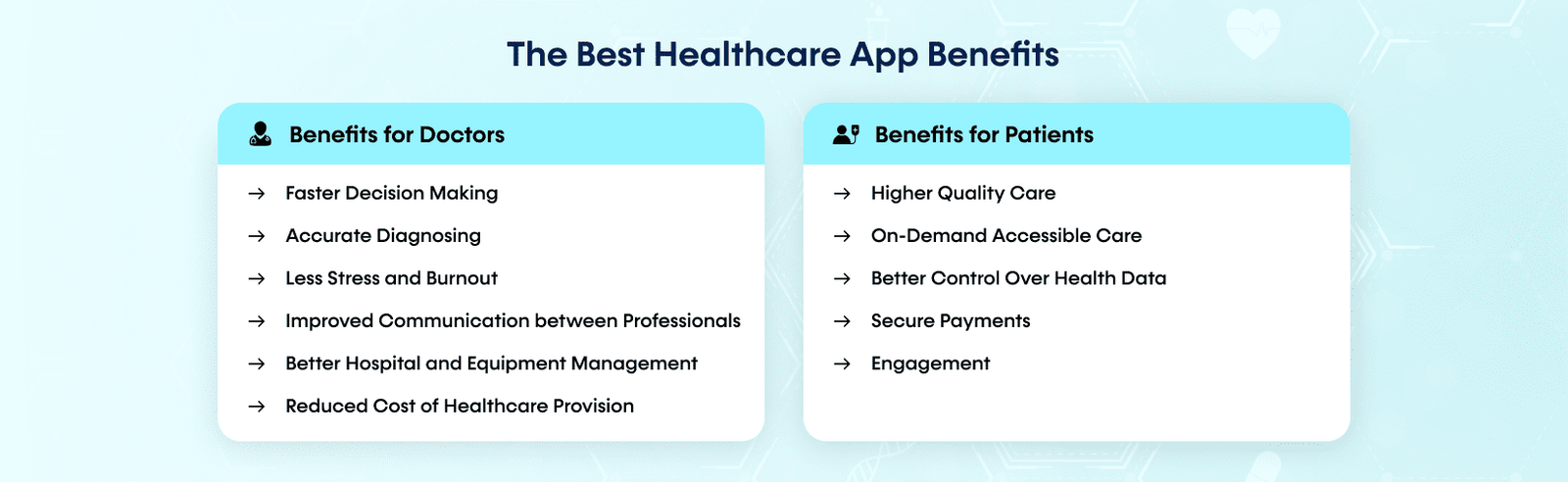
The Best Healthcare App Benefits

Custom app development offers many benefits for doctors and patients. Let us go over a few: 

Signs of a Good Healthcare App Development Company

Benefits for Doctors

  1. Faster Decision Making: It streamlines processes, enabling doctors to make quicker decisions and allocate more time to patients.
  2. Accurate Diagnosing: Improved data analysis leads to better treatment plans and timely healthcare delivery. With it comes better patient outcomes. 
  3. Less Stress and Burnout: By automating mundane tasks and reducing paperwork, doctors can focus on what’s important and get more time for themselves as well. 
  4. Improved Communication between Professionals: Doctors can communicate with each other regardless of location. 
  5. Better Hospital and Equipment Management: IoT technology allows real-time tracking of medical equipment. It can lead to better usage and improve overall hospital management.
  6. Reduced Cost of Healthcare Provision: All other benefits of healthcare apps contribute to lowering the cost of healthcare services.

Benefits for Patients

  1. Higher Quality Care: Patients receive personalized health plans. It is tailored to their specific conditions. 
  2. On-Demand Accessible Care: Healthcare apps offer faster and more convenient access to services. This includes medication delivery and remote consultations.
  3. Better Control Over Health Data: Patients can export and share their medical records with other hospitals. It results in better data management and continuity of care.
  4. Secure Payments: In-app payments with credit cards are available. It adds to the convenience and security of medical transactions.
  5. Engagement: Healthcare apps empower patients to take an active role in their healthcare journey. 

Key Takeaways

Custom healthcare app development is a necessity in modern times. Hospitals, clinics, and even private practices are turning to it to stay ahead and create better patient outcomes and experiences. Building a good healthcare app starts with the right healthcare app development company. We hope this guide helps you understand the process of choosing one, what to look for, and what to expect along the way. 

At EMed HealthTech, we’re proud to be a healthcare app development company that ticks off these boxes. Our team actively provides healthcare facilities with the latest technology. 

We have partnered with many promising healthcare businesses and brought their app ideas to life. We can do the same for you. 

Want to learn more about our healthcare mobile app development services? Get in touch with us today! 

What Is the Cost of Developing a Mobile App for Healthcare

What Is the Cost of Developing a Mobile App for Healthcare?

Mobile devices and their gazillion apps have become an extension of our beings. There is an app to manage every aspect of our life. Healthcare is no exception, as more people turn to mobile apps to manage their health and wellness. For users, there is one for walking, running, sleeping, breathing, and everything you can imagine. 

A mobile app can be a powerful tool for healthcare providers to improve patient engagement and outcomes. However, developing a healthcare mobile app is not a simple task, and it comes with a price tag. If you are a healthcare provider, you may be wondering about the cost of developing a mobile app for healthcare.

In this article, we will explore the cost of healthcare app development, factors that impact the cost, and tips to keep the cost within budget. Here you can find a detailed guide for building a successful healthcare mobile app.

Factors Affecting the Cost of Healthcare Mobile App Development

Developing a healthcare mobile app is a complex process that requires careful planning, development, and testing. It involves various factors that influence the overall cost of the project. You can go for a ready solution or can choose custom development. Here is the difference between readymade and custom healthcare software.

Also, there are some key factors that can affect the cost of healthcare mobile app development. 

– The complexity of the app

The more complex the app, the more time and resources it takes to develop. The app’s complexity can affect the project’s design, development, and testing phases, ultimately affecting the cost.

– Features and functionalities

The more features and functionalities the app has, the more time and resources it takes to develop. Some essential features of a healthcare mobile app include patient registration, appointment booking, medication reminders, lab results, and telemedicine. Including advanced features such as real-time monitoring and health, tracking can significantly increase the development cost.

– Design and user experience

A poorly designed app with a subpar user experience can lead to low user engagement and negatively impact the overall brand reputation. Therefore, investing in the app’s design and user experience is essential to ensure that it is visually appealing, user-friendly, and meets the target audience’s needs. 

– Platform and device compatibility

The app should be compatible with different operating systems, including iOS and Android, and devices such as smartphones, tablets, and wearables. Developing an app compatible with multiple platforms and devices requires additional resources, which can affect the development cost.

– Integration with existing systems and data security

The app should integrate with existing healthcare systems such as Electronic Health Records (EHR) and provide secure data transmission and storage. Developing an app with robust data security and integration capabilities requires additional resources, affecting the development cost.

Average Cost of Healthcare Mobile App Development

Developing a healthcare mobile app can be a costly investment, and it is important to know the average costs involved before embarking on such a project. The cost of developing a healthcare mobile app can vary based on several factors that you can consider during development. Here is all the required information to develop a custom healthcare application.

When creating a healthcare app, it is essential to consider the best features to make it stand out from the competition. And also need to include the required key regulatory compliances for healthcare software and application.

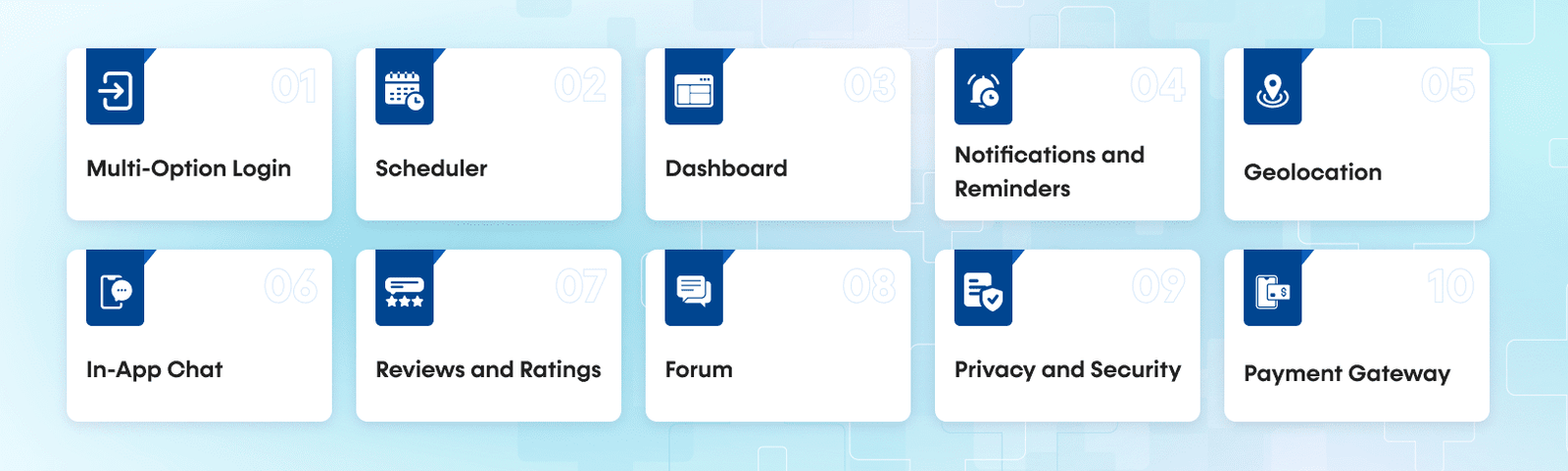
Here are some of the most important features to include in-app and accordingly cost can be decided:

Average Cost of Healthcare Mobile App Development

– Multi-Option Login: A multi-option login interface allows users to log in through social media or manually enter user details. Creating and deploying a multi-option login to your healthcare app may range from $4,000 to $10,000.

– Scheduler: A scheduler is a critical healthcare app feature that helps manage different activities. This feature allows scheduling appointments and delivering synced alerts and notifications to users. Designing and integrating a scheduler may range from $500 to $700.

– Dashboard: An interactive dashboard provides users quick access to everything they wish to avail through your healthcare app. The cost of designing and developing interactive user dashboards may range from $10,000 to $15,000.

– Notifications and Reminders: Incorporating notifications and reminders are core functionalities required in a healthcare app. The feature can be personalized and precise for the users. The cost of integrating effective notifications and reminders in your healthcare app may range between $800 to $1,500.

– Geolocation: Geolocation access provides location-based functionalities in your healthcare app. Incorporating geolocation capabilities may cost between $7,000 to $15,000.

-In-App Chat: In-app chats facilitate fast and smooth delivery of solutions. Integrating in-app chat features into your healthcare app may cost anywhere between $5,000 to $10,000.

– Reviews and Ratings: Users can post reviews and ratings on your app, allowing other users to consider genuine remarks while making a call on availing of your app services. Integrating reviews and rating options into your healthcare app may cost between $3,000 and $7,000.

– Forum: A forum enhances interaction capabilities by allowing users to post their queries and product administrators to answer. Integrating a forum into your healthcare app may cost around $5,000 to $10,000.

– Privacy and Security: To sustain a competitive, risk-prone, and fast-evolving market, privacy and secure transactions are important. Implementing your healthcare app’s latest privacy and security standards and protocols can cost anywhere between $5,000 and $20,000.

– Payment Gateway: A payment gateway plays a crucial role in ensuring the lucrative accomplishment of transactions. You can expect to pay between $3,000 to $7,000 to integrate multiple payment gateways into your product.

Cost-Saving Measures for Healthcare Mobile App Development

Don’t let the costs deter you from creating the app of your vision. There are always cost-saving measures that can make the whole process much more cost-effective. The following are some cost-saving measures that can be implemented during development.

– Prioritizing essential features and functionalities

It is vital to identify the core features that your app requires and focus on developing them first. You can save time and money by prioritizing essential features by avoiding developing unnecessary features.

– Agile development methodology

The Agile methodology enables developers to continually test and validate the app’s features, making it easier to identify and fix issues early in the development process. It is an effective way to manage costs because it involves breaking down the development process into small manageable tasks.

– Use of open-source tools and libraries

Using open-source tools and libraries can save costs during healthcare mobile app development. These tools can help speed the development process, reduce costs, and improve the app’s overall quality.

– Working with an experienced healthcare app development company

An experienced company will have the expertise to develop your app efficiently using the latest technologies and tools. Here are 5 key considerations for hiring the right healthcare app developers. They will also be able to identify potential issues early on in the development process and provide solutions to address them. This can help avoid costly mistakes and delays, ultimately leading to a better and more cost-effective product. 

Choose EMed HealthTech for your Custom Healthcare App Development 

The cost of developing a mobile app for healthcare varies depending on several factors. However, by considering cost-saving measures such as prioritizing essential features, using open-source tools, and working with an experienced healthcare app development company, you can significantly reduce the overall cost without compromising quality. 

EMed Healthtech is a reliable and experienced healthcare app development company that can help you build custom healthcare apps tailored to your needs and requirements. Contact us today to learn more about our custom healthcare app development services and take the first step toward creating a successful healthcare app.

Dec 2022 10 Digital Health Trends To Follow in 2023

10 Digital Healthcare Trends To Follow in 2023

Advances in medicine have always been closely tied to advancing technology. New inventions allow better diagnosis and care. The adoption of technology in medicine has seen a huge surge, since the onset of the COVID pandemic, especially in telehealth services. Other areas like wearable tech are also popular means of tracking vitals. All these and other factors like faster connectivity and research breakthroughs forecast a year filled with new health trends.

What is Digital Healthcare?

Digital health refers to a broad range of categories such as mobile health, wearable devices, health information technology, telemedicine and telehealth, and personalized medicine. These digital healthcare services and tools help diagnose and treat diseases and enhance the delivery of healthcare for the individual. Doctors can use data from these to make better diagnoses. It also uses technology like artificial intelligence, machine learning, virtual consultations, and more to make healthcare accessible to all. Digital healthcare has been the driving force of innovation and revolution in the healthcare industry.

Ten Digital Healthcare Trends to Look Out for in 2023

Earlier we checked 6 Emerging Digital Transformation trends in 2022 that are set to revolutionize the healthcare industry. Please check the top 10 digital healthcare trends to check in 2023.

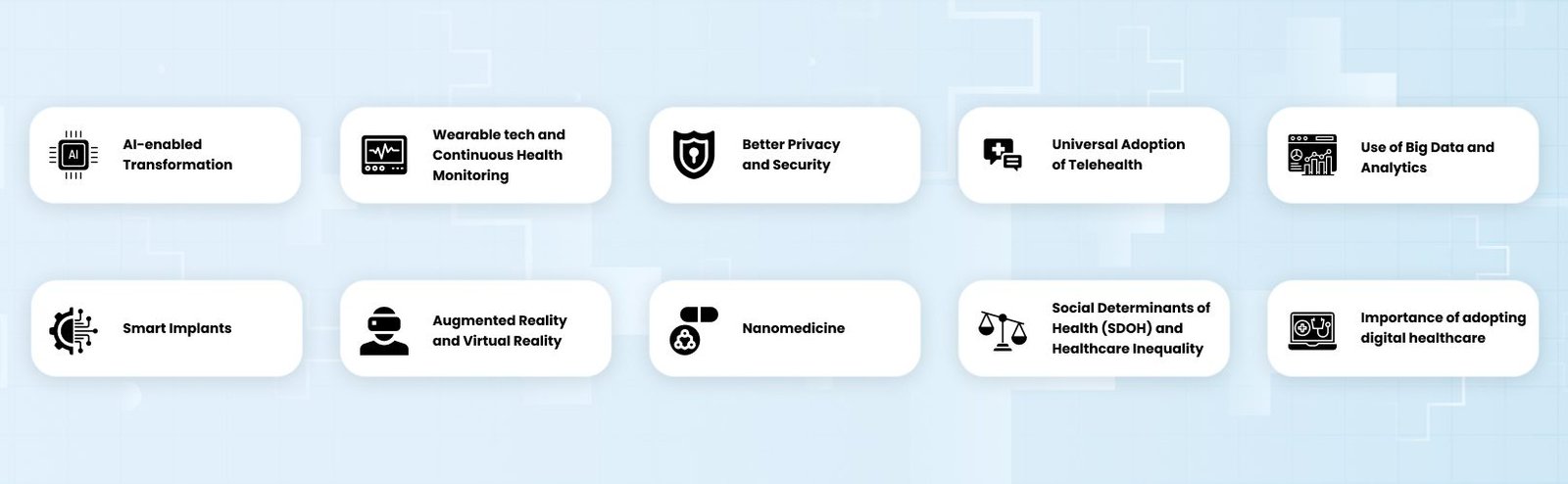
Ten-Digital-Healthcare-Trends-to-Look-Out

1. AI-enabled Digital Healthcare Transformation

One of the prominent healthcare trends that are expected in 2023 is the different ways in which AI will impact healthcare. AI can help data-driven clinical decision-making, streamline healthcare system workflows, etc. AI has the potential to improve patient care, enhance the work-life balance of physicians, and optimize resources for the functioning of healthcare institutions. One example is medical chatbots powered by AI conducting human-like conversations via text, voice, or option-based inputs.

2. Wearable tech and Continuous Health Monitoring

Wearable technology revolutionizes the way people perceive their health. It has brought a level of awareness to users. They take health into their own hands and use the information from it to constantly work on themselves. These wearables also generate data that doctors use. It also enables them to take a proactive rather than a reactive approach. It helps diagnose and monitor lifestyle diseases and other health conditions early on. They are also used for clinical trials.

3. Better Privacy and Security

Technology has aided in protecting the privacy and security of patients. The use of telehealth means a broader scope of private data being leaked unintentionally or intentionally for fraudulent purposes. The large amount of data generated from wearables also has the potential to be used illegally. However, better data protection is achieved with better security systems and technology like blockchain. Healthcare centers invest in better data privacy and security plans to ensure patient data privacy and to gain their trust.

4. Universal Adoption of Telehealth

Communication systems have undergone rapid globalization and there is better connectivity than ever before. This worldwide connectivity opens up the possibility of telehealth being widely adopted rather than being an isolated phenomenon. Telehealth as a way of transmitting medical information opens healthcare access to all. Telehealth services via videoconferencing, the internet, streaming services, and other communication systems are slowly being adopted worldwide. With the COVID pandemic showing a surge in such adoption, there is a rising trend of it becoming more widely used.

5. Use of Big Data and Analytics

One of the biggest trends of the previous years was using large amounts of data to gain insights. This continues in the coming years and the different industries, including healthcare. Mass amounts of data collected from devices like mobile, wearables, and other medical devices can give valuable data. These data are used to make new correlations between the economy, ecology, and demographics. Data is analyzed to know better what we never had access to before. Analytics can be used to prevent diseases, and the spread of diseases in a community and come to valuable conclusions from studies.

6. Smart Implants

One of the advancements in technology is the possibility of smart implants. They are medical devices implanted into the human body and transmit real-time information. This information can help ascertain critical information about the person’s condition. The data can then be used to prevent emergencies and take a proactive approach to treatment. Implant-related technology has also seen widespread adoption. There is higher efficiency in regenerative medicine, a cure for disabilities that previously could not be cured, and effective patient rehabilitation.

7. Augmented Reality and Virtual Reality

Augmented reality and virtual reality have been around for some time in the mainstream but their applications were mostly in the entertainment industry. The use of these technologies in the healthcare sector is still in the nascent stage but holds tremendous potential. AR and VR can be used for medical diagnosis, education, and training. Using simulation realities to teach different medical procedures, conducting them remotely via augmented reality, etc, are being tested worldwide.

8. Nanomedicine

Although nanotechnology has been around for a long time, there has not been significant widespread application in medical and other fields. However, the little steps over the years have accumulated to something, and 2023 is bound to see some nanotechnology in action. Inventions like xenobots, tiny organic robots with the ability to self-replicate, have made waves in the medical community. It can be used in cancer detection to find genetic anomalies or autoimmune diseases on a cellular level.

9. Investing in mental health

The pandemic and its aftermath put into stark reality the need for mental health. The pandemic put people in unusually challenging situations like isolation, loss of loved ones, and losing jobs as well. All of these brought the spotlight to the importance of mental health, and there has been no looking back ever since. With the use of telehealth services, the avenue of online mental health services has increased. 2023 shows the scope of expanding mental health services and increased investment in the same.

10. Social Determinants of Health (SDOH) and Healthcare Inequality

Healthcare is no longer regarded as accessible merely considering the distance. There are a lot of other factors that determine how accessible healthcare is to a person. These factors are called Social Determinants of Health. The environmental conditions to which a person is born, lives, worship, the education and exposure they have, their gender, employment, job security, income and social protection, and so many other factors come into play. Addressing these and focusing on them to negate them and make healthcare more democratic is a challenge for the coming years.


Importance of adopting digital healthcare

Hospitals, clinics, and private practices greatly benefit from adopting digital healthcare. On the whole, digital health products have the potential to lower the expenses related to healthcare, prevent diseases with a proactive approach, and monitor and help patients with chronic health conditions. It also has a high level of personalization according to patients’ needs. Here is how digital health can help developing countries in advancing their healthcare system.

Healthcare providers benefit from digital health as it gives them the tools to have a better view of the patient;’s health, which gives them an extensive view of the patient, which allows them to give better care to the patient. Overall, digital healthcare increases positive medical outcomes and the efficiency of the process.

Why Should you Work with a Digital Healthcare Provider?

Digital healthcare provider equips you with the necessary technology to establish a solid digital healthcare system. They would have better knowledge of the technology and better access to the resources you need to set it up. A good digital healthcare provider will also give you 24/7 support. They can guide you through the processes that make healthcare practices more efficient.

Why Should You Hire EMed HealthTech’s Developers?

EMed HealthTech is an expert in healthcare IT solutions and services and a specialist in healthcare software development. At EMed HealthTech we have state-of-the-art technology and customized IT solutions and services that help the healthcare industry to adopt cutting-edge technology that gives them the upper hand in the market. We enable companies to adopt healthcare IT products and services that improve the quality of their healthcare services and increase their revenue.

Interested in discussing more? Get in touch with us!


Integrated Healthcare Software

All You Need to Know About Integrated Healthcare Solutions

If COVID was a challenging time for us, we proved we were quick to adapt. We saw our basic needs met with the help of technology. Things we would have thought impossible are now the norm. If visiting a doctor was once a task, it is now accessible from the comfort of your home via virtual consultation. Running for the pharmacy could have been difficult, but we saw efficient delivery systems come into place. Relying on technology to help us through the pandemic. But what about in the long run? This is where integrated healthcare solutions come into play. Let’s explore how.

The adoption of technology in the healthcare sector has spiked over the last couple of years, thanks to COVID. A 2021 study by Accenture in the United States shows that 26% of people found their access to healthcare has improved since the pandemic.

The Challenges in Healthcare’s Tech Adoption

The quick shift to virtual care during the pandemic saw a great tide of digital adoption in healthcare. But is the tide retreating as the pandemic has subsided? The same Accenture study points out that the shift to virtual care has reduced since life went back to normal despite virtual care’s increasing accessibility.

One of the reasons is the lack of awareness and trust on the part of the healthcare providers and patients.

Another big reason has been the disconnected way of technology adoption among hospitals and healthcare providers. Often their operations are split between legacy systems and other technology platforms, resulting in a fragmented approach. Managing a bunch of systems that are different from each other is not just tedious and time-consuming but also leads to stress and burnout among healthcare providers. The answer to these problems lies in integrated healthcare solutions.

What is Healthcare Integration Solutions?

Healthcare integration aims to use the available resources to efficiently deliver healthcare services, enable effective communication between different systems of healthcare, and incorporate standardized protocols to ensure its overall smooth functioning. It prioritizes giving the best possible care to the patient, increasing the quality of the overall experience and thus getting better outcomes. It also helps the patient have a smooth transition through the healthcare system. When all of these tasks are aided by technology, it leads to affordable healthcare solutions. An integrated healthcare solution combines the functions of several distinctive applications such as online pharmacy, Telemedicine, and Diagnostics lab app to create a holistic and all-inclusive environment. 

The Need for an Integrated Health Care System

As mentioned earlier, technology has been used on different fronts of the healthcare system. Be it billing, management, EHR, pharmacy, or marketing, there is a large amount of data generated at each front. However, there exists a communication gap between these different fronts. The data is siloed and not put to good use.

The cost of disparate systems thus refers to the shortfalls or risks the industry has to face due to a system of unconnected tools. Data security risks, inefficient workflows, and overly complicated IT management are some of the issues faced today.

With well-designed integrated healthcare solutions, these obstacles can be knocked down to bring in true interoperability. Healthcare leaders working with supply chain teams can help cleanse and standardize data to ensure efficient data management. It can also lead to a seamless customer experience and an advantage over competitors. It is safe to say that an integrated health solution is no longer a luxury for modern healthcare companies, but a necessity.

Features of a Good healthcare Integration Software

Integrated health solutions are based on collaboration and communication. Addressing the needs of patients is at the center, with benefits to the healthcare providers as well. Let us look at some of the defining features you can expect from good healthcare medical solutions.

Healthcare integration solutions require features that enable the functioning of pharmacy, lab, and telemedicine, as well as business expansion. A good healthcare system that is built around customer convenience will have five panels. They are:

  1. Patient Panel
  2. Pharmacy Panel
  3. Doctor Panel
  4. Lab Panel
  5. Super Admin Panel

Let’s look at what features each panel has.

1. Patient Panel

This is the part of the software that is visible to the patients. The user interface contains the different operations such as:

  1. Search doctors based on the different parameters like specialty and charges before fixing a consultation
  2. Book a video consultation at a convenient time with a doctor of choice
  3. Super fast search without browsing the whole catalog or search via voice command
  4. Return partial or full order according to the requirement and ask for a refund
  5. Search and book lab tests or packages according to the test name or category and book a sample collection from home or an appointment.
  6. Option to book a Home visit or clinic visit with ease and manage appointments

2.  Pharmacy Panel

The pharmacy wing of the healthcare facility uses this part of the app where they can take care of transactions relating to the pharmacy.

  1. An abandoned cart report lets you follow up on items with added discount
  2. Order return or refund and directly transact the money to the customer
  3. Manage orders by assigning orders to pharmacists and tracking order status
  4. Create multiple sub-admins with restricted access for better management
  5. Simple and clickable banners for higher engagement and click-through rate
  6. Reports and analytics for insights on customer spending patterns, pharmacy performance, product performance, and more


3. Doctor Panel

This part is the user interface for doctors, where they can carry out day-to-day activities.

  1. Manage profile with details like qualification, specialty, awards, and clinic details
  2. Update availability schedule standard availability time or manually change
  3. Detailed Dashboard with details on appointments, follow-ups, and consultation
  4. Cancel the appointment with reason and the patient will be notified immediately
  5. Create and share medicine order for patient use
  6. Notifications for new appointments, follow-ups, and consultations


4. Lab Panel

The lab panel is designed for the use of lab admins who head the activities.

  1. Content Management of test fees, lab profiles, test requirements, and services
  2. Manage multiple Labs from a centralized location
  3. Dashboard for a better view of all bookings including scheduled and canceled
  4. Manage packages and modify them to cater to the customer
  5. Reports and analytics with insights on lab performance, customer purchase patterns, and product performance.
  6. Simple and clickable banners to improve click-through rates and engagement.


5. Super Admin Panel

This is managed by the administrative office of a healthcare system giving them overall visibility and control.

  1. Manage doctors and lab from a single dashboard
  2. Manage lab tests and packages, and combine them according to customer needs
  3. Manage multiple pharmacies for smooth handling of all facilities
  4. Manage products, modify or promote products for better sales
  5. Manage orders, track orders and solve order-related queries
  6. Get a better view at a glance of follow-ups, consultations, history, and other details.

Final Thoughts

Integrated health solutions are the most logical way forward for modern medicine. It incorporates the best technology to give the user and customer satisfaction. If you are convinced that your healthcare facility can benefit from using feature-rich integrated healthcare solutions, EMed HealthTech is your perfect choice.

At EMed HealthTech, we build custom all-in-one integrated healthcare platforms, which include telemedicine apps, online pharmacy, and diagnostic lab apps along with an array of features tailored to meet your business needs.

If you’re ready to enhance your business with world-class integrated healthcare solutions, get in touch with us for a custom quote today