The Future of Telemedicine Trends to Watch in 2025

The Future of Telemedicine Platform: Trends to Watch in 2025

Telemedicine Platform has rapidly become one of the most revolutionary aspects of modern healthcare. It’s role in medical services expanding each year, the future of telemedicine is filled with incredible potential. As 2025 approaches, telemedicine platform is set to transform patient care even further, improving access, reducing costs, and enhancing healthcare delivery. The ongoing telemedicine innovations will alter the relationship between healthcare providers and patients, driven by the worldwide trend toward digital healthcare solutions.

In this blog, we will explore the latest telemedicine trends and what we can expect by 2025.

Telemedicine Platform in 2025: A Quick Overview

Several factors have contributed to the fast-paced evolution of telemedicine, particularly the COVID-19 pandemic, which accelerated the shift toward virtual healthcare. Even today, patients and healthcare providers view telemedicine platform as an essential component of everyday healthcare.

By 2025, telemedicine trends suggest it will become a more mainstream part of healthcare systems, supported by digital advancements and increased mobile technology. Improved internet infrastructure, especially in rural and underserved areas, the demand for convenience, and mobile app development are driving this growth.

Regulatory bodies are also playing a more positive role by crafting rules that encourage healthcare providers to adopt telemedicine technology. By 2025, telemedicine platform will focus on improving access to care and enhancing patient outcomes using telemedicine innovations that are personalized and data-driven.

Top Trends Shaping Telemedicine Platform in 2025
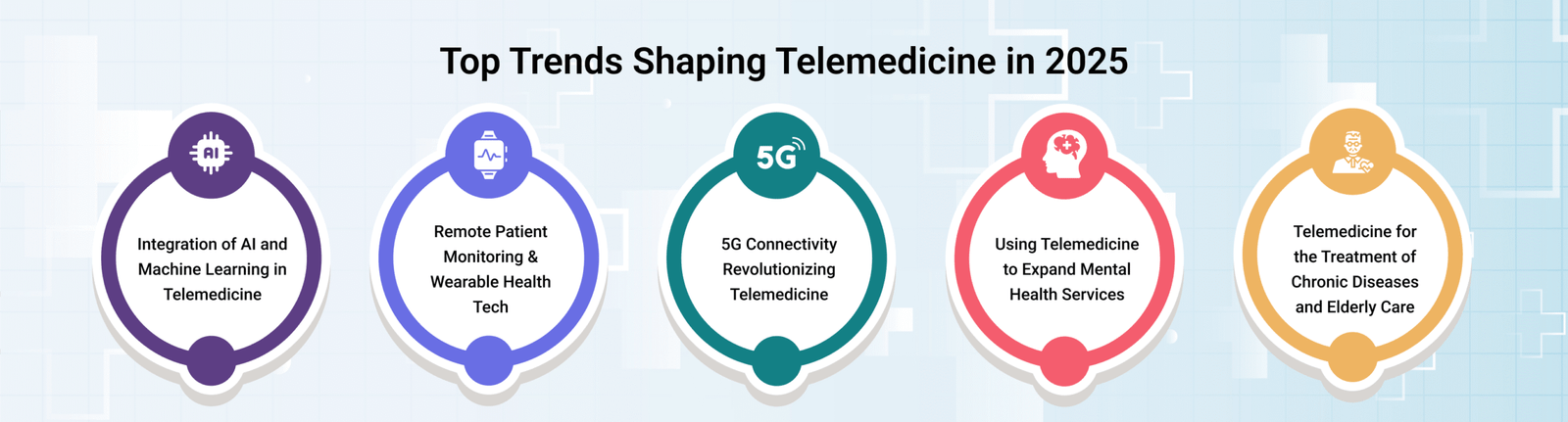
  • Integration of AI and Machine Learning in Telemedicine

Artificial Intelligence (AI) and Machine Learning (ML) will play a crucial role in the future of telehealth. AI-driven diagnostic tools can analyze real-time patient data and assist medical professionals in making faster, more informed decisions. For example, telemedicine innovations such as AI-powered virtual assistants will help automate routine tasks like symptom checks, appointment booking, and patient triage.

Machine learning models can process large datasets, enabling predictive analysis and customized treatment plans. This means that healthcare providers can offer more precise care, driving the increasing demand for telemedicine platform with advanced, AI-powered features.

  • Remote Patient Monitoring & Wearable Healthtech

Wearable health technologies, such as smartwatches and fitness trackers, will continue to evolve in the future of telehealth. These devices can monitor vital signs like heart rate, blood pressure, and oxygen levels in real-time, providing healthcare providers with invaluable data for proactive care management, particularly for chronic conditions.

By 2025, telemedicine innovations will include tighter integration between these wearables and telemedicine platforms. This will allow for automatic alerts when abnormal readings are detected, enabling healthcare professionals to respond quickly. The convenience of remote monitoring will significantly improve patient outcomes, while also benefiting healthcare providers by providing real-time data for clinical decisions.

  • 5G Connectivity Transforming Telemedicine Platform

The rollout of 5G networks will revolutionize telemedicine trends by providing faster speeds and lower latency. High-definition video consultations will become the norm, making virtual appointments feel as close to in-person visits as possible.

5G will also close the connectivity gap in rural areas, where poor internet infrastructure has hindered telemedicine adoption. With enhanced 5G connectivity, telemedicine innovations will make quality healthcare accessible to patients in remote areas, significantly improving future of telehealth for underserved populations.

  • Using Telemedicine to Expand Mental Health Services

By 2025, telemedicine will be a critical tool in delivering mental health services. Today, virtual counseling and therapy are already widely used, but telemedicine trends suggest that even more comprehensive mental health solutions will be integrated into telemedicine platforms.

Features such as mental health assessments, self-care tools, and cognitive behavioral therapy modules will be available, offering a more holistic approach to mental health care. Telemedicine apps will offer a private, convenient way to seek help, reducing the stigma around mental health care and improving accessibility for patients.

  • Telemedicine Platform for the Treatment of Chronic Diseases and Elderly Care

Patients with chronic conditions and elderly individuals stand to benefit the most from the future of telehealth. Telemedicine platforms allow for continuous, real-time monitoring, customized treatment plans, and virtual consultations, reducing the need for in-person visits and minimizing exposure to potential infections.

Specialized telemedicine apps designed for elderly patients will include features such as medication management, easy navigation, and intuitive interfaces, enhancing their quality of life. The ability to create telemedicine platform customize to specific patient needs is one of the most exciting telemedicine innovations for elderly care.

The Role of Telemedicine Platform in Future Healthcare

  • Development of Custom Telemedicine Apps

The demand to create telemedicine apps tailored to specific healthcare needs will only grow. Custom telemedicine apps can offer virtual consultations, AI-powered diagnostics, remote monitoring, and personalized health plans. Specialized telemedicine applications for fields like cardiology, dermatology, and mental health will allow healthcare professionals to provide targeted, effective care.

By 2025, developing personalized telemedicine solutions will be key to improving healthcare access and patient outcomes. Tailored apps will enable medical professionals to deliver care that meets the unique requirements of their patients.

  • Interoperability and Integration with EHR Systems

By 2025, a major advancement in the future of telehealth will be the seamless integration of telemedicine apps with electronic health records (EHRs). More telemedicine platforms will be designed to integrate patient data from EHRs, allowing healthcare providers to access comprehensive information during a virtual consultation.

This interoperability will enhance decision-making, reduce errors, and improve the overall quality of care, as healthcare professionals will have a complete view of a patient’s medical history during a telehealth appointment.

  • Personalized Patient Experience Through Telemedicine Apps

Personalization will be a dominant trend in telemedicine app development. Patients increasingly expect tailored care, and telemedicine platforms are no exception. Telemedicine trends indicate that apps will track patient progress, provide personalized health recommendations, and schedule follow-ups based on individual needs.

By providing a more customized experience, telemedicine apps can increase patient engagement and adherence to treatment plans, significantly enhancing healthcare outcomes.

Challenges and Opportunities in Telemedicine Platform for 2025

  • Resolving Security and Regulatory Issues

As telemedicine expands, concerns about data security and privacy remain paramount. By 2025, telemedicine apps will need to adhere to stricter regulations governing the transmission and storage of sensitive patient data. Advanced security measures, such as end-to-end encryption and blockchain technology, will play a crucial role in safeguarding patient data and building trust in telemedicine platforms.

  • Closing the Digital Gap in Telemedicine

While telemedicine is advancing rapidly, there is still a digital divide to address, particularly in rural and underserved areas. Investments in digital infrastructure, internet access, and digital literacy programs are essential to ensure that everyone can benefit from telemedicine services.

Conclusion

By 2025, telemedicine platform will continue to play an increasingly vital role in healthcare delivery. The future of telehealth will undoubtedly be shaped by telemedicine innovations such as AI integration, wearable health technology, and 5G connectivity.
These trends will drive more personalized, efficient, and accessible healthcare solutions, improving patient outcomes globally.

If you’re ready to take your medical services to the next level, partner with EMed Healthtech to build a telemedicine platform designed specifically for your healthcare needs.

Why User Experience Is Important in Online Pharmacy App Development

Why User Experience Is Important in Online Pharmacy App Development?

Convenience, security, and accessibility are important factors that influence client satisfaction in the digital healthcare sector. The need for a well-designed user experience (UX) is crucial as the need for healthcare services moves online, especially with online pharmacy apps. The success of online pharmacy apps depends on providing a smooth and user-friendly experience. People increasingly rely on online pharmacy apps to acquire prescription drugs, renew existing ones, and consult with medical specialists.

In this article, we will examine how UX is important in online pharmacy app development. We will also understand key tactics for developing a first-rate user interface (UI) design in healthcare and how it affects user experience, retention, and overall company success.

The Significance of User Experience in Online Pharmacy Apps

Every aspect of a user’s contact with a product is included in the user experience (UX), such as the product’s ease of navigation, intuitive design, and users’ satisfaction levels after performing tasks. This refers to developing an online pharmacy app that enables users to easily explore prescription drugs, upload prescriptions, track orders, and securely make payments.

In addition to facilitating quick job completion, a well UX design medical app fosters trust. This trust is crucial in the healthcare sector, where sensitive personal and medical data are involved. A platform should be safe, considerate of their time, and streamline intricate medical processes to gain patients’ faith.

An app with a bad user experience can turn off users, cause cart abandonment, and harm your platform’s image. It is critical to understand that designing for user experience entails more than simply making things visually beautiful; it also entails creating interactions that are logical, seamless, and responsive to the user’s demands.

Top Key UX Design Considerations for an Online Pharmacy App

When developing an online pharmacy app it is essential to understand the particular requirements and difficulties faced by the healthcare sector and its consumers. While working on UX design medical, keep the following points in mind:

  • Simplicity and Intuitive Navigation

An online pharmacy app is probably serving a wide range of consumers, from tech-savvy folks to elderly folks who might not be as comfortable with digital media. Thus, making navigation as easy as possible is one of the main objectives of UX design medical. It should be simple for users to find important features like submitting prescriptions, looking for drugs, and contacting customer service.

Users may become frustrated and give up on an app if it has a crowded UI and too many options. Developers can ensure that users of various technical levels may simply perform their activities, resulting in a more rewarding experience, by emphasizing simplicity and easy navigation.

  • Streamlined Prescription Upload and Management

Prescription management and uploading are the key functions of an online pharmacy app. For a positive user experience, this procedure has to be streamlined. It is simple for users to scan their prescriptions with OCR (Optical Character Recognition) features, and prescription renewal reminders help ensure users never forget to get a refill.

Additionally, seamless prescription management is expected. Within the app, users should be able to see their past prescription fills, schedule auto-refills, and get in touch with pharmacists for advice. These features make handling prescriptions easier for the user.

  • Secure and Simple Checkout Process

Any e-commerce platform, including an online pharmacy app, must have a solid checkout experience. It should be easy and safe for users to finish their transactions. Providing a variety of payment methods, including digital wallets, credit/debit cards, and insurance integration improves UX.

Developers are required to ensure the security of payment gateways as well as the privacy of user and payment data. In the healthcare industry, where data breaches can have major legal and reputational repercussions, using encryption and safe data storage techniques is essential for UI design in healthcare.

Strategies to Enhance User Experience in Online Pharmacy Apps

Careful design choices are necessary to create a platform that is both effective and user-friendly. The following are some practical methods for enhancing the online pharmacy app development UX:

1. Prioritize Mobile-First Design

Designing for mobile is essential since more people are using their cell phones to access healthcare apps. Design features must be fully functional and tiny because the displays on mobile devices are smaller. Making mobile-first UX design a priority will ensure that users on any device can browse your app easily.

Additionally, a responsive design ensures that the application adapts to various screen sizes, enabling it to be used on tablets and smartphones. Mobile users should have an easier time checking out, and buttons should be big enough to tap. In the field of UX design medical, where consumers may be old or have infirmities that make navigating a crowded interface challenging.

2. Offer Personalization

By customizing the layout and functions of healthcare apps to meet the needs of each user, personalization may enhance the overall user experience. Users may believe that the app is tailored to them personally if it offers features like customized drug suggestions, reminders for impending prescriptions, and even push notifications for sales on commonly purchased pharmaceuticals.

Furthermore, articles and health advice tailored to the user’s prescription or medical history can keep users on the site longer and increase the chance that they will return.

3. Optimize Load Times and Performance

All of the apps that users use, including the online pharmacy app, are expected to be seamless and quick. Frequent crashes or lengthy loading times can irritate customers to the point where they may stop using the app completely. User pleasure may be significantly increased by optimizing efficiency by lowering the amount of superfluous items, shrinking picture sizes, and streamlining the code.

In the healthcare industry, where customers may be trying to obtain necessary prescriptions and cannot afford delays, quick load speeds are important for UI design in healthcare.

The Impact of UX on User Retention and Business Success

Effective UX design directly affects corporate performance in addition to helping users. Users have many alternatives when selecting healthcare apps in today’s competitive digital market, so a bad UX might quickly cause them to switch to a competitor’s app.

Paying attention to UX may help your online pharmacy app in the following specific ways:

Increased User Retention

Smooth, easy-to-use software makes consumers want to come back. If you make complicated processes like managing prescriptions easier, ensure safe and quick checkouts, and make the app user-friendly, consumers will be more inclined to stay on your platform. Customer retention is particularly crucial in the healthcare industry as users depend on your app for urgent medical requirements.

Higher Customer Satisfaction

An app that functions well and meets user demands produces a satisfying experience for the user, which raises customer satisfaction. Happy customers with your app, are likely to spread the word about it, leave favorable reviews, and suggest it to others.

Better Conversion Rates

Higher conversion rates may result from an intuitive online pharmacy app that leads customers through the whole process of making a purchase. A user-friendly design increases the likelihood that customers will finish a transaction, whether they are purchasing medicine or seeking advice from a healthcare professional.

Conclusion

A key consideration in the creation of an online pharmacy app is user experience. Emphasizing UI and UX design for medical apps ensures that users can trust the platform’s security protocols, traverse it with ease, and be happy with their entire experience. Providing an exceptional user experience will help your app stand out in a crowded market as more healthcare services transition to digital platforms. This will increase user retention, happiness, and overall success.

Are you ready to create a remarkable online pharmacy app that offers a flawless user experience? At EMed Health Tech, we’re experts at creating and customizing healthcare apps to meet your specific requirements. To find out how we can improve the UX of your app and ensure its success, get in touch with us right now!

Basic Features of a Successful Telemedicine Platform

Basic Features of a Successful Telemedicine Platform

Telemedicine has grown to be a crucial component of contemporary healthcare, providing a more convenient and effective means of communication between patients and medical professionals. Understanding the essential components of a successful telemedicine platform is vital as the need for telemedicine develops. 

These systems are the cornerstone for offering telehealth solutions, making telemedicine in healthcare possible, and enabling online telemedicine consultations. To guarantee peak performance, patient happiness, and overall success, we will examine the essential components of every telemedicine platform in this article.

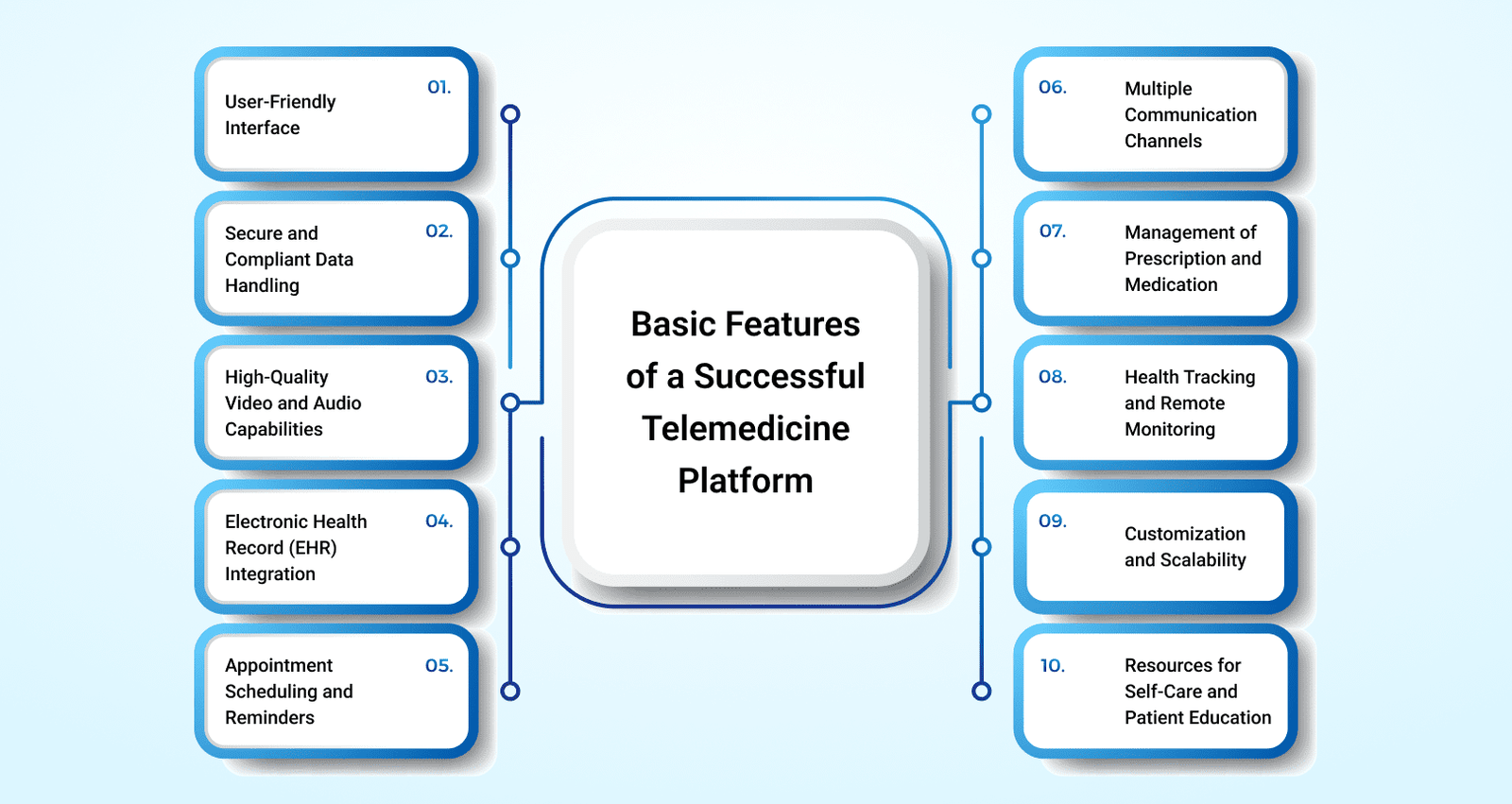
Telemedicine Platform Features1. User-Friendly Interface

An effective telemedicine platform must put user-friendliness first. The platform should be easy to use for both patients and healthcare professionals. This functionality is crucial for enhancing user experience and guaranteeing easy access to telemedicine services for people of different ages and technological proficiency. Clear menus and easily available services, such as the ability to schedule appointments, make payments, and use virtual consultation tools, should all be included in the interface.

The platform should make it simple for medical professionals to access patient data, medical records, and diagnostic tools. This guarantees that they won’t have to worry about being hampered by complex software and can concentrate on providing high-quality treatment. A clear, straightforward interface lowers the learning curve, promotes user adoption of the telemedicine platform, and creates a happy environment for both patients and doctors.

2. Secure and Compliant Data Handling

A telemedicine platform’s data security and privacy are non-negotiable features. Sensitive personal information is trusted by patients with healthcare providers, and the platform has to be set up to manage this data appropriately. It is imperative to adhere to rules such as the Health Insurance Portability and Accountability Act (HIPAA) in the United States, the General Data Protection Regulation (GDPR) in Europe, and any other pertinent local legislation.

The platform should provide end-to-end encryption for all conversations, including text messaging, file transfers, and video consultations, to safeguard patient data. Only authorized personnel should have access to patient data, and multi-factor authentication should be used to provide further protection. Data security is a primary concern since data breaches can harm a telemedicine platform’s reputation in addition to having legal repercussions.

3. High-Quality Video and Audio Capabilities

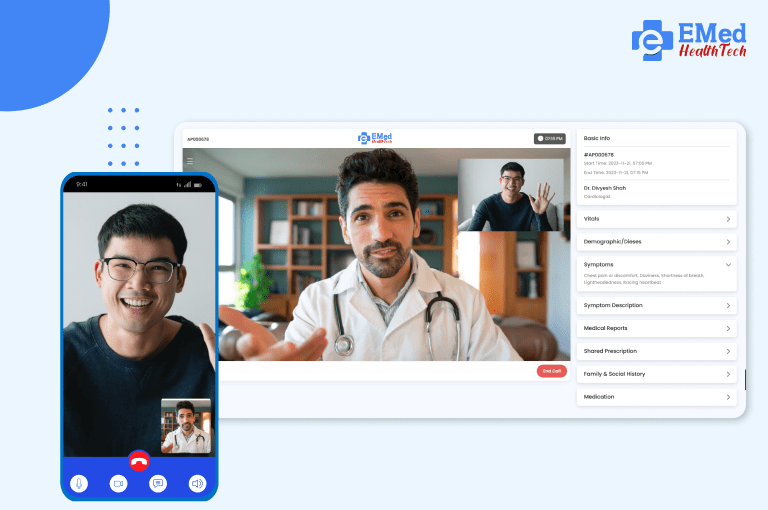
The primary purpose of telemedicine systems is to provide remote consultations between patients and medical professionals. The platform has to have high-quality audio and video capabilities for this to work. Clear, continuous communication is essential for doctors to diagnose and treat patients effectively during telemedicine online sessions.

A dependable telemedicine platform needs to provide high-definition video transmission with little latency and crisp audio, even in locations with subpar internet access. To accomplish this, platforms need to include functions like adaptive bitrate streaming, which modifies the video quality according to the internet speed of the patient or provider, guaranteeing smooth consultations.

Furthermore, during consultations, video conferencing systems have to incorporate functionalities such as screen sharing, which facilitate healthcare practitioners to elucidate treatment plans, provide test findings, or distribute instructional materials.

4. Electronic Health Record (EHR) Integration

It should be possible for an effective telemedicine platform to easily interface with current Electronic Health Records (EHR) systems. During a telemedicine session, this integration gives medical professionals access to a patient’s full medical history, prior diagnoses, test findings, and current treatment regimens. Providers may deliver more knowledgeable diagnoses and treatments by guaranteeing this continuity of care, which eventually enhances patient outcomes.

Telemedicine solutions should provide the real-time sharing of medical documents, such as test results and prescriptions, in addition to EHR integration. With the help of this function, follow-up appointments and in-person visits are less necessary because everything can be handled digitally via the telemedicine platform.

5. Appointment Scheduling and Reminders

A simplified method for arranging appointments is one of the main components of any telemedicine platform. Via the platform, patients ought to have no trouble scheduling, changing, or canceling appointments with medical professionals. This helps healthcare practitioners better organize their calendars and increases patient satisfaction. Patients should be able to select from several time slots on the platform according to their availability.

Not only can automated reminders via email, SMS, or push alerts make scheduling simple, but they may also lower the amount of missed appointments. Reminding patients and healthcare providers of missed appointments can cause delays in patient care, so having a strong reminder system is crucial to a positive experience for everyone involved.

6. Multiple Communication Channels

A successful telemedicine platform to accommodate a range of patient demands and preferences offers many communication channels. For patients, video consultations are the main feature while phone conversations or text messages are sometimes preferred. It is ensured that patients may select the communication mode that best meets their needs at any given moment by providing a range of options.

For short follow-up queries, medication reminders, or communicating test results, text messaging may be quite helpful. For easier consultations or in situations when video is not available because of restricted internet access, some patients might also prefer audio calls over video. Multiple communication channels increase the flexibility and accessibility of telemedicine.

7. Management of Prescription and Medication

The capability of telemedicine platforms to remotely prescribe and administer medicines is a crucial characteristic. Healthcare professionals should be able to transmit patients’ electronic prescriptions to the pharmacy of their choosing or issue them directly to patients via the platform. This makes the procedure more comfortable for both patients and clinicians by doing away with the necessity for in-person encounters.

The platform should provide medication management capabilities, such as reminders for patients to take their prescribed drugs or refill prescriptions, in addition to e-prescriptions. These features guarantee that patients receive the prescription drugs they require promptly and enhance patient adherence to treatment strategies.

8. Health Tracking and Remote Monitoring

An aspect of telemedicine systems that is gaining popularity is remote patient monitoring (RPM), especially for the management of chronic illnesses. Real-time monitoring of a patient’s vital signs, including blood pressure, heart rate, and glucose levels, is made possible by RPM. Through the telemedicine platform, this data is instantly transmitted to the healthcare provider, enabling prompt actions as needed.

Remote monitoring may ease the minds of patients with long-term conditions or those recuperating from surgery, and it can assist medical professionals in identifying possible problems before they get worse. With this capability, the telemedicine platform becomes an invaluable tool for controlling chronic health disorders and improving patient care.

9. Customization and Scalability

Healthcare organizations’ requirements expand along with their growth. Scalability and customization are essential for a successful telemedicine platform to meet the changing needs of patients and healthcare professionals. The platform should be able to grow with the company, whether that means connecting with other health systems, supporting additional users, or introducing new features.

Healthcare providers may customize the platform to meet their unique requirements, whether it is branding, certain communication features, or specialty healthcare services. The capacity of the healthcare practitioner to provide high-quality treatment will be impacted throughout time by a platform that can adjust to changing requirements.

10. Resources for Self-Care and Patient Education

In addition to making consultations easier, an effective telemedicine online consultation should give patients access to learning materials. To help people understand their health issues, treatments, and preventative actions, this might include articles, videos, and self-care guidelines. Telemedicine systems can enhance patient involvement and adherence to treatment strategies by providing patients with knowledge.

Additionally, self-care resources like wellness trackers, symptom checkers, and mental health evaluations can give patients important information about their health in between appointments. The telemedicine platform’s total value is increased and proactive health management is encouraged by these technologies.

Transform Your Health Sector Today!

Transform Your Health Sector Today!Telemedicine will keep revolutionizing healthcare in 2025 and beyond by providing cutting-edge technologies that enhance patient care, accessibility, and convenience. High-quality communication capabilities, safe data processing, and user-friendly interfaces are essential components of any successful telemedicine platform. The platform’s efficacy is further enhanced by features like prescription management, remote monitoring, and EHR connection.

Maintaining a competitive advantage in the evolving field of telemedicine will need the provision of different communication channels, scalability, and patient education tools. Purchasing a strong telemedicine platform may completely change the way medical professionals give treatment, increasing the effectiveness and accessibility of telemedicine in the healthcare industry.

EMedHealthTech specializes in bespoke telehealth solutions made to satisfy the demands of contemporary healthcare practitioners, whether you want to develop or improve your telemedicine platform. Get in touch with us right now to find out how we can assist you in developing a telemedicine platform that successfully changes patient care.

The Impact and Importance of Online Pharmacy App in Healthcare Industry

The Impact and Importance of Online Pharmacy App in Healthcare Industry

The way patients engage with healthcare services has changed due to the emergence of digital health solutions. Online pharmacy applications are one development that has made delivering quick and effective medical consultations possible. 

These applications, the result of strong Online Pharmacy App Development, are revolutionizing patient care. They provide patients with unmatched access to prescription services and medical guidance. 

The combination of healthcare IT software and telemedicine app development has further improved the functionality and reach of these applications, making healthcare more efficient and accessible.

Importance of Online Pharmacy App Development

Online pharmacy app development is essential to modern healthcare because it facilitates communication between consumers and healthcare professionals. From consultations to prescription administration, these applications are intended to simplify different parts of medical care. 

Through the integration of cutting-edge healthcare IT software, developers may build safe, intuitive systems that meet the requirements of both healthcare practitioners and patients. A more integrated healthcare system results in better patient outcomes and satisfaction.

Advantages of Using an Online Pharmacy App for Consultations

  • Convenience of Accessing Healthcare Services From Home

The ease that online pharmacy applications provide is one of their biggest advantages. Patients no longer have to leave their homes to obtain healthcare services, which saves travel time and wait periods. Those with hectic schedules, chronic diseases, or mobility impairments can especially benefit from this convenience.

  • Integration with Telemedicine Apps

Telemedicine and online pharmacy apps frequently work together to provide complete healthcare services. Thanks to this connection, patients can monitor their medicine, have prescriptions filled, and get medical advice all on one platform. The seamless prescription services and consultations made possible by these integrated applications improve the patient experience in its entirety.

  • Availability and Accessibility

Online pharmacy apps guarantee that consumers may get medical advice whenever they need it by giving them access to healthcare specialists around the clock. This 24-hour availability is quite helpful for patients who live in rural or underdeveloped areas and may not have easy access to conventional medical institutions.

Features of a Well-Developed Online Pharmacy App

  • User-Friendly Interface

A well-designed online pharmacy app has an intuitive user interface that is simple for users of all ages to navigate and use. Its accessibility depends on its ability to encourage widespread adoption and ensure that patients can efficiently use the app.

  • Secure and Private Consultations

Privacy and security are crucial in the healthcare industry. Online pharmacy applications use data security and encryption features found in healthcare IT software to guarantee the privacy and security of patient consultations.

  • Comprehensive Medical Records

Online pharmacy applications can offer full medical information because they integrate with current electronic health records (EHRs). This feature guarantees that medical professionals have access to comprehensive patient histories, helping improve diagnostic and treatment strategies.

  • Custom Healthcare Solutions

Personalized medication management and reminders are among the customized healthcare solutions provided by online pharmacy applications. By assisting patients in adhering to their prescription regimens, these characteristics enhance treatment results and general health.

Enhancing Patient Care through Online Pharmacy Apps

Online pharmacy apps improve medication adherence and patient care by providing automatic reminders and refill alerts. Through effective digital healthcare marketing within these applications, patients can receive tailored updates and information about their health. Furthermore, coordinated treatment between various healthcare practitioners is ensured via integrated healthcare software, guaranteeing a comprehensive approach to patient management.

The Role of Custom Healthcare Solutions in Online Pharmacy App Development

  • Personalized Health Plans

By providing individualized health programs, customized healthcare solutions are essential to online pharmacy app development. Each patient’s unique requirements are catered to through these programs, which guarantee that they get the best possible care and attention.

  • Tailored Recommendations And Follow-ups

By integrating customized healthcare solutions, online pharmacy applications can offer personalized suggestions and follow-ups. Thanks to this individualized approach, patients will receive ongoing treatment and support, which is essential for treating chronic disorders and preserving general health.

  • Telemedicine App Development Integration

The integration of telemedicine app development into online pharmacy applications makes combining telehealth services with pharmacy consultations possible. By guaranteeing that patients may obtain complete treatment in the comfort of their own homes, this integration improves the general efficacy and efficiency of healthcare delivery.

  • Holistic Patient Management

Online pharmacy applications provide comprehensive patient management by summarizing all-inclusive treatment plans. These plans cover a wide range of patient care services, including medication management and consultations, guaranteeing that all medical requirements are met in a coordinated way.

Expanding Telemedicine App Development

The growth of telemedicine app development is intimately related to the future of online pharmacy app development. As telehealth services continue to change, online pharmacy applications will advance in sophistication and provide more integrated and all-encompassing healthcare solutions. With this growth, patient comfort and care will be further improved, increasing accessibility to healthcare for all.

Conclusion

Online pharmacy mobile apps are revolutionizing the healthcare industry by providing quick and easy consultation services. Thanks to sophisticated online pharmacy app development, these applications, which offer complete treatment, effectively interact with telemedicine apps and healthcare IT software. 

Online pharmacy applications are a vital resource for contemporary healthcare due to the ease of using healthcare services from home and the advantages of 24/7 availability and individualized treatment. 

The growth of telemedicine apps and personalized healthcare solutions will propel these applications’ significance in augmenting patient comfort and care. In an ever-changing healthcare environment, adopting these digital health technologies is essential to guaranteeing that patients receive the best treatment possible. Hence, it is crucial to hire one of the best online pharmacy app development services providers, EMed HealthTech. Contact us right away to explore more about healthcare digital marketing.

Medicine Delivery App A Complete Solution From Prescription To Doorstep Delivery

Medicine Delivery App: A Complete Solution From Prescription To Doorstep Delivery

If the patient needs immediate medication at their convenience, who can help? With the evolving healthcare sector, medicine delivery app development is becoming a critical component of delivering effective and reliable medical services. This article explores the mechanics of pharmacy app development, along with its advantages, operations, security measures, and possible revenue models.

The Growing Need For Medicine Delivery App

The ease of medicine delivery becomes clear as more individuals depend on regular prescriptions to stay healthy. The idea of developing an online pharmacy app is particularly alluring as it meets a pressing demand for prompt access to necessary medications. 

Medicine delivery app development offers business owners a profitable chance to enter a field with strong demand and offer a useful service.

How Does Medicine Delivery App Development Benefit Consumers?

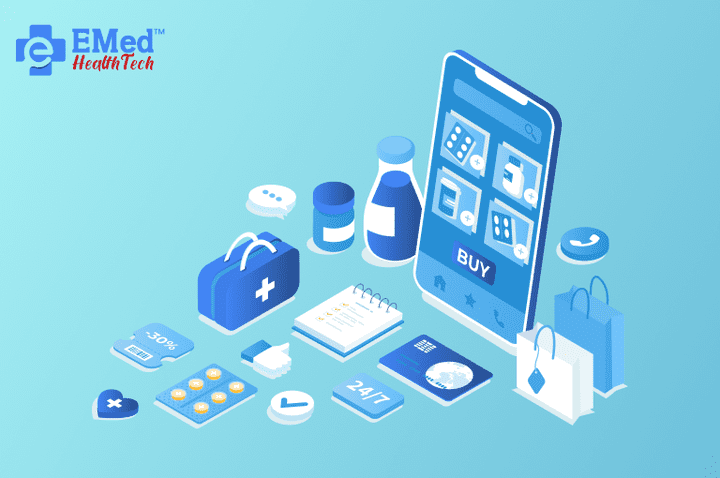
An application operating on any smart device designed to make it easier to carry out prescribed medicines is known as a Mobile Delivery App. Through these applications, individuals may quickly obtain prescription drugs without having to leave their homes by linking them with pharmacies. 

There are several benefits offered to consumers utilizing mobile delivery apps, a few of them are:

  • For people with chronic diseases or mobility impairments, this easy experience is especially helpful 
  • Ensures timely medicine delivery 
  • Without the inconvenience of numerous pharmacy trips, doorstep delivery
  • Several % discounts on medicines
  • Regular notification and medicinal updates 

How Does Medicine Delivery App Operate?

  • Account Creation And Registration

The patient registers for an account on the medicine delivery app as the initial step in the process. Users provide necessary information on registration, which is safely stored by the app. With the help of this recorded data, users may quickly manage prescriptions, view their order history, and more.

  • Prescription Upload

Patients must ensure that they upload their prescriptions since medicines need precise approval. Thanks to the pharmacy app development, people no longer have to make trips to the pharmacy. Users are encouraged to follow their doctor’s prescriptions when taking medications. Users just need to upload a photograph of their prescription to better understand and ensure accuracy in medical operations.

  • Making Orders

Once the prescription is uploaded, users may browse the app and choose the necessary medications. This user-friendly app makes it easier for users to select a product and enter the amount. Pharmacy app development has simplified the ordering procedure, making it accessible to even non-techies. 

  • Modes Of Payment 

Numerous payment options, including cash on delivery, digital wallets, and credit/debit cards, are provided by the medicine delivery app. This adaptability ensures a seamless transaction procedure while supporting user preferences. Secure payment channels enhance user confidence by securing financial information.

  • Tracking Your Order

Customers may follow the delivery status in real-time through the app after making an order. From deployment to delivery, notifications and updates keep them informed, increasing transparency and enabling users to make the right choices. This feature is essential for establishing trust and ensuring all medicines are delivered on time. 

Medicine Delivery App Notification & Communication 

Users placing successful purchases receive a quick email or SMS confirmation. This confirmation reassures them that their request has been received and contains information such as the order number and the anticipated delivery time.

Users receive regular updates about the status of their orders during delivery. From the time of dispatch until arrival, these messages provide transparency and let consumers schedule when their prescription will arrive. In addition, the pharmacy app development company provides a specific date order feature if anyone wants medicines on a particular date.

Customer support features are often built-in medicine delivery apps to handle queries or worries. Quick assistance is provided by live chat, dedicated helplines, and extensive FAQs to improve the client experience.

Security Measures During Pharmacy App Development

  • Data Encryption

Securing personal and medical data is critical to preserving user confidence. Strong encryption methods guard against breaches or unwanted access to personal data. This protects the privacy and accuracy of users’ health and personal information.

  • Safe Payment Gateways

Partnering with secure payment gateways protects financial transactions against fraud. These gateways utilize advanced security protocols and encryption to safeguard funds, providing consumers with peace of mind.

Integration With Healthcare Providers

Pharmacy app development entails using APIs (Application Programming Interfaces) to integrate with the systems of healthcare providers. The app’s usefulness is improved as this connectivity enables features like syncing with medical information and on-time prescription verification.

  • Verifying Uploaded Prescription

During medicine delivery app development, prescriptions uploaded are ensured to be precise and compliant with medical rules using automated verification algorithms. This automation streamlines the procedure and lowers the possibility of mistakes, ensuring patients receive the right medicines. 

  • Collaboration With Pharmacies

Partnering with authorized pharmacies is essential for completing orders and ensuring the authenticity and quality of medicines. These collaborations expand the app’s network, and users may access a greater variety of pharmaceutical items.

Important Factor Considerations In Medicine Delivery App Development

Adaptation To Geographical Variations

Effective logistics planning is crucial for deliveries to occur on schedule, especially in remote locations. Delivery obstacles are addressed by affecting routing and regional adaptability. Thanks to the development of medicine delivery apps, even patients in remote areas get their prescriptions. To expand globally, medicine delivery app development follows local regulatory rules.

Pricing And Revenue Plans

  • Subscription Plans—Providing subscription services might generate steady income streams. Benefits like quick delivery and prescription discounts may be included to encourage consumer loyalty.
  • Commission Structure – Transparent payment setups encourage pharmacies to collaborate with the app, providing a broader customer base. 
  • Revenue From Ads – Advertising partnerships with similar companies might bring in extra money.

Emerging Trends And Competitions

Many well-established companies are entering the market, and startups are also joining the market. Thus, mobile app development is necessary for growing more competitively. Creating pharmacy apps with user interfaces, fast delivery services, and additional offerings such as teleconsultation aims to differentiate itself from competitors.

Partnerships with telemedicine platforms and integrating AI-driven medication reminders represent some of the advancements in pharmacy app development.

Final Words – Know The Potential Of Medicine Delivery Apps

Medicine delivery apps are an important tool in modern healthcare as they have immense potential to increase patient volumes, expedite pharmacy operations, and improve healthcare delivery. Embrace this reform to ensure a healthy future.

Medicine delivery apps are transforming how people obtain pharmacy and medical services. These apps provide a quick and easy way to get necessary prescription drugs by connecting patients and pharmacies. Medicine delivery app development will aid in transforming the healthcare sector, emphasizing security integration with healthcare providers. 

Collaborate with EMed HealthTech, the leading pharmacy app development company, to build a reliable and user-friendly app. These apps ensure smooth operations and significantly influence how healthcare is delivered today.

Discover How Doctor Appointment App Development Can Maximize Patient Engagement

Discover How Doctor Appointment App Development Can Maximize Patient Engagement!

Nowadays, the use of modern tools is increased, thus digitalization is a backbone now in industries such as healthcare, pharmaceuticals, hospitals, clinics, and more. Doctor appointment app development can turn the tide as it provides better patient engagement, credibility, advertising, and convenience for everyone in any respective place. These doctor appointment booking systems have changed the conventional healthcare system because it is more patient-centric and open at your fingertips. Let’s dig into this article to investigate how doctor appointment app development can maximize patient engagement.

The Role of Doctor Appointment App Development in Improving Patient Engagement

Our doctor appointment app is outlined with understanding engagement at its center. With our innovative strategies, we offer features that fulfill the needs of both patients and healthcare providers. Out of many, a few standout aspects are discussed below:

1. Easy to Use Interface

We ensure doctor app development is user-friendly for better patient engagement. You don’t need to be a pro, your age will not matter as we have a customized doctor appointment app that boasts a user-intuitive interface. Effortlessly patients can operate the application and make the initial setup process smooth and efficient. This is a quick learning curve. Encourages patients to use the app. 

2. Seamless Bookings

The most helpful feature of our app is the doctor appointment booking system. This includes permitting patients to book arrangements with their favored specialists easily. Patients can see accessible time spaces and select a helpful time without the bother of long waiting periods or phone calls. This not only spares time but also diminishes the authoritative burden on healthcare suppliers, improving overall efficiency.

3. Integration with EHR Frameworks

Our doctor app development prioritizes integrating Electronic Health Records (EHR) frameworks. This integration permits real-time information admissions, guaranteeing that patients and specialists have access to up-to-date health data. Patients can see their vital records, test results, and treatment plans straightforwardly through the telemedicine app development. This straightforwardness cultivates trust and empowers patients to take an active role in overseeing their health.

4. Telemedicine Capabilities

Telemedicine has emerged as a crucial element in the delivery of healthcare. With the assistance of our on-demand doctor app development, consumers may have audio or video consultations with medical experts who are interacting through telemedicine app features. This aspect of doctor app development is particularly beneficial for individuals facing mobility challenges or residing in areas. Our doctor app development offers on-time consultation to ensure that patients receive the utmost care improving their overall well-being.

5. Regular Customized Notification & Updates

To update patients with what’s new, we have designed telemedicine app development, utilizing this tech, patients effectively get notifications and updates. Appointment reminders, medication alerts, and follow-up messages are a few of the notifications that patients will receive. These regular updates pop up on patients’ mobile devices so that they can adhere to their treatment plans and attend scheduled appointments leading to better health results.

6. Secure and Easy Payment Process

Our doctor appointment app development consists of secure payment gateways allowing patients to make transactions reliably for consultation and services through the application. This feature guarantees a consistent and hassle-free installment encounter, decreasing charging slacks and improving patient comfort. The app adheres to PCI DSS measures, guaranteeing that all exchanges are secure and that understanding information is ensured.

7. Access to Top Doctors

Patients frequently look for nitty-gritty data from healthcare suppliers, sometimes recently booking appointments. Our doctor appointment app development provides profiles of specialists, including their credentials, areas of expertise, patient reviews, and availability. This transparency enables patients to make decisions about their healthcare enhancing their involvement and satisfaction.

  1. Enhanced Communication Channels

For better understanding, viable communication between patients and healthcare providers is essential. Our telemedicine app development incorporates communication channels such as in-app information, voice calls, and video interviews. These highlights encourage incite and effective communication, guaranteeing that patients can easily reach out to their specialists and get opportune reactions.

9. Real-Time Health Monitoring

For patients with persistent conditions, nonstop well-being monitoring is fundamental. Our telemedicine app development supports connecting with devices and IoT technology enabling the real-time tracking of health metrics, like heart rate, blood pressure, and glucose levels. This data is transmitted to healthcare providers via a doctor appointment app, enabling management of health and appropriate interventions.

10. Customizable Client Experience

Understanding that each patient has unique needs, our doctor app development offers customizable features. Patients can personalize their app interface, set preferences for notifications, and select their preferred mode of communication. This customization improves client satisfaction and energizes standard app utilization. 

Benefits of Doctor Appointment App Development

1. Transparency

One of the essential benefits of doctor appointment app development is the upgraded straightforwardness between healthcare suppliers and patients. By integrating EMR and Electronic Health Records (EHR) into the app, patients can pick up real-time data to get their well-being data. This transparency guarantees that patients are well-informed about their health, treatment plans, and vital history. In addition, healthcare professionals can conveniently understand data, empowering them to make educated choices. This made strides in straightforwardness, cultivating belief and communication, and fortifying the patient-provider relationship.

2. Disposes of Enthusiastic Hole

Doctor app development, moreover, offers assistance in bridging the gap between patients and healthcare suppliers. Conventional healthcare intuitive can sometimes need the enthusiastic back that patients require. With highlights like video and sound meetings, patients can interface with their specialists more individually and sympathetically. These virtual intelligences permit patients to specify their concerns and get enthusiastic support, improving their general healthcare. Also, chatbot highlights give 24/7 help, guaranteeing patients always feel upheld.

3. Patients Take Control of Their Wellbeing

Enabling patients to require control of their well-being is another critical, good thing about doctor appointment app development. These apps give patients access to their health records, arrangement plans, and medicine updates. By having this data at their fingertips, patients can make educated choices in their healthcare. This strengthening led to expanded patient engagement, as they ended up with dynamic members overseeing their well-being. Additionally, patients can make choices considering their budgetary limitations and individual inclinations, driving them to more personalized and palatable healthcare experiences.

4. Understanding Customization and Custom-made Treatment

Telemedicine app development encourages customized and custom-made treatment for patients. Healthcare suppliers can analyze each patient’s remarkable restorative history and current health information through the app, permitting more personalized treatment plans. This customization is especially advantageous when overseeing expansive understanding volumes because it streamlines the method of exploring understanding records and fitting care-like manners. Personalized care moves forward with quiet results and satisfaction, as treatments are better suited to a person’s needs and conditions.

Conclusion

Doctor app development has greatly increased patient engagement to provide better interaction between patients and doctors. With the doctor appointment booking system, patients may streamline the booking procedure whereas telemedicine app development provides unmatched accessibility and convenience. 

Don’t let your patient hesitate to reach you. Partner with EMed HealthTech today, a reputable doctor app development company to take benefits and reach new heights in patient engagement!

Healthcare App Development Best Practices For Security And Privacy

Healthcare App Development: Best Practices For Security And Privacy

Healthcare sectors are busier than before! Many individuals look for comfort and proper navigation by their doctors. To properly diagnose a patient, a doctor and patient must connect more effectively with relevant details, past medical history, and present data. However, how could all this data be safe and secure? To solve all issues, we are the leading healthcare app development company delivering custom healthcare solutions.

With the rise in technological advancement, protecting patient data privacy and security has become crucial in custom healthcare software development. 

In this blog, we’ll explore the top strategies to ensure healthcare app development manages security and privacy compliance standards.

Why Privacy & Security Is Crucial In Healthcare App Development?

The healthcare sector obtains a huge database from the patients they are serving. To ensure these data are safeguarded, healthcare software development establishes a software designed considering strict security regulations. This healthcare software can safeguard a lot of sensitive data such as financial information, medical records, and personal data. 

Safeguarding such data is not just required by law, but also by morality. Several regulatory systems such as HIPAA (Health Insurance Portability And Accountability Act) and GDPR (General Data Protection Regulation) impose strict guidelines in the USA and Europe. 

Impacts Of Security Vulnerabilities

Security breaches in the healthcare sector may have worse impacts. You might have heard about an incident Anthem Inc. hacked in 2015, which exposed the personal information of millions of individuals. Such disastrous occurrences may lead to financial reduction, identity theft, and a decline in patient trust in the hospital. Moreover, a significant decrease in security breaches is seen in healthcare software development provided security and privacy protocols are followed.

Top Strategies Ensuring Healthcare Privacy In Healthcare App Development

  • Clear Privacy Protocols

Users’ confidence and reliability increase with the simple and uncomplicated privacy policy. It ought to specify what information is gathered, how it’s employed, and with whom it’s shared. In addition to being required by law, getting express consent from users before collecting and using their data is also recommended practice that upholds their autonomy.

  • User-Controlled Information

Giving users authority over their data is essential. Transparency and trust are improved by features that enable consumers to access, move, and delete their data. This control is compliant with laws such as GDPR that demand data portability and the right to be forgotten.

  • Secure Data Storage

Data security is essential regardless of where it is kept–on local devices or in the cloud. Access restrictions, frequent security updates, and strong encryption are all part of cloud storage security. Encrypting data and protecting the device from unwanted access are crucial procedures for local storage.

  • Compliance With Regulations

Ensuring compliance with regulations like GDPR and HIPAA is extremely important. Should not be overlooked. HIPAA guidelines focus on the importance of implementing security measures – technological and physical – to safeguard patient data. On the other hand, GDPR primarily focuses on user rights, responsibilities, and principles related to data protection.

Top Strategies Ensuring Healthcare Security In Healthcare App Development

  • Data Encryption In Healthcare App Development

A key component of healthcare app development is encrypting data. Encrypting data both during transit and when at rest is essential. This practice guarantees that even if intercepted the data remains unreadable without the encryption password. Custom healthcare software development implements strong encryption standards to ensure solid security.

  • Secure Authentication and Authorization

Multi-factor authentication is essential to develop healthcare apps with strict security. It is required for users to submit two or more verification factors to get access. Moreover, an essential procedure is role-based access control or RBAC. It lowers the possibility of internal breaches by limiting access to critical data to only authorized workers through the assignment of roles and permissions.

  • Regular Security Audits And Penetration Tests

It is easier to find flaws in the system with the assistance of regular security audits. In particular, penetration testing resembles cyberattacks to find vulnerabilities before malicious hackers do. By taking a proactive stance, healthcare app developers can quickly resolve possible problems and protect patient data.

  • Minimizing Data 

One strategy to lower the danger of exposure is to only gather the data that is essential. Furthermore, patient privacy may be preserved by using data anonymization techniques such as deleting personal identifiers. Thus, developing hospital management software considering this procedure is particularly important when working with massive datasets in research and analysis. 

Upcoming Trends In Custom Healthcare Solutions

Blockchain Technology For Data

Blockchain is a decentralized security solution that makes data alteration more difficult for hackers. Blockchain technology can improve data security in the healthcare sector by offering an unchangeable transaction ledger. When it comes to EHR software development, this technology may be very helpful in ensuring that medical records are unaltered.

AI In Healthcare App Development

Artificial Intelligence and machine learning may greatly improve security by detecting and averting risks in no time. AI, for instance, may detect anomalous behavior and analyze trends to notify managers of possible security breaches. AI may also be used to customize privacy settings so that individuals have more personalized control over their data.

Take Action To Develop Healthcare App With Security & Privacy Protocols 

In addition to compliance, prioritizing security and privacy software development in healthcare is important in developing confidence and ensuring the protection of patient data. This article provides custom healthcare app developers thorough approach concerning data encryption, secure authentication, user control, and transparency in privacy rules. 

Strong security and privacy in healthcare software development will depend on developers being alert and relying on new technologies like blockchain and AI when they become available. 

We, at EMed HealthTech, understand how important it is for users and healthcare providers to ensure safe interaction and data handling. Our custom healthcare software development is done in compliance with stringent laws, protecting patient trust along with data. Contact us today for top-notch software development in healthcare.

Build a Top Tier Hospital Management System for 2026

Build a Top-Tier Hospital Management System for 2024

For individuals who operate manually in hospitals, efficiently managing the hospital sector can be challenging. Thus, to overcome such problems in the rapidly evolving healthcare industry, building a top-tier Hospital Management System (HMS) is crucial. 

Choosing HMS offers efficient hospital operations, improved patient care, and enhanced services with constant workflows. This article will take you through the essentials of creating a cutting-edge HMS for 2024, highlighting key factors, considerations, technology hacks, and upcoming trends.

What Are Hospital Management Systems?

A creative and all-inclusive Hospital Management System (HMS) software solution is designed to handle healthcare sectors’ financial, clinical, and operational aspects. HMS is an integration of modules that helps in managing patient data, appointments, billing, inventory, and more. In addition, it is easier to remotely control routine tasks and provide real-time data access with the assistance of HMS. This enhances the efficiency and potency of hospital management.

Top Key Features of a Top-Tier Hospital Management System

Patient Management

Efficient patient management is a robust task for the health sector. Executing effective HMS should offer significant patient management features, such as electronic health records (EHR), appointment scheduling, and patient enrollment. This module ensures that patient information is correct and easily accessible to enhance both operational effectiveness and patient care.

Appointment and Scheduling

Automated appointment scheduling helps individuals save time and travel expenses. In addition, patients can analyze when to meet with professionals, reducing no-shows and optimizing the use of hospital resources. Hospital management software provides an individual with various features like online registration, reminders, and calendar integration to improve the patient experience and streamline hospital performance.

Billing and Invoicing

Precise cash transactions and billing are crucial for patients and hospitals. A tailored billing module should be efficient enough to handle all money transfers, including patient billing, insurance claims, and the payment process. Hospital management software ensures accuracy, lessens operation burden, and improves revenue cycle management.

Inventory Management

A hospital has extensive inventories that need proper management. Hence, proficient inventory management is vital for keeping up stock levels of medications, medical supplies, and devices. Clinic management software gives real-time stock tracking, automated reorder alerts, and careful reporting to anticipate stockouts and wastage.

Laboratory Management

HMSs integrate with laboratory management systems to operate the seamless diagnostic data flow. Features like test ordering, result tracking, and lab report management improve accuracy and speed up diagnosis.

Reporting and Analytics

Present-day reporting and analytics devices can empower hospital administrators to make informed decisions. The same clinic management system offers customizable reports, data visualization, and predictive analytics to assist screen performance, recognize trends, and optimize operations.

Security and Compliance

Patient data and hospital regulatory compliance both require a system to secure the information. Well-developed custom clinic management software incorporates strong security measures, including encryption, access control, and review trails, to secure delicate patient information and comply with controls like HIPAA.

Factors To Consider For Building a Hospital Management System

User-Friendly Interface

A user-friendly hospital information system ensures that staff can quickly and efficiently adopt it. Building an HMS with an intuitive design, easy navigation, and responsive customer support is essential to maximizing user satisfaction.

Customization and Scalability

Hospitals have unique necessities, so a customizable and adaptable clinic management system is crucial. Custom hospital management software permits for joining of specific features customized to the hospital’s needs and can scale as the hospital develops.

Integration Capabilities

To ensure a cohesive and successful healthcare system, an HMS should consistently integrate with different systems, such as EHR, research facility data systems, and telemedicine platforms. 

Cost and Budget

The overall cost of ownership is significant, including development, usage, support, and training. Choosing the best hospital management software that balances cost and features is essential for long-term maintainability.

Vendor Support and Training

Reliable vendor support and comprehensive training are essential for the successful use and operation of clinic management software. Ensure that the vendor provides ongoing support, upgrades, and preparation assets.

Revolutionizing Technology Stacks For A Modern Hospital Management System

Cloud Computing

Cloud-based hospital management software offers scalability, adaptability, and cost-effectiveness. It enables further access to information, empowers collaboration, and diminishes the requirement for an on-premises establishment.

Artificial Intelligence (AI)

AI-powered highlights like prescient analytics, computerized decision-making, and chatbots progress calm care and operational efficiency. AI can additionally help in overseeing huge datasets, distinguishing plans, and making data-driven choices. 

Blockchain

Blockchain development guarantees information security, judgment, and straightforwardness. It is fundamental to keep up a tamper-proof understanding of records and enable secure information sharing among different healthcare suppliers.  

Internet of Things (IoT)

IoT gadgets can collect and transmit real-time quiet data, empowering nonstop checking and early mediation. Integration with IoT improves patient care and improves operational productivity.

Step-by-step Guide To Build A Hospital Management System

Step 1: Define Requirements

Conduct a thorough needs appraisal to understand the hospital’s requirements. Distinguish the key features, client roles, and workflow processes that the HMS ought to support.

Step 2: Choose the Right Technology Stack

Select an innovation stack that adjusts to the hospital’s needs and future versatility. Consider cloud computing, AI, blockchain, and IoT innovations to construct a present-day and strong hospital management system.

Step 3: Design the System Architecture

Make a detailed system design that outlines the data flow, integration points, and security measures. Ensure the plan supports versatility, reliability, and performance.

Step 4: Develop and Test the System

Follow agile development techniques to construct the HMS in iterative stages. Conduct thorough testing to ensure the system meets useful, performance, and security requirements.

Step 5: Implement and Train

Implement the HMS continuously to diminish unsettling influences. Give comprehensive preparation to staff to ensure they can successfully utilize the system. Offer continuous support to address any issues during the move.

Step 6: Monitor and Optimize

Continuously screen the system’s performance and client feedback. Make fundamental optimizations and updates to improve functionality and address developing needs.

Future Challenges And Ways To Overcome Them While Building HMS

Data Security and Privacy

Ensuring the security and privacy of patient data may be a noteworthy challenge. To secure delicate data, vigorous security measures, regular reviews, and compliance with controls must be implemented.

Integration with Legacy Systems

Joining the HMS with existing legacy systems can be complex. To encourage seamless integration and data exchange, create standardized APIs and utilize middleware arrangements.

User Adoption

Encouraging staff to receive and viably utilize the modern system can be challenging. Provide comprehensive training, and progressing support, and include clients in the development process to ensure buy-in and ease of utilize.

Keeping Up with Technological Advancements

Healthcare technology is quickly advancing. Stay informed about developing advances and persistently update the HMS to use new advancements and keep up competitiveness.

Exploring Future Trends In Hospital Management Systems

Telemedicine Integration

Telemedicine is becoming increasingly vital for providing inaccessible care. Future clinic data frameworks will coordinate telemedicine capabilities to encourage virtual meetings, inaccessible observation, and persistent engagement.

Prescient Analytics

Prescient analytics will play a significant part in proactive healthcare administration. Future HMS will use AI to foresee quiet results, optimize asset allotment, and make strides in preventive care.

Upgraded Persistent Engagement

Patient-centric highlights like portable apps, quiet entrances, and personalized well-being bits of knowledge will improve persistent engagement. Future HMS will center on giving consistent and personalized quiet encounters.

Interoperability

Interoperability will be a key center, empowering consistent information trade between diverse healthcare frameworks and suppliers. This will improve care coordination and guarantee an all-encompassing view of well-being.

Takeaway

Building a top-tier Hospital Management System for 2024 requires careful planning, the right technology stack, and a focus on user needs. By joining progressed innovations like AI, blockchain, and IoT and tending to future challenges, healthcare suppliers can make a strong, productive, and patient-centric HMS. As the healthcare scene advances, remaining ahead of patterns and persistently optimizing the HMS will be significant for conveying high-quality care and accomplishing operational fabulousness. 

EMed HealthTech has experts in developing custom hospital management software and offers several services and solutions to cater to modern needs of hospitals and clinics. Contributing to the best hospital management software and custom healthcare arrangements will guarantee that your clinic is well-equipped to meet the requests of advanced healthcare and provide extraordinary, quiet care.

telemedicine software

Telemedicine Software: Enhancing Patient-Doctor Connectivity

In an era where advanced change is reshaping businesses, telemedicine software is developing as an urgent headway in healthcare, revolutionizing the patient-doctor network. This imaginative innovation empowers healthcare suppliers to expand their reach, advertising real-time meetings, further checking, and personalized care without topographical impediments. The comfort of telemedicine improves quiet engagement and fulfillment, making healthcare more available and effective. 

As we explore the post-pandemic scene, the significance of vigorous telemedicine arrangements has become progressively apparent. These frameworks are not as were to bridge the crevice between patients and specialists but to streamline healthcare conveyance, diminish costs, and make strides in results. This comprehensive direct investigates the transformative effect of telemedicine software on patient-doctor connections, the key highlights driving its victory, and the end of the patterns set to assist in revolutionizing the way we approach healthcare. Let’s delve together as we dig into the subtleties of telemedicine software, opening modern possibilities for improved healthcare encounters. 

What Is Telemedicine Software?

Telemedicine software could be a transformative innovation that empowers healthcare suppliers to provide therapeutic administrations and discussions remotely. By leveraging secure video conferencing, advanced well-being records, and further checking, telemedicine software bridges the gap between patients and specialists, advertising helpful, opportune, and effective healthcare. This imaginative arrangement is especially useful for people in inaccessible regions, those with portability challenges, and active experts. As telemedicine proceeds to advance, it improves the patient-doctor network, progresses the understanding of results, and bolsters the broader objective of making healthcare more open and effective for everybody. 

Key Features of Telemedicine Software

Telemedicine software has revolutionized the healthcare industry by bridging the hole between patients and specialists through progressing computerized innovation. In a time where comfort and availability are fundamental, telemedicine software offers a comprehensive arrangement that improves understanding of care and extends the reach of restorative administrations. This imaginative approach empowers healthcare suppliers to convey convenient and productive care to patients in any case of their geological area. The key features of telemedicine software, including secure video conferencing, electronic well-being records (EHR) integration, planning and arrangement administration, inaccessible understanding, observation, medicine administration, and versatile openness, collectively contribute to its viability. These features guarantee that restorative discussions are consistent, information is effortlessly open and secure, and patients get personalized and persistent care.

Telemedicine software not only progresses patient experience but also addresses different challenges confronted by conventional healthcare frameworks. The capacity to supply high-quality care remotely, keep comprehensive quiet records, and oversee arrangements proficiently makes telemedicine a crucial apparatus in present-day healthcare. As innovation proceeds to development, the integration of extra highlights and advancements in telemedicine programs will advance and improve its capabilities, making it a fundamental component of modern restorative hone. 

Benefits of Telemedicine Software

Improved Access to Healthcare:

Telemedicine software breaks down geological boundaries, permitting patients in farther or underserved regions to get restorative consideration from pros and healthcare suppliers without the requirement for travel.

Comfort for Patients and Doctors:

Both patients and healthcare experts can spare time and assets by killing the requirement for physical visits. This comfort improves persistent fulfillment and permits suppliers to oversee their plans more effectively.

Improved Engagement:

Telemedicine energizes patients’ dynamic interest in their healthcare travel. Through ceaseless communication and further observation, patients can remain more educated and included in their treatment plans.

Cost-Effectiveness:

By diminishing the requirement for in-person visits, telemedicine software brings down healthcare costs for both patients and suppliers. This incorporates reserve funds for transportation, healing center remains, and foundation.

Better Illness Administration:

Telemedicine permits standard observing and convenient meditations for unremitting infection patients, leading to progressed well-being results and decreased clinic confirmations.

Decreased Infection Risk:

Particularly significant amid pandemics, telemedicine minimizes the hazard of spreading irresistible maladies by lessening the requirement for physical visits to healthcare offices. 

Challenges in Implementing Telemedicine Software

Implementing telemedicine software presents a large number of challenges, despite its colossal potential to revolutionize healthcare. The fast selection of telemedicine showcased its capacity to bridge the hole between patients and healthcare suppliers, advertising comfort and getting to care. In any case, as healthcare education and suppliers progressively coordinate telemedicine into their administrations, they experience critical obstacles that must be addressed to guarantee its victory and supportability.

One of the essential challenges is information security and security. Ensuring persistent data from breaches and guaranteeing compliance with directions such as HIPAA. Moreover, innovative boundaries, counting changing levels of web get-to and gadget compatibility, can constrain the adequacy and reach of telemedicine administrations. Another basic issue is the resistance to alter among both patients and healthcare suppliers, who may be acclimated to conventional, in-person discussions and reluctant to receive unused innovations.

Besides, joining telemedicine software with existing healthcare frameworks, such as electronic well-being records (EHRs), postures specialized and calculated troubles. At last, administrative and repayment arrangements change broadly, making vulnerability and complexity for healthcare suppliers looking to offer telemedicine administrations. Tending to these challenges is pivotal to completely realizing the benefits of telemedicine and guaranteeing evenhanded, proficient, and secure healthcare conveyance within the advanced age. 

How Telemedicine Software Enhances Patient-Doctor Connectivity?

Telemedicine software is revolutionizing the healthcare scene by essentially upgrading the patient-doctor network. This inventive innovation bridges the gap between patients and healthcare suppliers, advertising a helpful, effective, and open implies of communication and care. Not at all like conventional healthcare settings, telemedicine permits real-time intuition through secure video conferencing, moment informing, and further observing, guaranteeing patients get opportune restorative consideration notwithstanding of their area. 

This network cultivates persistent quiet engagement, personalized care plans, and proactive well-being administration. By joining electronic well-being records and progressing observing apparatuses, telemedicine software not as it were streamlines the meeting handle but moreover guarantees comprehensive and facilitated care. As the request for adaptable healthcare arrangements develops, telemedicine stands out as an urgent apparatus in moving forward healthcare conveyance, upgrading understanding fulfillment, and optimizing clinical results.

Conclusion

In conclusion, telemedicine software is revolutionizing the patient-doctor network, advertising unparalleled get to healthcare and improving the quality of quiet care. EMed HealthTech is at the bleeding edge of this change, giving cutting-edge arrangements that empower secure, productive, and helpful intuitiveness between patients and healthcare suppliers. With highlights like real-time communication, further observing, and consistent EHR integration, EMed HealthTech’s telemedicine computer program is clearing the way for a more associated and responsive healthcare framework. As we see in the long run, the anticipated advancement of telemedicine will encourage bridge the hole between patients and specialists, guaranteeing superior well-being results for all.

Generative AI in Healthcare A New Era of Patient Care

Generative AI In Healthcare: Meeting The Demand For Patient Care

In today’s revolutionizing era, the integration of generative AI has become crucial for more productive, accessible, and personalized patient care. In this blog, we will discover the transformative impact of generative AI on healthcare, exploring its application, advantages, and probability. With a center on healthcare app development and healthcare software development, we’ll examine how these advances help the healthcare division accomplish way better results.

What Is Generative AI?

Generative AI alludes to fake insights frameworks able to create modern substance, such as content, pictures, or sound, based on the information they have been prepared on. Unlike conventional AI, which depends on foreordained rules and designs, generative AI employs machine learning models to make unequivocally modified yields. In healthcare, this implies creating arrangements that can analyze complex datasets, give bits of knowledge, and recommend medications. Further, generative AI can be incorporated easily with the assistance of EHR software development. 

Generative AI Provides Custom Healthcare Solutions!

Diagnostic Assistance

Generative AI exceeds expectations in diagnostic help by analyzing restorative images, lab results, and patient histories. It can more precisely identify peculiarities in X-rays, MRIs, and CT scans than human eyes. By identifying patterns and correlations that human specialists can miss, generative AI ensures earlier and more precise diagnoses. This capability is especially beneficial in radiology and pathology, where accuracy is crucial.

Personalized Treatment Plans

Healthcare software development has enabled the creation of AI systems that give personalized treatment plans. These systems analyze a patient’s hereditary data, way of life, and medical history to prescribe medicines custom-fitted to their particular needs. This approach not only improves the adequacy of medications but also minimizes potential side impacts. For example, custom healthcare software development permits the planning of applications that can anticipate how a patient will react to diverse medicines, ensuring ideal treatment.

Medicine Invention And Development

Generative AI is additionally significant in drug discovery and advancement. By simulating the interaction of atoms with organic systems, AI can recognize potential drug candidates faster than traditional strategies. This approach of telemedicine software accelerates the process of bringing unused medicines to market. Also, EHR software development integrates AI to streamline clinical trials, oversee patient information, and screen adverse impacts, making the development process more productive and successful.

Virtual Health Assistance

Virtual well-being assistants powered by generative AI offer continuous support to patients. These AI-driven chatbots and virtual assistants can oversee appointments, provide restorative data, and offer updates for pharmaceuticals, improving patient adherence to treatment plans. Additionally, with healthcare software development, they can monitor indications and caution healthcare providers in case of any anomalies, ensuring timely mediation.

Top Benefits Of Generative AI In Healthcare

Enhanced Accuracy & Efficiency

Generative AI improves the precision and proficiency of healthcare delivery. Healthcare experts can center on more basic aspects of patient care with healthcare app development by automating scheduled tasks, such as information passage and analysis. AI-driven diagnostic devices decrease the probability of human error, ensuring that patients get precise analysis and suitable medications instantly.

Improved Personalization

Generative AI empowers highly personalized healthcare solutions. By considering a patient’s one-of-a-kind genetic makeup, therapeutic history, and way of life, AI systems can prescribe medicines tailored to individual needs. This personalized approach increases the probability of fruitful results and patient satisfaction.

Cost-effective

Implementing generative AI in healthcare can lead to significant cost savings. By streamlining processes and reducing the requirement for repetitive tests and methods, AI makes a difference and lowers operational costs. Custom healthcare solutions and hospital management software can optimize asset assignment, decreasing waste and improving efficiency.

Enhanced Patient Monitoring and Care

AI-driven systems give persistent observation of patients, particularly those with constant conditions. This custom healthcare software development can track vital signs, analyze patterns, and caution healthcare providers about any changes that require attention. This continuous monitoring improves patient results by empowering timely intercessions.

Transforming the Role Of Healthcare App Development 

Healthcare app development enhances individual mobile application experience for health-related matters. It improves executive procedures, improves overall health outcomes, and painless patient care. Using this innovative application, healthcare providers can offer a wide range of services that meet the various needs of patients, caregivers, and medical specialists.

First, telemedicine software made easy appointment scheduling and rapid access to medical information possible. Furthermore, with the assistance of telemedicine software, patients can virtually confer with doctors, receive prescription reminders, and monitor their health metrics on the phone. This user-friendliness increases patient involvement and ensures quick medical response, which may be crucial for treating chronic conditions.

Second, creating healthcare app development facilitates the effective administration of medical facilities. Hospital administration apps automate tasks, including electronic health records (EHR), billing, inventory control, and patient admissions. This automation lessens the workload for healthcare personnel overall, lowers mistakes, and increases their efficiency.

Also, healthcare app development makes a difference in suppliers’ facilitation and communication. Doctors, medical caretakers, and other restorative workforces can work together to create treatment plans, trade understanding information, and keep an eye on patients’ advances in real-time. This coordinated approach ensures that patients urge exhaustive and well-coordinated treatment, which is much appreciated.

Security and protection of information are vital when creating healthcare apps. Engineers are mindful of making beyond any doubt that applications follow laws such as HIPAA to defend private, quiet information. Secure login methods and progressed encryption are fundamental to protecting mystery and certainty.

Creating healthcare apps is essential to updating healthcare delivery and enhancing its efficiency, security, and patient-centeredness. It links patients and healthcare professionals, providing a more responsive and integrated system.

How Does Healthcare App Development Assist the Healthcare Sector?

Data Privacy and Security

One of the essential concerns in healthcare app improvement is ensuring data protection and security. Custom healthcare software improvement must comply with controls such as HIPAA and GDPR to ensure confidential information. AI-driven security systems can distinguish and react to dangers in real time, defending sensitive data.

Accountability and Transparency

AI systems in healthcare must be transparent and responsible. This implies clearly explaining how AI algorithms make decisions and ensuring that these decisions can be audited. Transparency builds belief among healthcare providers and patients, cultivating more extensive acceptance of AI innovations.

Bias and Fairness

Generative AI systems must be designed to avoid biases that could lead to out-of-line treatment. This includes preparing AI models on different datasets and ceaselessly checking their performance. Ensuring fairness in AI-driven healthcare solutions is fundamental to giving equitable care to all patients.

Telemedicine Software to Resolve Future Challenges 

Telemedicine software is revolutionizing healthcare, but implementing it will present difficulties, including managing technology infrastructure, protecting patient privacy, and fostering a positive patient-doctor relationship. Data privacy and cybersecurity are critical to the electronic transmission of sensitive patient data. 

Furthermore, integrating telemedicine software with current healthcare systems might be expensive and difficult. Patients’ and healthcare professionals’ levels of technological literacy differ as well, creating a learning curve for efficient use. To address these issues and safeguard patient data, sophisticated telemedicine software includes robust encryption and security procedures.  

Through seamless integration possibilities with current systems, interoperability, and more seamless transitions are guaranteed. Accessible interfaces and extensive training courses aid in bridging the technical divide and increasing the number of people who can use telemedicine. Telemedicine can potentially improve healthcare delivery as it develops further, providing practical, effective, and safe answers to emerging healthcare problems.

How Generative AI in Healthcare Brings Changes In the Future?

The future of healthcare will be significantly shaped by generative AI – healthcare software development. Advances in AI innovation will lead to more modern diagnostic tools, personalized treatment plans, and efficient medication discovery processes. AI will moreover encourage better patient engagement through virtual well-being colleagues and telemedicine solutions. As healthcare app development advances, we can anticipate more coordinates and user-friendly stages that improve patient care.

Besides, AI-driven clinic management software will optimize operations, from planning to stock management, ensuring that healthcare providers can focus more on persistent care. The continuous change of AI capabilities will drive development, leading to superior healthcare results and more proficient systems.

Bottom Line

Generative AI is introduced in an unused time of persistent care, characterized by upgraded precision, productivity, and personalization. Through healthcare app development and healthcare software development, AI arrangements are becoming more available and compelling. As the healthcare segment proceeds to grasp these advances, patients can see forward to move forward with care and better outcomes. Taking a significant step towards a more efficient, equitable, and patient-focused healthcare system is crucial, as integrating generative AI in healthcare is not only a technological advancement. Are you seeking to develop a healthcare app for your specific needs? EMed HealthTech is here to fulfill your requirements; contact us right away!