Posted by
Hasanabbas
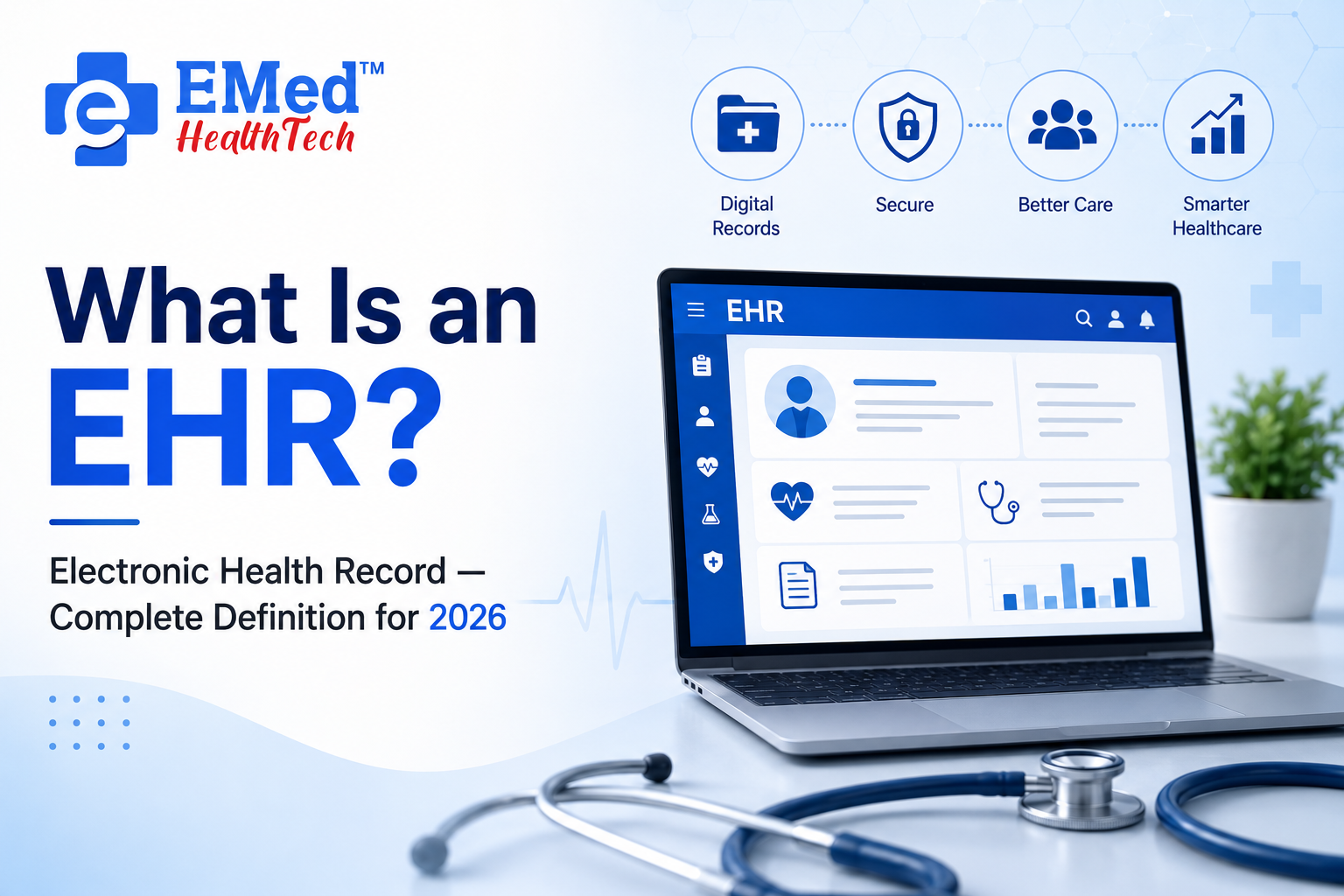 Understanding Electronic Health Records in 2026
Walk into any modern hospital or clinic today and you will notice something missing: the tall metal cabinets stuffed with paper files. In their place is a screen, a login, and a patient history that loads in seconds. That shift did not happen by accident. It happened because healthcare providers across the world, including a growing number in India, adopted Electronic Health Records to manage patient information faster and more accurately.
If you have ever wondered what is EHR and why it keeps coming up in conversations about hospital software, this guide breaks it down in plain language. We will cover the definition, how an EHR differs from an EMR, the core features every EHR system should have, and what a real world EHR implementation hospital project looks like in 2026.
An EHR, short for Electronic Health Record, is a digital version of a patient’s complete medical history. It is maintained over time and can include data such as diagnoses, medications, treatment plans, immunization records, allergies, lab results, and radiology images. Unlike a single doctor’s notes, an EHR is designed to be shared securely across multiple healthcare providers, so a specialist, a lab, and a pharmacy can all work from the same up to date record.
At its core, the electronic health records definition centers on continuity. A patient’s information does not stay locked inside one clinic. It travels with them, which means better coordinated care, fewer repeated tests, and quicker decisions in emergencies.
People often use EHR and EMR interchangeably, but there is a real difference. An EMR, or Electronic Medical Record, is essentially a digital chart used within a single practice. It replaces the paper file for that one provider. An EHR goes further. It is built to be interoperable, meaning it can be accessed and updated by different hospitals, clinics, labs, and even the patient themselves through a portal. Think of an EMR as one chapter and an EHR as the entire book, compiled from many providers over a person’s lifetime.
An EHR system works by capturing patient data at the point of care and storing it in a structured, searchable format. When a doctor examines a patient, notes, prescriptions, and vitals are entered directly into the system rather than written on paper. That information is then encrypted and stored on secure servers, often cloud based, so authorized users can retrieve it from anywhere.
Behind the scenes, a well built EHR connects with other software layers such as a hospital management system for scheduling and billing, laboratory systems for test results, and pharmacy platforms for prescription tracking. This connected approach is what allows a nurse, a physician, and a billing department to all view the same patient timeline without duplicating effort.
Not every EHR platform is built the same way, and the difference usually shows up in the depth of its features. Here are the ehr system features that separate a genuinely useful platform from a basic digital filing cabinet.
A strong EHR gives clinicians an extensive dashboard, e prescriptions, custom templates, and automated task reminders. Doctors can search past charts in seconds instead of flipping through years of paper notes, which saves time during every single consultation.
Patients benefit too. Features like complete medical history access, medication and vaccination tracking, appointment reminders, and lab order sharing put people in control of their own health journey. Many hospitals now pair this with remote patient monitoring so vitals collected from home devices flow directly into the same record.
Because medical data is sensitive, every credible EHR platform needs role based access control, multi factor authentication, and end to end encryption. In India, this also means aligning with the Ayushman Bharat Digital Mission framework, along with global standards like HL7, FHIR, and HIPAA where applicable.
The ehr vs paper records comparison is not close once you look at daily operations. Paper charts can be misplaced, damaged, or simply illegible due to handwriting. Retrieving a single file might take a staff member several minutes, and sharing that file with another provider often means physical transport or faxing.
An EHR eliminates most of that friction. Records are searchable instantly, cannot be physically lost, and can be shared with a referral specialist in seconds rather than days. Paper also has no built in safety checks, while a digital system can flag drug interactions, missing allergy information, or overdue follow ups automatically. For hospitals managing thousands of patients, this difference translates directly into safer, faster care.
India’s healthcare sector is expanding quickly, and hospitals are under pressure to do more with the same staff and space. This is where EHR software India solutions are proving their value. Digitized records reduce administrative overhead, cut down on duplicate testing, and give management real visibility into patient outcomes through built in healthcare data analytics.
There is also a patient experience angle. Indian patients increasingly expect the same digital convenience from healthcare that they get from banking or shopping. Being able to book appointments, view lab reports, and message a doctor through a portal builds trust and keeps patients coming back to the same provider network.
An ehr implementation hospital project is rarely a simple software install. It usually unfolds in stages. First comes a needs assessment, where the hospital’s existing workflows, departments, and data sources are mapped out. Next is data migration, which involves carefully transferring historical patient records from paper or legacy systems into the new platform without losing accuracy.
After migration, the system needs to be configured around the hospital’s specific specialties, whether that is a multi speciality hospital, a diagnostic chain, or a small clinic network. Staff training follows, since even the best platform fails if doctors and nurses are not comfortable using it. Finally, there is ongoing support and updates, because regulations and clinical needs change over time. A custom healthcare software development partner typically manages this entire lifecycle rather than handing over a generic template.
When evaluating vendors, look beyond the feature list. Ask how the platform handles data privacy, whether it follows Indian healthcare regulatory compliance requirements, and how easily it integrates with your existing pharmacy or lab systems. A good partner will also offer mobile access, since doctors and patients increasingly expect on the go visibility into records rather than being tied to a desktop terminal.
Pricing matters too, but the cheapest option often lacks the compliance depth or integration flexibility a growing hospital will need within a year or two. It is worth choosing a system built to scale with your patient volume rather than one you will outgrow quickly.
An Electronic Health Record is far more than a digital filing system. It is the backbone of modern, connected healthcare, linking doctors, labs, pharmacies, and patients around a single accurate source of truth. As Indian hospitals continue moving away from paper, understanding what an EHR is and how to implement one correctly will separate providers who thrive from those who fall behind. If your hospital or clinic is exploring this shift, working with an experienced EHR software India development partner can make the transition smoother and far less disruptive to daily operations.
An EHR is a digital record of a patient’s complete medical history that can be securely shared across multiple healthcare providers, unlike a single clinic’s paper file.
Not exactly. An EMR is a digital chart used within one practice, while an EHR is designed to be shared and accessed across different hospitals, labs, and clinics.
EHR software reduces errors, speeds up record retrieval, supports regulatory compliance, and gives hospitals better visibility into patient care compared to manual paper files.
Look for clinical data management, patient data management, appointment scheduling, e prescriptions, and strong data security including encryption and role based access.
Timelines vary by hospital size, but most implementations take a few months, covering needs assessment, data migration, configuration, staff training, and go live support.
Yes, when built correctly. A reliable EHR platform uses encryption, multi factor authentication, and compliance with standards like HL7 and HIPAA to protect patient information.
Yes. Most modern EHR platforms are built to integrate with pharmacy management, laboratory systems, billing, and even telemedicine tools for a connected workflow.
Cost depends on features, integrations, and whether the hospital chooses a custom build or a ready platform. A development partner can provide an estimate based on specific requirements.
Hasanabbas
Healthcare
If you’re planning to build a medical or wellness platform, the first question that comes up almost every time is simple: how much will it actually cost? Healthcare app development cost isn’t a fixed number. It moves depending on the type of app, the features you want, the regulations you must meet, and who builds […]
Read more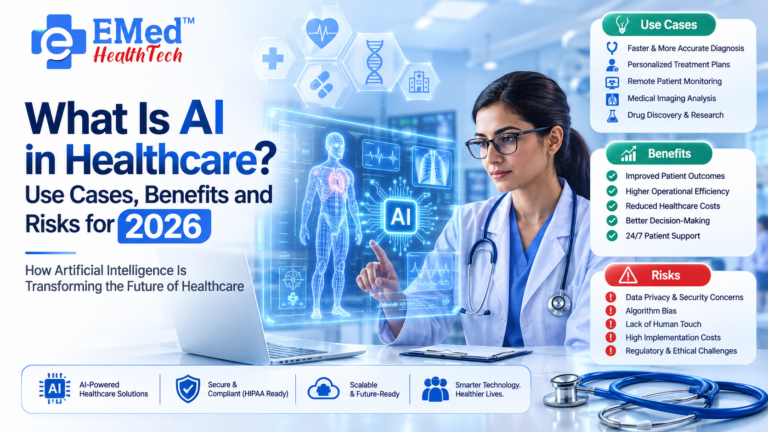
Healthcare
Artificial intelligence is fundamentally reshaping healthcare in 2026. From diagnostic systems that detect diseases earlier than human radiologists to administrative platforms that streamline hospital operations, AI has become the central topic in healthcare IT discussions worldwide. The healthcare industry stands at an inflection point where embracing AI technology is no longer optional but essential for […]
Read more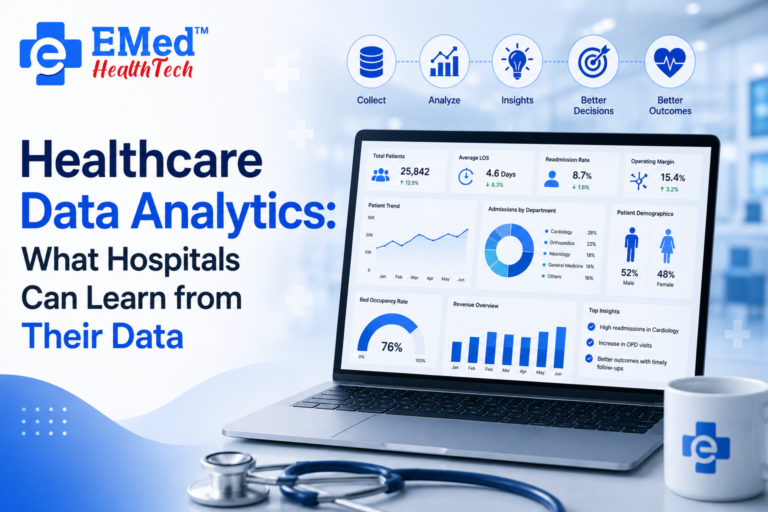
Healthcare
Why Hospitals Are Finally Paying Attention to Their Own Data Every hospital generates a staggering amount of information every single day. Admission records, lab results, billing entries, prescription histories, equipment logs, and patient feedback all pile up quietly in the background. For years, most of that data simply sat there, unused, spread across disconnected systems. […]
Read more