Posted by
Hasanabbas
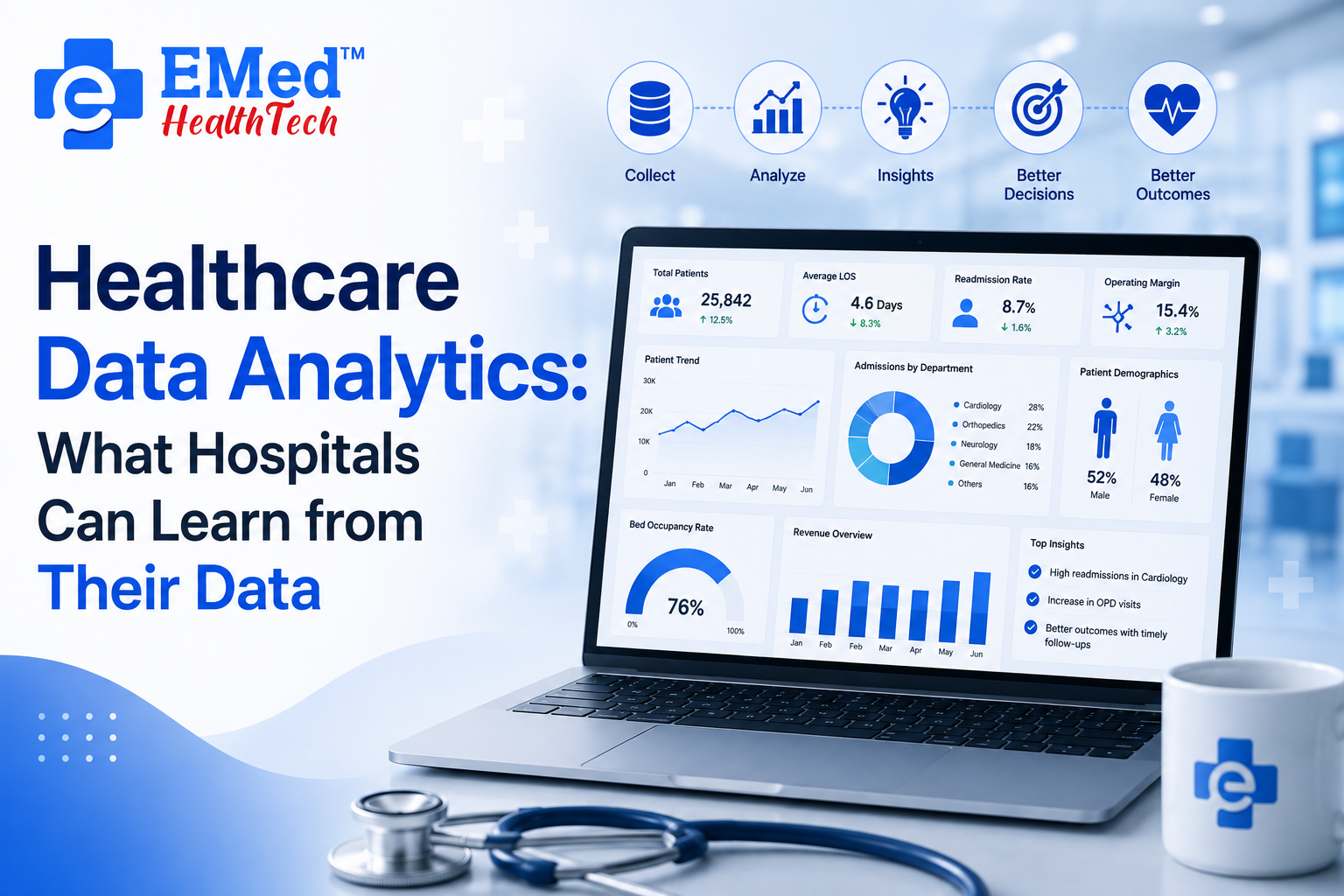
Every hospital generates a staggering amount of information every single day. Admission records, lab results, billing entries, prescription histories, equipment logs, and patient feedback all pile up quietly in the background. For years, most of that data simply sat there, unused, spread across disconnected systems. That is changing fast. Hospital administrators across India are now asking a sharper question: what is this data actually telling us, and how do we act on it?
This is where healthcare data analytics comes in. It is not just a technical upgrade sitting inside IT departments. It has become a strategic tool that shapes staffing decisions, budget planning, and even how a hospital treats its patients. In this article, we will look at what hospital data analytics really means, how predictive analytics healthcare India projects are being used today, and what a hospital administrator should know before investing in a business intelligence platform.
Healthcare data analytics is the process of collecting, organizing, and interpreting clinical, operational, and financial data to support better decision making. It pulls information from sources such as EHR/EMR systems, lab equipment, billing software, and patient monitoring devices, then turns raw numbers into insights a hospital can actually use.
Broadly, this work falls into five categories. Descriptive analytics tells you what has already happened, such as last month’s readmission rate. Diagnostic analytics digs into why something happened, like a spike in emergency visits. Predictive analytics forecasts what is likely to happen next, such as bed demand during flu season. Prescriptive analytics recommends specific actions to take. Preventive analytics focuses on catching risks before they turn into costly problems. Together, these layers give hospital leadership a much fuller picture than a spreadsheet ever could.
Traditional hospital reporting usually looks backward. A monthly report might show how many patients were admitted or how much revenue came in, but it rarely explains the underlying pattern or predicts what comes next. Hospital data analytics goes further by connecting data points across departments, so a rise in a particular diagnosis can be linked to seasonal trends, staffing gaps, or even supply chain delays, all in the same dashboard.
Predictive analytics healthcare India adoption has picked up noticeably over the last few years, particularly among mid sized and large hospital chains. Instead of reacting to a crisis, hospitals are using historical data to anticipate it. A predictive model might flag which patients are at higher risk of readmission within thirty days, allowing care teams to schedule follow up calls before a problem escalates.
This same approach is being applied to resource planning. By analyzing admission patterns over several years, a hospital can predict which months will see higher ICU demand and staff accordingly. Pharmaceutical companies working with EMed HealthTech have used similar predictive models to forecast medicine demand across regions, reducing both stockouts and wastage. The value is not just operational efficiency, it is often the difference between a hospital that is prepared and one that is scrambling.
A lot of hospitals invest in dashboards that end up ignored within a few months. The gap usually comes down to relevance. Good healthcare business intelligence is not about showing every possible metric. It is about surfacing the handful of numbers that matter to a specific role, whether that is a finance head tracking revenue cycle performance or a clinical director watching infection rates.
Real time dashboards give department heads a live view of bed occupancy, average wait times, and staff workload. This is particularly useful in emergency departments, where even a fifteen minute delay in identifying a bottleneck can affect patient safety. Hospitals that integrate this kind of dashboard with their hospital management system tend to see faster decision making across the board.
On the financial side, business intelligence tools track claim denials, payment delays, and insurance authorization bottlenecks. Instead of discovering a revenue leak at the end of the quarter, administrators can catch it within days and correct the underlying process before it compounds.
Patient data analysis is often where the most meaningful insights surface, because it connects directly to outcomes rather than just operations. By studying patterns across thousands of patient records, hospitals can identify which treatment protocols produce the best recovery rates, which demographics are more likely to miss follow up appointments, and where care gaps tend to occur.
This kind of analysis also strengthens preventive care. When a hospital can see that a certain group of patients consistently shows early markers for a chronic condition, outreach teams can intervene sooner. It is a shift from treating illness after it appears to catching risk factors while they are still manageable. Many of these workflows now connect with remote patient monitoring tools, so vitals collected outside the hospital feed directly into the same analytics engine used for in patient care.
Collecting data is the easy part. The harder challenge is turning health data insights into decisions that staff actually follow through on. This starts with making dashboards simple enough that a department head does not need a data science background to read them. It also means building alerts around thresholds that matter, such as a sudden rise in a specific complication, rather than flooding staff with notifications they eventually start ignoring.
Hospitals that succeed here usually treat analytics as an ongoing habit rather than a one time project. Weekly review meetings built around a shared dashboard tend to produce far more consistent improvements than an annual report that gets read once and filed away.
Before committing budget to an analytics platform, it helps to ask a few grounded questions. Does the vendor understand healthcare workflows specifically, or are they adapting a generic business intelligence tool? Can the platform integrate with the hospital’s existing EHR, billing, and lab systems without a lengthy rebuild? Is patient data handled in line with regulatory requirements, an area covered in detail under healthcare regulatory compliance standards?
It is also worth asking how much of the platform can be tailored to the hospital’s specific specialties and reporting needs, since a one size fits all dashboard rarely serves a multi speciality hospital well. Vendors offering custom healthcare software development tend to build analytics layers that actually match the hospital’s real workflows rather than forcing staff to adapt to a rigid template.
The hospitals that get the most out of their data are rarely the ones with the fanciest dashboards. They are the ones that build a habit of asking what the numbers mean and acting on the answer. Healthcare data analytics, when implemented thoughtfully, turns years of scattered records into a genuine strategic advantage, improving patient outcomes while keeping costs under control. As more hospitals across India move toward predictive and prescriptive models, the gap between data driven organizations and those still relying on gut instinct will only widen.
Healthcare data analytics is the process of collecting and interpreting clinical, operational, and financial data to help hospitals make better decisions and improve patient care.
Predictive analytics helps hospitals forecast patient demand, identify readmission risks, and plan staffing and resources before problems occur, rather than reacting after the fact.
Regular reporting shows what already happened, while hospital data analytics connects patterns across departments to explain why it happened and predict what comes next.
Yes, most modern BI platforms are built to pull data directly from EHR, billing, and lab systems, giving hospitals a unified view without duplicating manual entry.
Patient data analysis reveals treatment effectiveness, missed follow up patterns, and early risk markers, helping hospitals shift toward more preventive, personalized care.
Reputable analytics vendors follow strict security protocols and regulatory compliance standards to protect patient data throughout collection, storage, and reporting.
Timelines vary based on hospital size and existing systems, but most implementations take a few months, covering integration, dashboard setup, and staff training.
Yes. Even smaller clinics can use basic analytics to track appointment trends, reduce no shows, and identify which services generate the most patient demand.
Hasanabbas
Healthcare
If you’re planning to build a medical or wellness platform, the first question that comes up almost every time is simple: how much will it actually cost? Healthcare app development cost isn’t a fixed number. It moves depending on the type of app, the features you want, the regulations you must meet, and who builds […]
Read more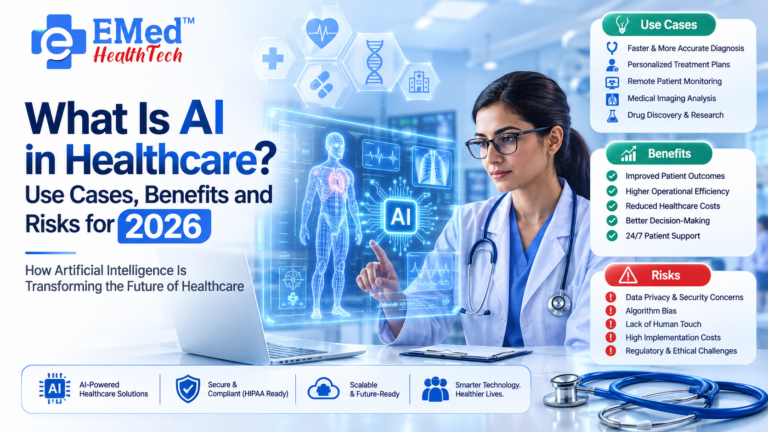
Healthcare
Artificial intelligence is fundamentally reshaping healthcare in 2026. From diagnostic systems that detect diseases earlier than human radiologists to administrative platforms that streamline hospital operations, AI has become the central topic in healthcare IT discussions worldwide. The healthcare industry stands at an inflection point where embracing AI technology is no longer optional but essential for […]
Read more
Healthcare
Understanding Electronic Health Records in 2026 Walk into any modern hospital or clinic today and you will notice something missing: the tall metal cabinets stuffed with paper files. In their place is a screen, a login, and a patient history that loads in seconds. That shift did not happen by accident. It happened because healthcare […]
Read more