Posted by
Hasanabbas
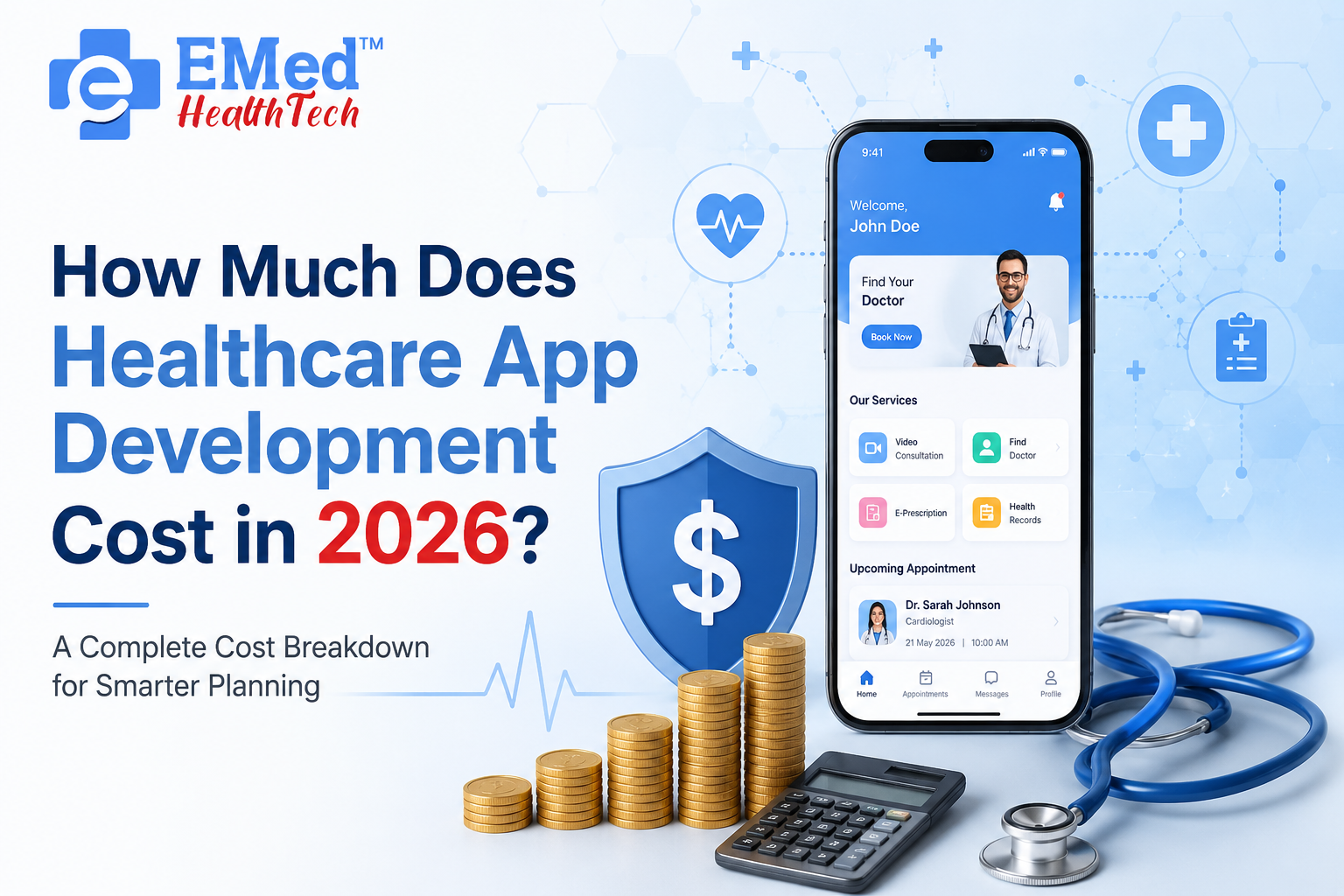
If you’re planning to build a medical or wellness platform, the first question that comes up almost every time is simple: how much will it actually cost? Healthcare app development cost isn’t a fixed number. It moves depending on the type of app, the features you want, the regulations you must meet, and who builds it for you. This guide breaks down real pricing ranges so you can walk into your next vendor call or RFP with realistic expectations instead of guesswork.
For most businesses, the cost to build health app solutions falls somewhere between $15,000 and $250,000, though highly complex, enterprise grade platforms can cross that range. A simple MVP with booking and basic patient records sits at the lower end. A full featured telemedicine or hospital management platform with EHR integration, payment gateways, and compliance layers sits at the higher end.
The medical app development price also depends heavily on where your development partner is based. Teams in North America and Western Europe typically charge $80 to $200 per hour, while experienced teams in India charge $20 to $50 per hour for comparable quality, which is why many global healthcare brands now outsource development to Indian companies without compromising on standards.
| Healthcare App Type | Estimated Cost Range | Typical Timeline |
| Basic appointment booking app | $10,000 to $25,000 | 6 to 10 weeks |
| Telemedicine app (video consultation, chat, prescriptions) | $30,000 to $80,000 | 3 to 5 months |
| Medicine delivery / online pharmacy app | $25,000 to $70,000 | 3 to 5 months |
| Hospital app (multi department, staff modules) | $60,000 to $150,000 | 5 to 8 months |
| Custom healthcare software (EHR/EMR, analytics, ERP) | $80,000 to $250,000+ | 6 to 12 months |
These numbers are directional. Your final quote will depend on the exact scope, platforms (iOS, Android, web), and integrations you choose.
No two healthcare apps cost the same, because no two projects have identical requirements. Here’s what actually drives the number up or down.
A basic app with login, profile, and appointment scheduling costs far less than one with video consultations, e prescriptions, lab report uploads, wearable integration, and AI symptom checkers. Every additional module adds development hours, QA cycles, and backend infrastructure, which directly affects your final medical app development price.
Building separately for iOS and Android using native code generally costs more than a single cross platform build, but native apps often perform better for camera heavy features like video consultations. Many clients choose to launch on one platform first through custom healthcare app development, then expand once the product proves itself.
Healthcare apps handle sensitive patient data, so compliance isn’t optional. In India, that means aligning with ABDM and data protection norms; globally, it may mean HIPAA or GDPR. Meeting healthcare regulatory compliances requires encrypted storage, secure authentication, audit trails, and consent management, all of which add engineering time and, consequently, cost.
Payment gateways, SMS/OTP providers, pharmacy inventory systems, lab APIs, and insurance verification tools all need to be integrated and tested. Each integration is a separate line item in your development quote, and the number of integrations is one of the biggest swing factors in hospital app development cost specifically, since hospital systems tend to connect to many external tools.
You can hire an in house team, work with a freelancer, or partner with a dedicated healthcare software development company. Agencies with domain expertise, like teams that have already built EHR/EMR software and hospital management systems, tend to move faster because they aren’t learning healthcare workflows from scratch, which can actually reduce your overall spend despite a higher hourly rate.
Telemedicine remains the most requested healthcare app category going into 2026, and for good reason: patients want remote access, and providers want to extend their reach without adding physical infrastructure. Explore our telemedicine solutions to see what a ready made platform includes. A telemedicine app cost typically breaks down like this:
Add these up and a fully functional telemedicine platform generally lands between $30,000 and $80,000, though white label telemedicine solutions can reduce this significantly since much of the core architecture already exists.
Hospital platforms are a different category altogether. A hospital app isn’t one app, it’s usually a connected system covering OPD management, IPD workflows, billing, pharmacy, lab, and staff scheduling. That’s why hospital app development cost climbs faster than a single purpose consumer app.
If your organization needs deeper backend systems such as a hospital management system or dedicated EHR/EMR software, expect the custom healthcare software price to start around $80,000 and scale well past $200,000 depending on the number of departments, user roles, and reporting requirements involved. Enterprise clients building multi location or multi country platforms should budget even higher, since data residency and multi currency billing add further complexity. Our custom healthcare software development service is built specifically for this kind of scope.
You don’t need to sacrifice quality to manage your budget sensibly. A few practical approaches:
Many founders and hospital administrators find it useful to speak with a development team directly before finalizing a budget, since a short discovery call can often reshape the entire cost estimate. If you’re at that stage, you can reach out through our contact page for a no obligation project discussion, or explore options to hire a dedicated healthcare app development team if you already know your scope.
Healthcare app development cost in 2026 is shaped by far more than just screen count or app store listing type. Complexity, compliance, integrations, and the experience level of your development partner all play a role in the final number. Whether you’re scoping a lightweight booking app or a full hospital ecosystem, getting a clear, itemized estimate upfront from a team that understands healthcare workflows will save you both time and money down the line.
A simple appointment booking or symptom tracking app can start around $10,000 to $15,000. Costs rise quickly once you add video consultations or payment processing.
Usually not. Maintenance, bug fixes, and feature updates are billed separately, typically 15 to 20 percent of the original development cost per year.
White label telemedicine platforms are generally 30 to 50 percent cheaper since the core infrastructure is already built and tested.
Most projects take anywhere from 3 months for a focused MVP to 8 to 12 months for a full hospital or enterprise platform.
Yes, meaningfully. Secure data handling, consent flows, and audit logging for standards like ABDM or HIPAA can add 10 to 25 percent to total development cost.
Absolutely, and it’s often the smarter approach. Launching an MVP first lets you validate demand before investing in advanced modules.
Hosting, third party API fees, app store fees, customer support, and periodic security audits all add to your recurring healthcare software price.
Share your feature list, target platforms, and compliance needs with a healthcare focused development team so they can scope the exact effort required and return a detailed, itemized estimate.
Hasanabbas
Healthcare
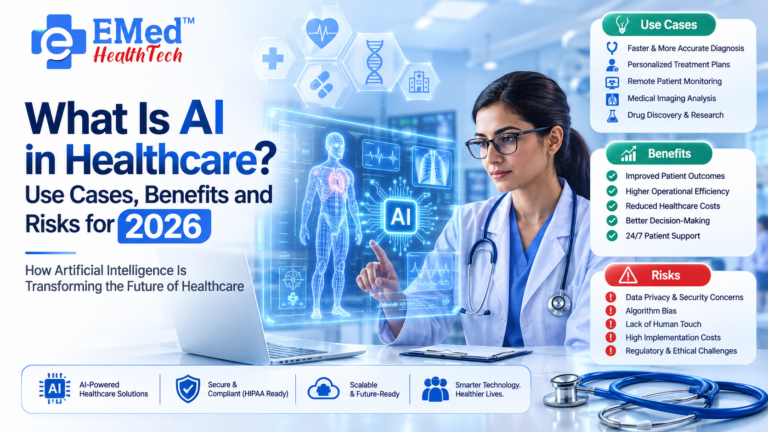
Artificial intelligence is fundamentally reshaping healthcare in 2026. From diagnostic systems that detect diseases earlier than human radiologists to administrative platforms that streamline hospital operations, AI has become the central topic in healthcare IT discussions worldwide. The healthcare industry stands at an inflection point where embracing AI technology is no longer optional but essential for […]
Read more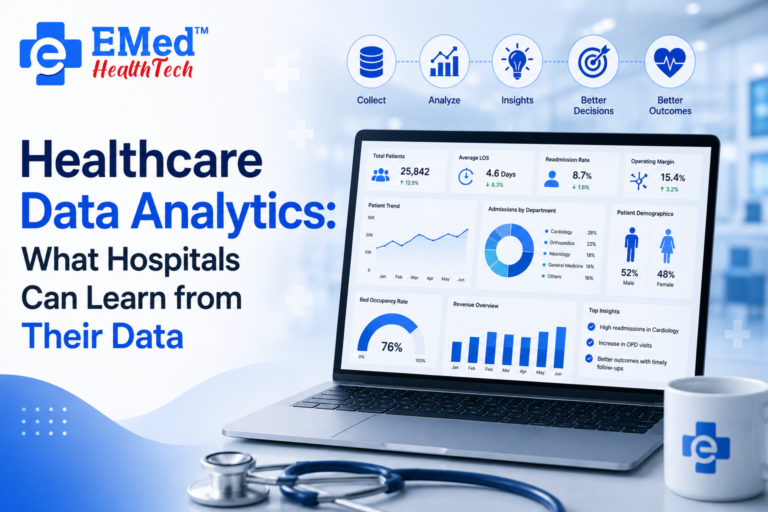
Healthcare
Why Hospitals Are Finally Paying Attention to Their Own Data Every hospital generates a staggering amount of information every single day. Admission records, lab results, billing entries, prescription histories, equipment logs, and patient feedback all pile up quietly in the background. For years, most of that data simply sat there, unused, spread across disconnected systems. […]
Read more
Healthcare
Understanding Electronic Health Records in 2026 Walk into any modern hospital or clinic today and you will notice something missing: the tall metal cabinets stuffed with paper files. In their place is a screen, a login, and a patient history that loads in seconds. That shift did not happen by accident. It happened because healthcare […]
Read more