Posted by
Hasanabbas
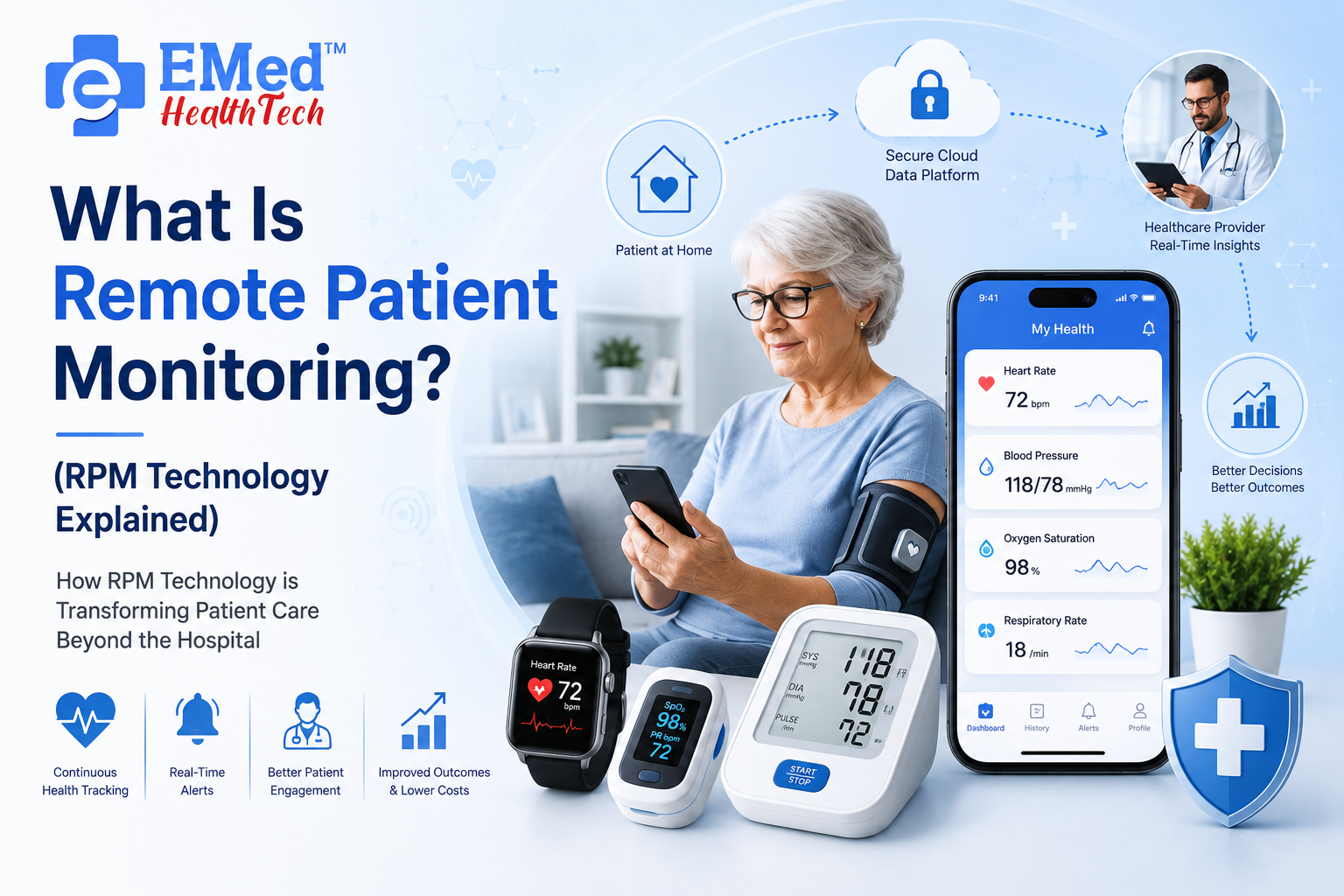 Hospital networks and home care providers are moving a growing share of patient care outside the hospital building, and remote patient monitoring technology is the reason this shift is possible. Instead of waiting for a patient to walk into a clinic, care teams can now watch vitals such as blood pressure, glucose, and oxygen levels update on a dashboard in real time. This guide explains what rpm healthcare actually involves, how the devices and software fit together, and what hospitals should look for before choosing a monitoring platform.
Remote patient monitoring, usually shortened to RPM, is a care model that uses connected devices to collect a patient’s health data outside a traditional clinical setting, most often at home. The readings travel through a secure connection into a patient monitoring system, where clinicians can review trends, set alert thresholds, and step in the moment something looks off. RPM is especially valuable for patients managing chronic conditions such as diabetes, hypertension, heart failure, and COPD, where small day to day changes in vitals often predict a bigger problem before it becomes an emergency.
RPM is not a single product, it is a chain of connected pieces working together. A device on or near the patient records a reading, that reading moves through a secure network, software processes and stores it, and a clinician or an automated rule decides what happens next. Hospitals that already run hospital management system software often connect RPM data directly into that same platform so nurses are not switching between five different screens during a shift.
RPM devices are the wearables and connected instruments that sit with the patient. Blood pressure cuffs, glucometers, pulse oximeters, weight scales, and ECG patches are the most common examples, and most modern devices sync automatically without the patient needing to type anything in.
Once a reading is captured, it needs to move somewhere useful. Bluetooth paired devices usually route through a patient’s phone or a dedicated gateway, then travel over an encrypted connection into the monitoring platform, keeping the data protected in line with HIPAA and similar regulations.
This is where remote monitoring software hospital teams rely on daily comes in. The software applies thresholds set by the care team, flags anything outside the safe range, and pushes an alert to a nurse or physician so they can intervene quickly, often before the patient even notices a problem.
The appeal of RPM healthcare goes beyond convenience. For hospitals managing limited beds, RPM allows stable patients to recover safely at home while a stable patient monitoring system keeps their care team informed. For home care providers, it means fewer unnecessary visits and faster response when a patient’s numbers genuinely need attention. Patients also benefit directly, since regular monitoring often catches complications early and reduces the number of avoidable emergency room trips.
Patients discharged after cardiac events or surgery are at high risk of readmission in the first thirty days. Continuous RPM data lets care teams catch warning signs early and adjust treatment before the patient needs to be readmitted.
Conditions like diabetes and hypertension need ongoing tracking rather than occasional clinic visits. RPM gives both the patient and the provider a continuous, accurate picture instead of a single snapshot taken once every few months.
Not every remote monitoring software hospital vendors sell is built the same way, and the features matter as much as the device hardware. A strong platform should support real time alerting, configurable thresholds per patient, a clear provider dashboard, and secure device pairing that does not require heavy technical setup on the patient’s side. It should also integrate cleanly with existing hospital software, including EHR or EMR software so that RPM readings become part of the patient’s permanent medical record instead of sitting in a separate, disconnected app.
A patient monitoring system that cannot exchange data with a hospital’s other software creates more work, not less. Look for RPM platforms that support standard data exchange so vitals flow directly into existing clinical records.
A platform that works well for one cardiology ward should be able to expand to diabetes management, post surgical recovery, and maternal health without a complete rebuild. This matters most for hospital networks running multiple facilities.
Hospitals generally choose between an off the shelf RPM product and a platform built around their specific workflow. A ready made tool can get a pilot running quickly, but it often forces clinical teams to adjust their process around the software’s limitations. A custom healthcare software development approach instead builds the monitoring dashboard, alert logic, and integrations around how the hospital actually operates, which tends to pay off once RPM moves from a pilot program into a full department wide rollout. Many providers also combine RPM with broader IoT implementation in healthcare so connected devices across wards, not just individual patients at home, feed into the same data pipeline.
Remote patient monitoring technology has moved from a niche pilot project to a core part of how hospitals and home care providers manage chronic conditions and post discharge recovery. The technology itself is simple to describe, connected devices capture vitals, software analyzes and flags the data, and a care team acts on what it sees, but getting the implementation right takes the correct mix of devices, secure software, and workflow integration. Hospitals evaluating RPM should treat it as a long term extension of patient care rather than a short term add on.
Remote patient monitoring uses connected devices to send a patient’s vitals from home to their care team, so clinicians can track health without an in person visit.
Blood pressure cuffs, glucometers, pulse oximeters, weight scales, and ECG patches are the most widely used rpm devices in home based care programs.
It collects incoming vitals, compares them against set thresholds, and sends an alert to a nurse or physician whenever a reading falls outside the safe range.
No, RPM is also used for post surgical recovery, maternal health monitoring, and general wellness tracking, not just long term chronic condition management.
A well built patient monitoring system encrypts data in transit and storage and follows HIPAA aligned security practices to protect patient information.
Yes, most modern RPM platforms are designed to sync directly with a hospital’s EHR so readings become part of the patient’s permanent medical record.
Telemedicine is a live video or audio consultation, while RPM is continuous data collection from devices, and many hospitals use both together.
It depends on scale, a ready made platform suits quick pilots, while custom software fits hospitals that need deep integration with existing systems.
Hasanabbas
If you’re planning to build a medical or wellness platform, the first question that comes up almost every time is simple: how much will it actually cost? Healthcare app development cost isn’t a fixed number. It moves depending on the type of app, the features you want, the regulations you...
Artificial intelligence is fundamentally reshaping healthcare in 2026. From diagnostic systems that detect diseases earlier than human radiologists to administrative platforms that streamline hospital operations, AI has become the central topic in healthcare IT discussions worldwide. The healthcare industry stands at an inflection point where embracing AI technology is no...
Why Hospitals Are Finally Paying Attention to Their Own Data Every hospital generates a staggering amount of information every single day. Admission records, lab results, billing entries, prescription histories, equipment logs, and patient feedback all pile up quietly in the background. For years, most of that data simply sat there,...