Posted by
Hasanabbas
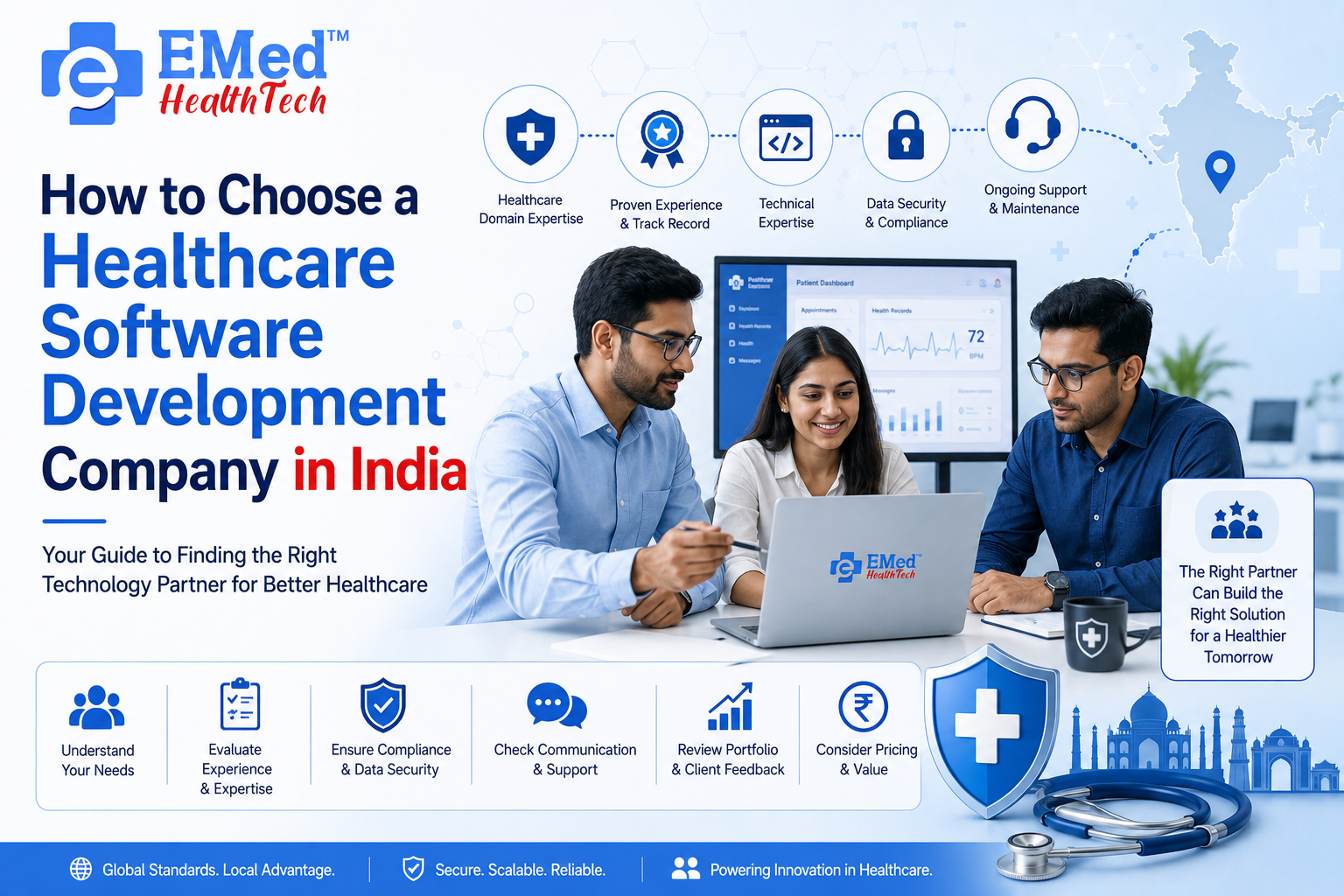 Picking a technology partner for your hospital, clinic, pharmacy chain, or health startup is not something you want to rush. The software you choose will hold patient records, run your billing, connect your doctors and patients, and, if it is not built properly, put sensitive medical data at risk. That is why so many hospital administrators, pharma founders, and healthcare entrepreneurs spend weeks comparing vendors before they sign a contract.
If you are searching for a reliable healthcare software development company India has to offer, this guide breaks down exactly what to look for, what questions to ask, and which warning signs mean you should walk away.
A healthcare IT vendor is not just a coding shop. A genuine healthcare software partner understands clinical workflows, patient privacy rules, hospital operations, and how doctors, labs, pharmacies, and patients need to interact with a digital system every single day. Their job covers requirement analysis, UI and UX design suited to medical users, backend development, third party integrations such as payment gateways or diagnostic devices, testing, deployment, and long term maintenance.
Companies offering custom healthcare software development typically build products such as hospital management systems, EHR and EMR platforms, telemedicine apps, online pharmacy platforms, lab management software, and remote patient monitoring tools. If a vendor can only show you generic mobile apps or e commerce projects, that is usually a sign they lack real domain depth.
Choosing the right partner comes down to a handful of factors that genuinely matter once the project is live and being used by real doctors and patients.
Ask how many years the company has spent specifically in healthcare, not general software development. A vendor that has delivered dozens of hospital or pharmacy platforms will already understand appointment scheduling logic, insurance workflows, and lab reporting formats, so you spend less time explaining the basics and more time building features that matter.
This is non negotiable. Any serious partner should be comfortable discussing healthcare regulatory compliance standards such as HIPAA, HL7, FHIR, DICOM, and GDPR, along with India specific frameworks like ABDM. Ask how patient data is encrypted, where it is hosted, and how access is controlled internally. If the sales team cannot answer these questions clearly, treat that as a warning sign.
Some vendors only offer one type of product, such as a pharmacy app, while others can build a full ecosystem including hospital management systems, EHR and EMR software, telemedicine platforms, and patient engagement tools. A wider product range usually means the team has already solved many of the technical problems you will eventually run into, so your project moves faster.
Your software will need to talk to lab machines, insurance systems, payment gateways, and possibly government health databases. Ask which technologies the team uses, how they handle interoperability, and whether they have integrated IoT devices or AI tools before. This matters even more if you plan to scale the platform later.
Healthcare software is never really finished. New regulations arrive, devices change, and user needs evolve. Confirm what support plans look like after launch, how quickly bugs get fixed, and whether the same team that built the product will be available for updates.
A few warning signs come up again and again when healthcare companies pick the wrong vendor. Watch out for pricing that seems unusually low compared to the market, since it often means corners are being cut on testing or security. Be cautious of vendors who cannot show real client references or case studies, who avoid discussing compliance in detail, or who promise unrealistic delivery timelines for complex platforms. A trustworthy partner will happily walk you through past case studies and connect you with existing clients if you ask.
India has become one of the top destinations for custom healthcare software India projects, and for good reason. The country has a large pool of experienced engineers, competitive development costs compared to the US, UK, or Canada, and a growing number of companies that specialize specifically in medical software rather than general IT outsourcing. Many Indian healthcare IT firms already serve international clients, which means they understand global compliance requirements alongside local regulations like ABDM.
When you run through the checklist above, EMed HealthTech checks most of the boxes healthcare buyers look for. The team has spent years focused only on healthcare IT, working with hospitals, diagnostic labs, pharmacy chains, and telemedicine startups across more than thirty countries. Their portfolio spans hospital management systems, EHR and EMR platforms, online pharmacy solutions, lab information systems, and IoT enabled patient monitoring tools, all built with HIPAA, HL7, FHIR, and GDPR compliance in mind. For teams that want to see how projects have actually performed after launch, their published work is a useful reference point. If you are still comparing options, you can also explore their service portfolio directly or reach out through their contact page to discuss your specific requirements.
Start by listing three to five vendors based on referrals, online research, and industry reputation. Review each company’s past projects, paying attention to whether they have built products similar to what you need. Ask for client references and actually speak with them if possible. Request a detailed proposal that covers timeline, cost breakdown, compliance approach, and post launch support. Finally, if you want a team that can also support your existing staff, consider vendors who let you hire dedicated healthcare developers so you retain flexibility as your project scales.
Choosing a healthcare technology partner is a long term decision, not a one time purchase. Take the time to check credentials, ask hard questions about compliance and security, and look closely at what the vendor has actually shipped for other healthcare businesses. Get this right, and your software becomes an asset your clinical and administrative teams rely on for years. Get it wrong, and you end up rebuilding the same system from scratch within a couple of years.
Check their years of healthcare specific experience, ask for client references, and confirm they follow HIPAA, HL7, and GDPR standards. A vendor willing to share detailed case studies is usually a safe bet.
Cost depends on features, integrations, and compliance needs. Simple platforms may start in the low thousands of dollars, while enterprise grade hospital systems cost significantly more.
Most projects take anywhere from three to nine months depending on complexity, the number of integrations required, and how many rounds of testing are needed before launch.
Yes, many established Indian vendors regularly build platforms compliant with HIPAA, GDPR, and other international standards while also supporting local frameworks like ABDM.
A healthcare specialist understands clinical workflows, patient privacy laws, and medical data standards, while a general vendor typically lacks this domain knowledge and compliance experience.
A full service vendor is usually a safer choice since your needs will likely expand beyond a single app to include backend systems, integrations, and analytics over time.
Yes, any reputable healthcare software company should be willing to sign a non disclosure agreement before discussing sensitive business or patient data requirements.
Expect bug fixes, security patches, feature updates, and compliance updates as regulations change. Confirm the support terms and response times before signing any contract.
Hasanabbas
If you’re planning to build a medical or wellness platform, the first question that comes up almost every time is simple: how much will it actually cost? Healthcare app development cost isn’t a fixed number. It moves depending on the type of app, the features you want, the regulations you...
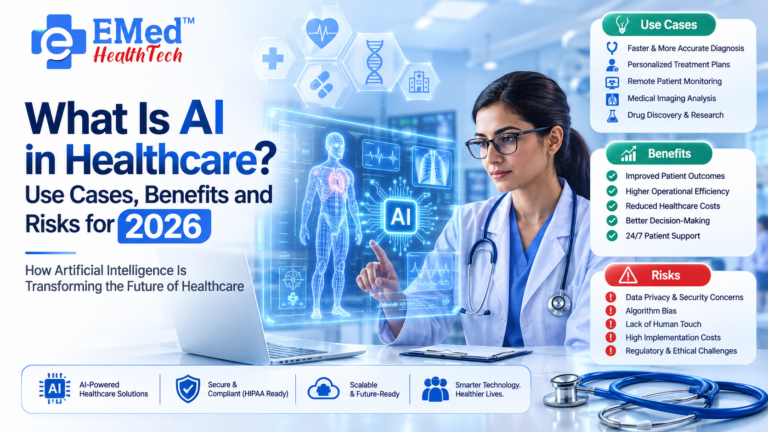
Artificial intelligence is fundamentally reshaping healthcare in 2026. From diagnostic systems that detect diseases earlier than human radiologists to administrative platforms that streamline hospital operations, AI has become the central topic in healthcare IT discussions worldwide. The healthcare industry stands at an inflection point where embracing AI technology is no...
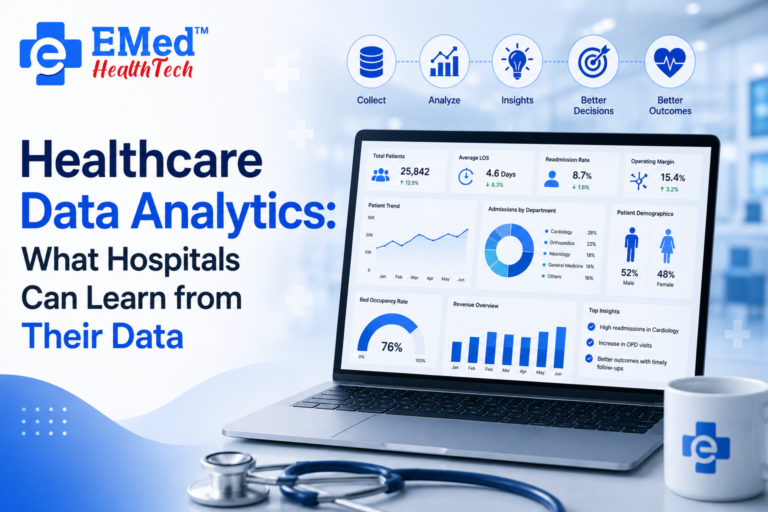
Why Hospitals Are Finally Paying Attention to Their Own Data Every hospital generates a staggering amount of information every single day. Admission records, lab results, billing entries, prescription histories, equipment logs, and patient feedback all pile up quietly in the background. For years, most of that data simply sat there,...